Japanese Chrysanthemum Meaning: The Crest on Passports, Coins and Gardens
 Written by Mei · IKOKA Japan
Japanese chrysanthemum meaning: why the kiku is on passports and 50-yen coins, how it became the imperial crest, and where to see it in Tokyo in November.
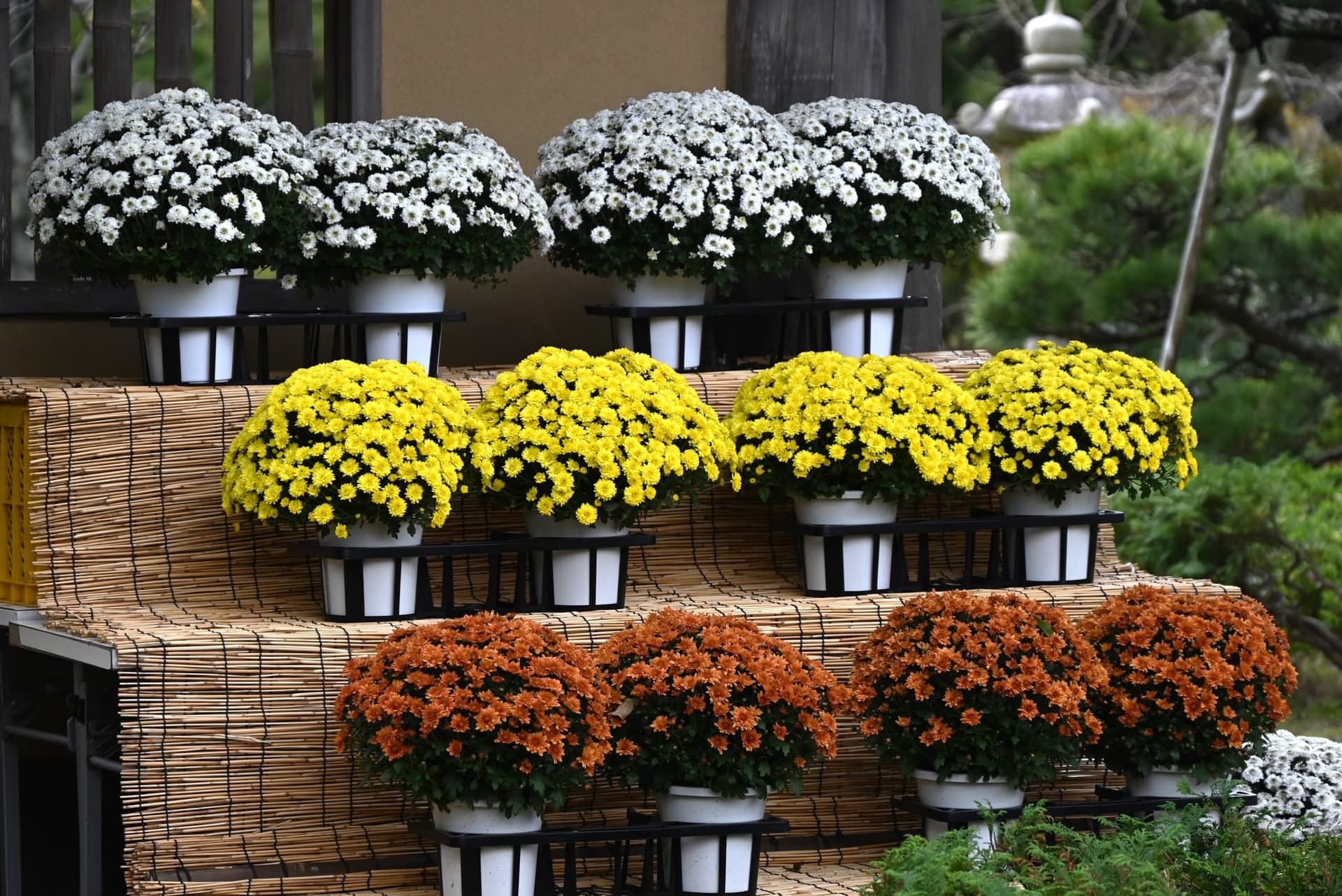
Get a little change in Japan and sooner or later you will hold a 50-yen coin, the one with a hole in the middle. Turn it over and there is a flower on the front: the chrysanthemum. Flip it back, then once more, and a small question sticks: why a flower, and why this one, on Japanese money? The Japanese chrysanthemum meaning is the answer, and it goes far beyond a pretty bloom: it is the crest of the imperial family, the emblem on the passport cover, and the star of November garden shows that began as palace events.
Here is the story in plain words, plus where you can see real chrysanthemum displays in Tokyo this November.
Japanese chrysanthemum symbol: where you already see it

The 50-yen coin is the easiest example to hold in your hand. Japan's Ministry of Finance lists the current cupronickel 50-yen coin, issued since 1967, with chrysanthemum flowers on the front and "50" on the back. Next time you get change, flip the coin with the hole and look for the petals.
The same flower sits on the cover of every Japanese passport. Before World War II, Japan had no national emblem set by law. When an international conference in 1920 (国際交通制度改良会議, the International Conference on Communications and Transit) adopted the rule of printing a national emblem in the center of passport covers, Japan started using a design based on the chrysanthemum crest in 1926.

Japanese imperial seal flower (菊の御紋): why the chrysanthemum became the crest
Garden chrysanthemums are said to have arrived in Japan between the end of the Nara period and the start of the Heian period. Here is how it went from one emperor's favorite flower to the crest of the imperial family. In the early Kamakura period, the retired Emperor Go-Toba loved the chrysanthemum and put it on his clothes, furnishings, carriages, poem paper and swords. Later retired emperors kept using it, and it is said to have settled in as the imperial crest from there.
The last step came in the Meiji era. In 1869 a government proclamation officially made the chrysanthemum the imperial crest. The imperial version is the "sixteen-petal double chrysanthemum" (jūrokuyō yae omotegiku, 十六葉八重表菊, also written 十六弁八重表菊): 16 petals in front, with a second layer behind them.

You can still see traces of Go-Toba's taste in a museum. The Kyoto National Museum holds a 13th-century tachi sword, an Important Cultural Property, with a 12-petal chrysanthemum carved near the base of the blade. Swords linked to Go-Toba's own hand are called kiku-gosaku, roughly "made by the chrysanthemum."
Chrysanthemum festival Japan in November: Shinjuku Gyoen exhibition (菊花展)
In 1878 the Imperial Household Ministry held its first chrysanthemum viewing centered on the imperial family at the Akasaka Palace, then the temporary imperial residence. In 1880 it was renamed Kangikukai, and foreign envoys were invited as a gesture of friendship. From 1929, the Kangikukai was held at Shinjuku Gyoen. The tradition paused from 1937 to 1948, and since 1949 the chrysanthemum beds have been shown to the public every year.

Today the show runs from November 1 to 15 every year in the garden's Japanese garden. The flowers sit inside uwaya, small pavilions built for the display, and each bed is arranged to look its best when you follow the set route. This year the garden sets up seven pavilion beds and two open-air beds to match the scenery.
If you like context before you look, stop first at the Information Center just outside the Shinjuku Gate. During the show it runs a free explainer exhibition on the chrysanthemum beds in its first-floor art gallery. It is a good way to learn what makes each bed different before you walk the route.
Shinjuku Gyoen chrysanthemum exhibition (菊花展) 2026 at a glance
- Dates: November 1–15, 2026, open every day during the show
- Hours: 9:00–16:30 (last entry 16:00)
- Cost: regular garden admission. Adults 500 yen, seniors 65+ and students (high school and up) 250 yen, junior high and younger free
- Getting there: about 10 minutes on foot from Shinjuku Station (South Exit), 5 minutes from Shinjuku-gyoemmae Station (Exit 2), or 5 minutes from Sendagaya Station
- Getting back: the same stations work in reverse. Walk 5 minutes to Shinjuku-gyoemmae Station or Sendagaya Station, or about 10 minutes back to the South Exit of Shinjuku Station
Weekends in early November can get busy, so check the Shinjuku Gyoen crowd forecast before you pick a day, and use the yen converter if you want to see the fee in your own currency.
How to read the flowers: big blooms, thread petals and the "crest" chrysanthemum
The beds make more sense once you know a few names. Look for these at Shinjuku Gyoen:
- Ōgiku (large chrysanthemums): round, ball-shaped blooms. Shinjuku Gyoen plants 311 plants of 39 varieties in yellow, white and red rows, in its own "tazuna-ue" pattern inspired by a sacred horse's reins.
- Ichimonji-giku: a single-flowered type with about 16 large petals. Because it looks like the imperial crest, it is also called gomonshō-giku, the "crest chrysanthemum."
- Kudamono-giku: tube-shaped petals that spread out like rays.
- Ōzukuri: one plant, grown for more than a year without grafting, trained into a half-dome of several hundred flowers. It is a technique unique to Shinjuku Gyoen.

Chrysanthemum dolls (菊人形) at Yushima Tenmangu: Bunkyo Chrysanthemum Festival
For something more playful, the 48th Bunkyo Chrysanthemum Festival runs from November 1 to 23, 2026 at Yushima Tenmangu (also called Yushima Tenjin). Along with cascading kengai displays and senrin-zaki, where one plant carries so many flowers it looks like a single huge bloom, the shrine shows kiku-ningyō (菊人形), chrysanthemum dolls, which are rare in Tokyo.

Viewing runs from 6:00 until sunset. The shrine is a 2-minute walk from Exit 3 of Yushima Station on the Tokyo Metro Chiyoda Line.
One chrysanthemum day in Tokyo (November 1–15)
Both shows overlap from November 1 to 15, so you can see them in one day in this order:
- Morning: Yushima Tenmangu. Viewing starts at 6:00, so go early for the chrysanthemum dolls while it is quiet. Get off at Exit 3 of Yushima Station.
- Late morning: Shinjuku Gyoen. The garden opens at 9:00 (last entry 16:00). Enter from Shinjuku-gyoemmae Station Exit 2 and visit the Information Center outside the Shinjuku Gate before the beds.
- Afternoon: finish the beds, then head home. Walk the set route through the uwaya pavilions, since each bed is arranged to look best in that order. Save the large-chrysanthemum bed in its tazuna-ue rows and the half-dome ōzukuri for the end of your walk. Last entry is 16:00 and the garden closes at 16:30, so reach the beds by mid-afternoon. Then leave from Shinjuku-gyoemmae or Sendagaya Station, or walk back to Shinjuku Station's South Exit.
Travel time between the two depends on your route, so check a route app on the day.
Keep exploring Tokyo in November
So the flower in your change is the same one the emperors chose as their crest, and the same one you will see in full bloom in November. Which would you see first: the palace-style beds at Shinjuku Gyoen or the chrysanthemum dolls at Yushima Tenmangu? Either way, the next time a 50-yen coin lands in your palm, that little flower will look different.
Planning more autumn days in Tokyo? These two are the natural next reads.
Places in this article: how crowded are they now?
Hour-by-hour estimates (LEVEL 1–5). Tap a place to see today’s calmest times.
 Kabukicho, ShinjukuTokyo · NightlifeQuieter at 11:00 · 12:00Crowd LEVEL 1/5 · Very calm (estimate)
 Shinjuku Gyoen National GardenTokyo · NatureQuieter at 15:00 · 16:00Crowd LEVEL 2/5 · Calm (estimate)
Sources
Facts in this article were checked against these official sources.
- Bunkyo City Tourism Association
- National Diet Library Collaborative Reference Database (Imari City Library)
- National Diet Library Collaborative Reference Database (answer by 外務省 外交史料館 / MOFA Diplomatic Archives)
- Kyoto National Museum
- Ministry of the Environment, Shinjuku Gyoen National Garden
- Bunkyo City
- Ministry of the Environment of Japan (環境省) press release, Shinjuku Gyoen
- GO TOKYO (Tokyo Convention & Visitors Bureau)
- Ministry of Finance Japan (財務省)
Photo credits
Photo: IKOKA · shutterstock shutterstock-unlimited
Comments
Anyone can comment with just a nickname. Comments with links or contact details are published after review.
Loading comments…