Tori no Ichi 2026 (Nov 7 & 19): Lucky Rakes, Haggling Lore, Asakusa
Tori no Ichi 2026 runs Nov 7 and 19 at Asakusa's Otori Shrine, 0:00–24:00. The rake legend, the haggle-then-tip custom, Okame luck and station walks.
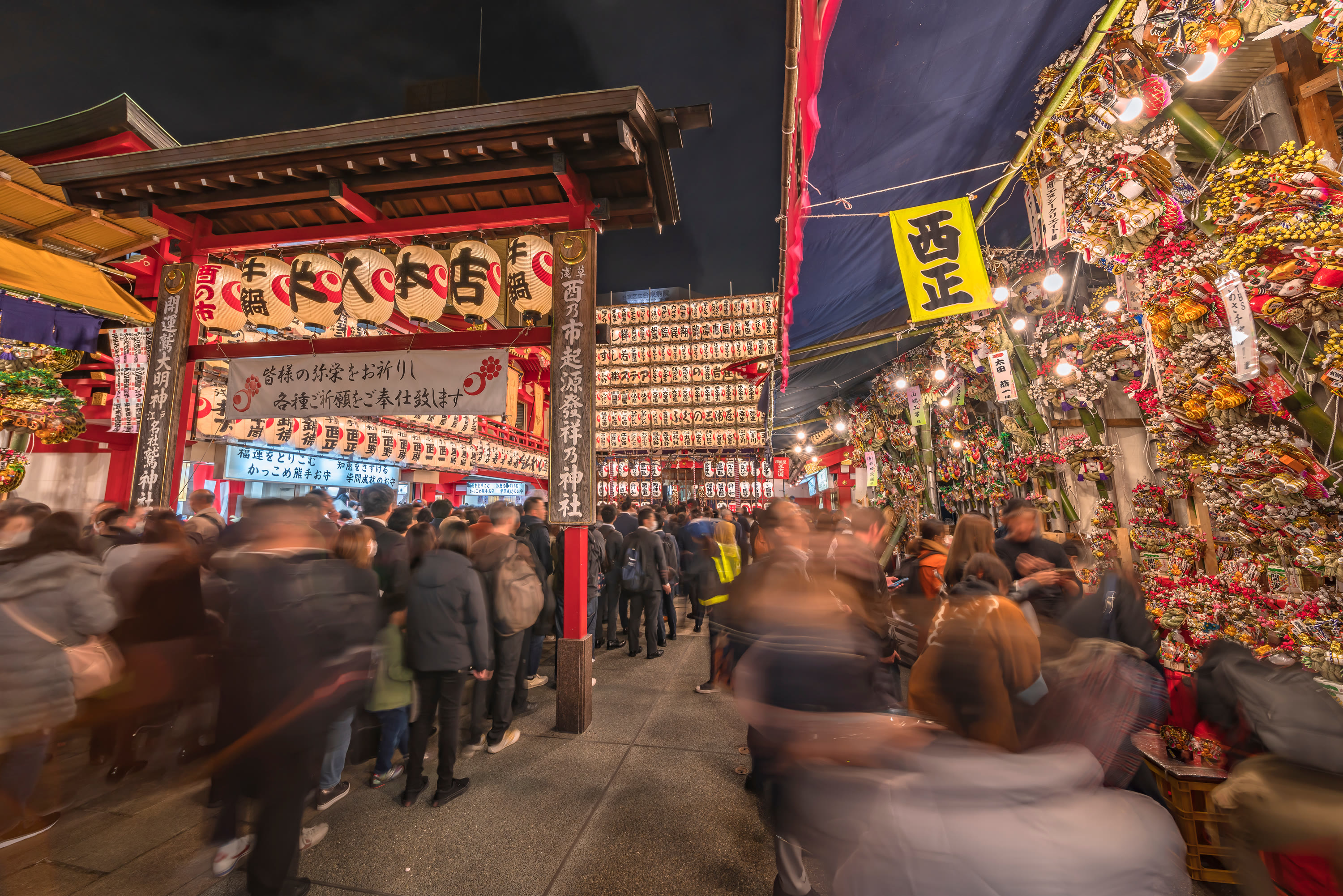
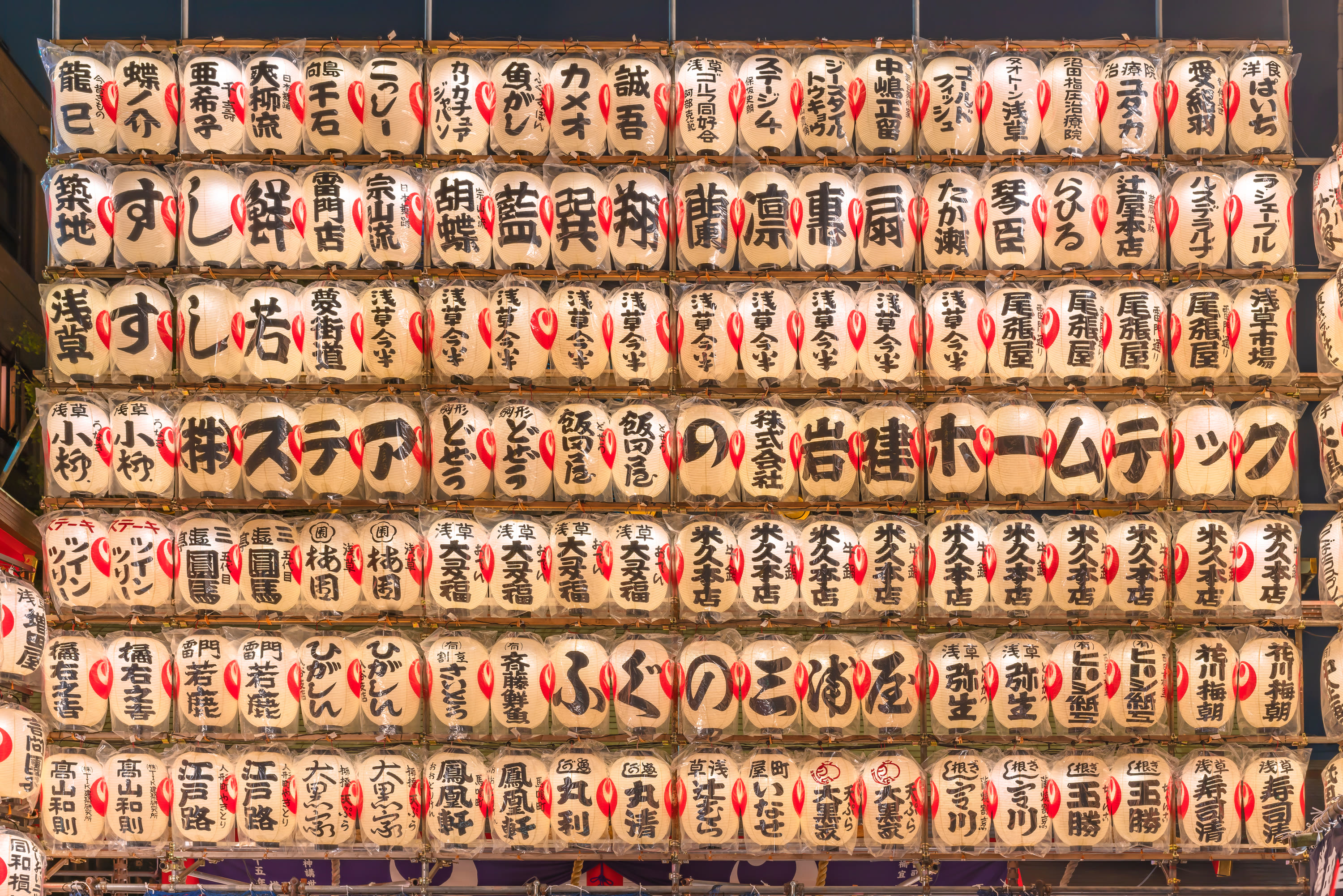
Midnight in Senzoku, a few streets north of the Asakusa you know. A drum sounds at the gate of Otori Shrine, the paper lanterns are already glowing, and somewhere behind the crowd a rake seller shouts a price, a customer shouts back, and three sharp rounds of hand-claps seal the deal.
That is the first minute of Tori no Ichi, and in 2026 it starts at 0:00 on Saturday, November 7. If you are in Tokyo that month, this is the night market where Edo-era business luck is still bought, haggled over and carried home on the train.
When is Tori no Ichi 2026?
Tori no Ichi follows the "rooster days" of the old 12-day zodiac cycle, so the dates move every year. Otori Shrine (Washi Jinja) in Asakusa has confirmed two days for 2026, and says this year ends with the second rooster day.1
| Day | Date | Hours at Otori Shrine |
|---|---|---|
| Ichi no Tori (1st) | Sat, Nov 7, 2026 | 0:00–24:00 |
| Ni no Tori (2nd) | Thu, Nov 19, 2026 | 0:00–24:00 |
The night before each one, the shrine holds an eve ceremony at 11:15 p.m. (Nov 6 and Nov 18), and the fair itself opens with the first drum at midnight.1 The shrine also notes that the blessing is the same whichever rooster day you visit, so pick the one that fits your trip.2
Why a bamboo rake?
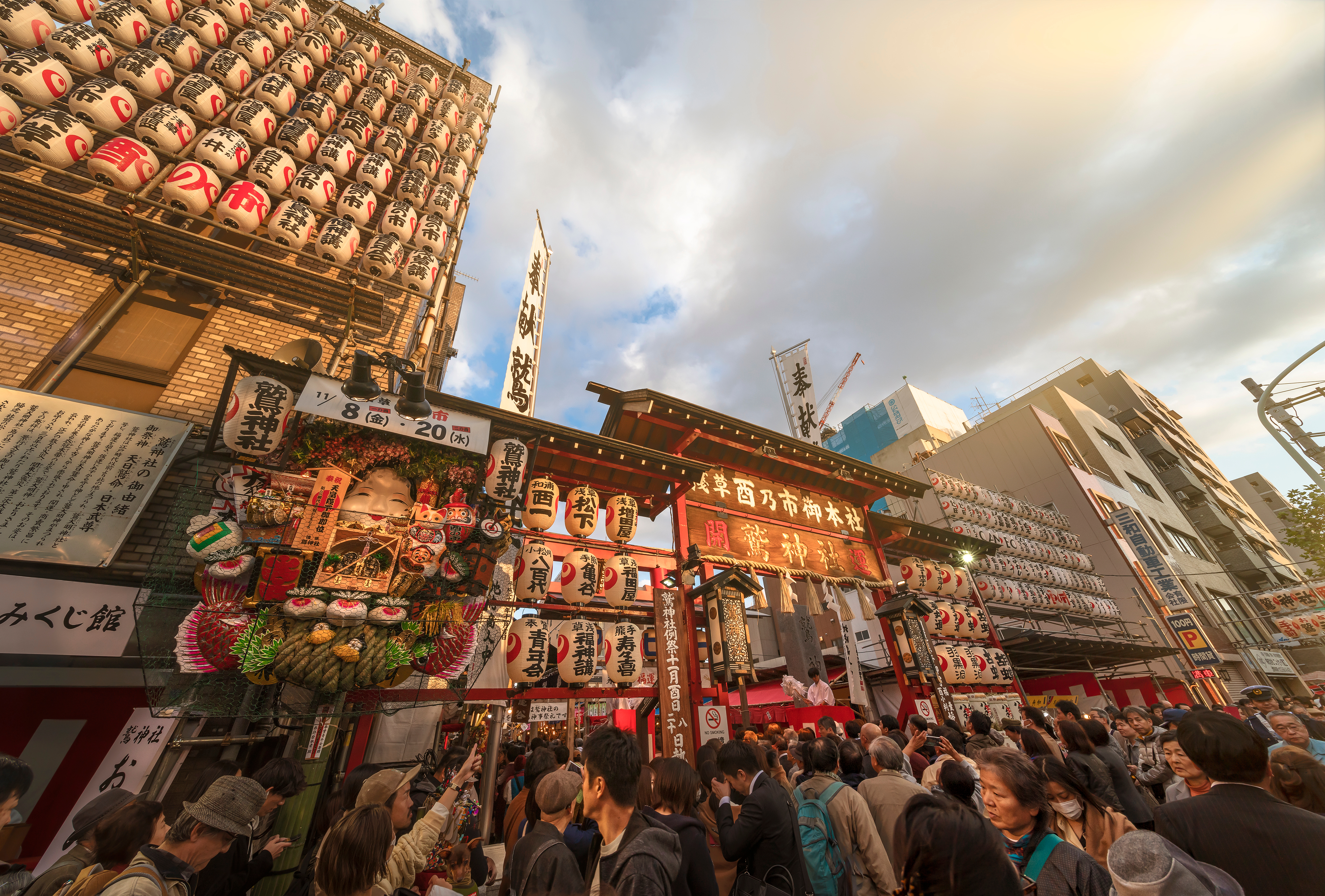
The shrine's own story starts with a warrior. According to Otori Shrine, Yamato Takeru stopped here to pray before an eastern campaign, and on the way home he hung a kumade, a rake used as war gear, on the pine tree in front of the shrine to celebrate. That thank-you visit fell on a rooster day in November, and it became the shrine's festival day.2
Over time the rake became a symbol of "raking in" luck. Today about 150 kumade stalls fill the grounds, around 750 food and goods stalls spill into the streets, and the shrine says 700,000 to 800,000 people come each year, which it calls the largest Tori no Ichi in Japan.2 Business owners still come for the shop's rake, but the shrine points out that people now buy them for family safety, health, love and plain good luck too.2
How do you buy a kumade?
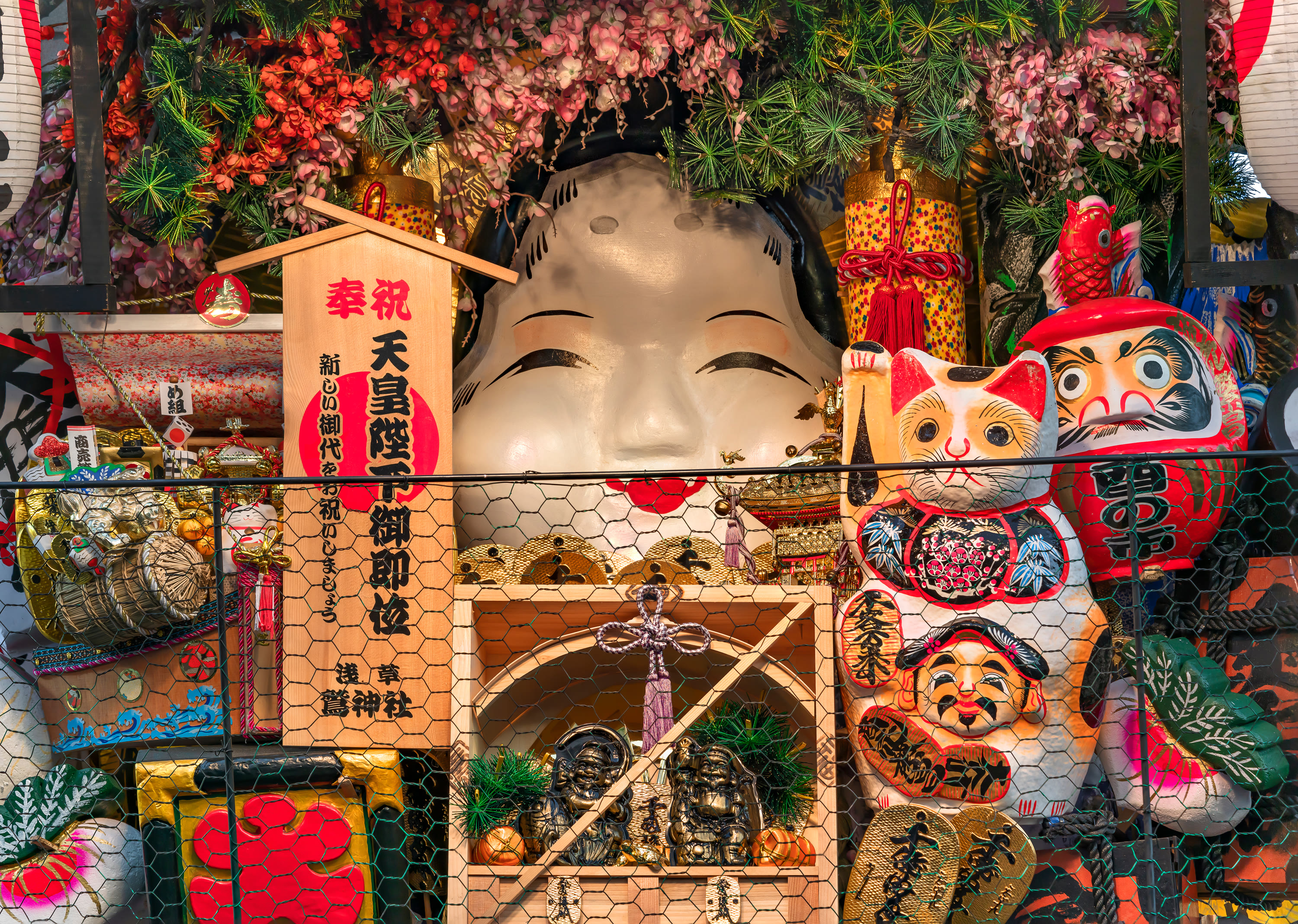
Prices start around 1,000 yen for small rakes and climb to hundreds of thousands of yen for the giants; the shrine's own guide says the popular range seems to be roughly 20,000 to 50,000 yen.2 The custom is to start small and buy a slightly bigger rake as your business or household grows.2
Here is the part most guides skip. The shrine describes buying a rake as a negotiation you are meant to enjoy. In the old days, the "cool" way was to haggle the price down, then leave the amount you saved as a tip (goshugi) for the stall. You end up paying the asking price, the buyer feels generous, the seller feels lucky, and the deal is sealed with tejime, the rhythmic hand-clap.2 If you only want to watch, stand back from the stall front and listen for the shout that comes before the clapping.
[Two kumade merchants clapping hands in a tejime with customers in front of a stall hung with rakes] Two other old lucky foods are still sold. Yatsugashira, a knobbly taro, stands for rising "to the head" of others and for many children, because one tuber sends up many shoots; the shrine says only one stall in the grounds still sells it. Kirizansho, a sweet rice cake flavored with Japanese pepper, is another Tori no Ichi souvenir.2
Which part of Okame should you rub?
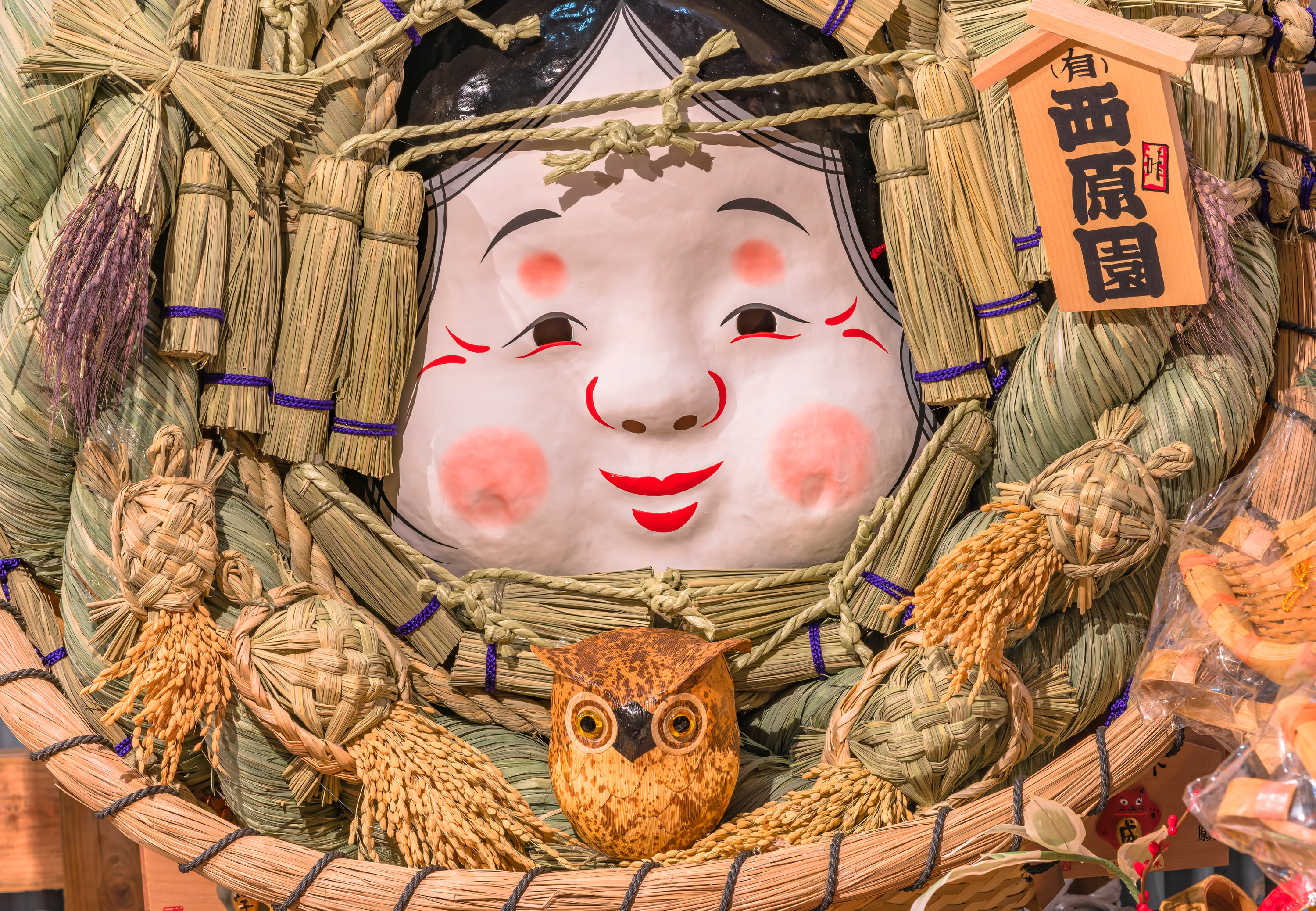
Look near the shrine office during the fair and you will find "Nade-Okame," a smiling round face that people rub for luck. Each part of the face has its own meaning, according to the shrine:2
- Forehead: wisdom
- Eyes: foresight
- Nose: money luck (the most rubbed, since this is a business shrine)
- Right cheek as you face her: love
- Left cheek: health
- Mouth: protection from trouble
- Chin, stroked clockwise: things settle smoothly
The shrine links Okame to Ame-no-Uzume, the goddess whose dance helped draw the sun goddess out of her cave, and Okame faces have decorated lucky rakes since the Edo period.2
Is a third rooster day bad luck?
Some years have three rooster days in November, and an old saying warns that "years with San no Tori have many fires." The shrine admits nobody knows the exact origin, but it shares a few theories: a seasonal reminder to be careful with fire in the dry cold, or a story wives spread to keep husbands from slipping off to the nearby Yoshiwara pleasure quarter at night. The shrine also connects it to the memory of the Great Meireki Fire of 1657, which followed a winter with a third rooster day.2
2026 only has two, so you can file this one under stories to tell on the walk home.
How do you get there from Asakusa?
The most common mistake is heading to Senso-ji. Otori Shrine is in Senzoku 3-chome, Taito City, north of central Asakusa.1 The shrine's own access times are:3
- Iriya Station (Hibiya Line), North Exit 3: about 7 minutes on foot
- Asakusa Station (Tsukuba Express): about 8 minutes
- Tawaramachi Station (Ginza Line): about 15 minutes
- Asakusa Station (Tobu, Asakusa Line, Ginza Line): about 15 minutes
- Uguisudani Station (JR), South Exit: about 20 minutes
Use public transport; the streets around the shrine fill with stalls. Before you go, check the crowd outlook for central Asakusa so you can do Senso-ji at a calmer hour and walk north to the fair later.
Is there a Tori no Ichi in Shinjuku?
Yes. Hanazono Shrine in Shinjuku also holds a Tori no Ichi in November; check the shrine's own notice for this year's dates and stall hours before you go. It is an easy add-on if you are already staying near Shinjuku, but if you want the shrine stories in this post, Asakusa's Otori Shrine is the place they come from.
Keep planning your November in Japan
Information was checked on October 16, 2026, against Otori Shrine's official pages. Times can change, so check the shrine sites again before you go.
Will your Tokyo trip land on Saturday, November 7 or Thursday, November 19, and would you go at midnight for the first drum or in the afternoon?
Notes
Drafted with AI assistance, fact-checked against official sources and approved by an IKOKA editor.
Sources
Facts in this article were checked against these official sources.
Photo credits
Comments
Anyone can comment with just a nickname. Comments with links or contact details are published after review.
Loading comments…