Daruma Doll Meaning: Why One Eye Is Blank, and Takasaki's 200-Year Story
 Written by Mei · IKOKA Japan
Daruma doll meaning explained: the Takasaki temple where lucky daruma began, why they are red, what the cranes and turtles mean, and which eye to paint.

You pick up a round red doll at a Japanese temple shop, turn it over in your hands, and notice it has no pupils at all. That is on purpose: many shops sell daruma with blank eyes, and the idea is to paint one in while you make a wish. That blank eye is the heart of the daruma doll meaning, and the story behind it starts with a volcano and a hungry village.
A cheap, cheerful lucky charm, the daruma carries two centuries of local history. Here is what the face, the color and the eyes actually mean, and where in Japan the tradition began.
Daruma doll meaning: a monk, a famine and a wooden mold

The daruma is modeled on Bodhidharma (Daruma Daishi), the founder of Zen Buddhism. The lucky "engi daruma" most people buy today traces back to Shorinzan Darumaji, a Zen temple in Takasaki, Gunma.
According to the temple, about 200 years ago, in the third year of the Tenmei era, Mount Asama erupted and a run of disasters led to a great famine. To help struggling farmers nearby, the temple's ninth head priest, Togaku, carved a wooden mold based on a single-brushstroke painting of Daruma in meditation by the temple's founder, Shinetsu, and taught Yamagata Tomogoro of Toyooka village how to make papier-mache daruma. The dolls were sold as lucky charms at the temple's New Year Nanakusa festival, and that is how the engi daruma began.
Takasaki City describes the same beginning from the village side: daruma making in Takasaki is said to have started a little over 210 years ago with Yamagata Tomogoro, made in the farming off-season from autumn to spring.
Daruma doll color meaning: why red

Takasaki City links the daruma's spread to outbreaks of smallpox in Edo. People feared the disease and often made wishes for protection, and because red things were believed to drive away evil, red-painted daruma were sought as charms against smallpox and were said to be placed by children's pillows during outbreaks.
There is also a very practical twist. In Takasaki, early production was small partly because paint materials were hard to get. After the port of Yokohama opened in 1859, an imported red pigment called scarlet became available and daruma production took off. By around 1909 there were 18 daruma-making households, and today 72 craftspeople carry on the tradition.
Reading a daruma's face: cranes, turtles and gold letters
The Takasaki daruma has a face you can read once you know the code:
| Part | What it shows | Meaning |
|---|---|---|
| Eyebrows | Two cranes facing each other | A lucky animal |
| Nose to mustache | Two turtles facing each other | A lucky animal |
| Shoulders | Gold characters for wishes such as business success or family safety | The wish you are buying it for |
| Belly | 福入 (fuku-iri), "fortune comes in" | Luck flowing into the home |
The crane and turtle are two traditional symbols of good fortune in Japan, which is why the doll is also called "engi daruma" or "fuku daruma". Takasaki City calls itself Japan's top daruma-producing area, and Gunma named the Takasaki daruma a traditional craft of the prefecture in 1993.
Daruma eyes meaning: which eye to paint first

This is the part visitors love. Both the temple and the city describe the same ritual:
- Sit facing the daruma and calm your mind.
- While making your wish, paint in the eye that is on your right as you face the doll (the doll's left eye).
- When a year has passed safely, or when your wish comes true, paint the other eye in thanks.
At Shorinzan Darumaji, a priest can first place a small dot in one eye to "open" it with a prayer (kaigen); you then paint the eye in fully at home, starting from that dot.
Want to try the eye ritual at home?
Amazon · Ad
Takasaki Daruma Doll, Red
A red daruma from Takasaki: paint one eye when you set a goal, the other when it comes true.
Check price on AmazonWhere to see it: Shorinzan Darumaji and the January daruma market

The best day to feel all of this at once is the Nanakusa Taisai Daruma Ichi, held at Shorinzan Darumaji every year from January 6 to 7. It starts in the evening of January 6 and runs through the night until the evening of January 7, with stalls of lucky daruma filling the temple grounds. Takasaki is about an hour from Tokyo Station by shinkansen.
On a normal day, the temple grounds have a Darumado hall displaying daruma old and new, and Senshintei, where the German architect Bruno Taut lived in the early Showa era. Admission is listed as free.
- Getting there: walk about 15 minutes from Gunma-Yawata Station, or ride the Gururin bus about 20 minutes from Takasaki Station's west exit to the Shorinzan Iriguchi stop.
- Getting back: use the same two routes in reverse, either the walk to Gunma-Yawata Station or the Gururin bus line back toward Takasaki Station.
Workshops in the city also offer daruma painting, where you draw the eyes and beard yourself.

Keep reading: Japan's lucky charms
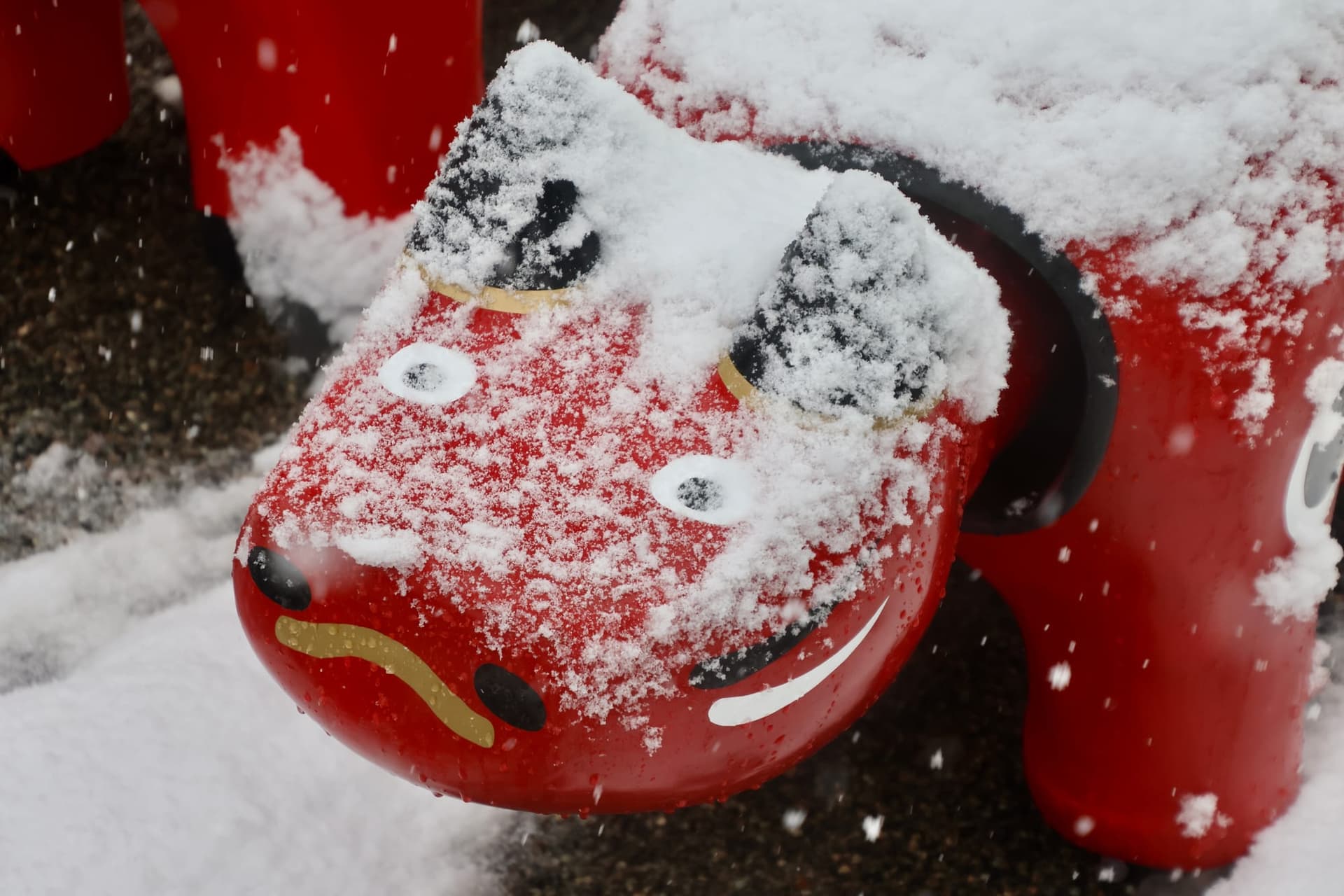
If you liked the idea of a toy that carries a town's history, Aizu's red cow is the daruma's cousin from Fukushima.
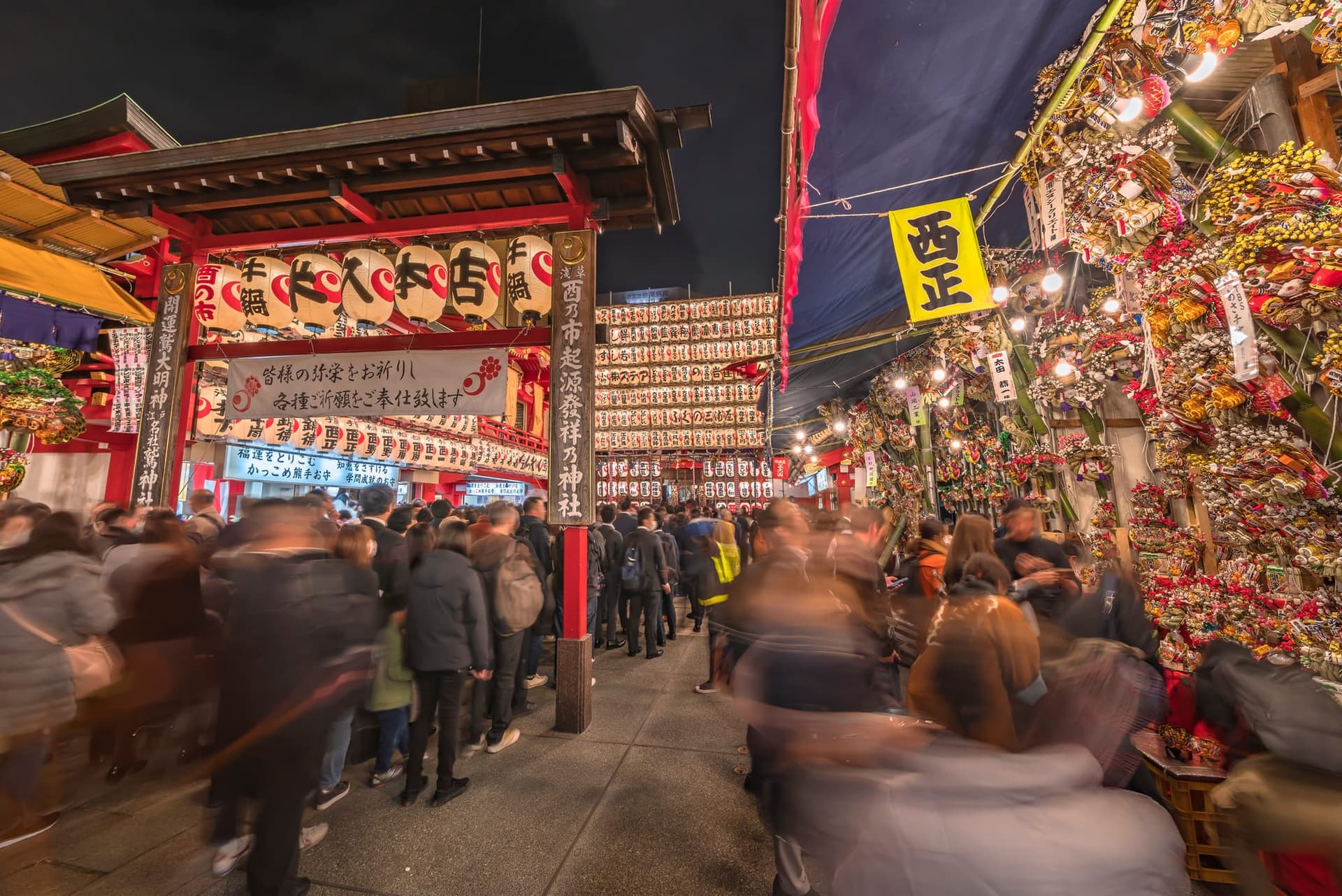
November in Tokyo has its own lucky-charm market, with bamboo rakes instead of dolls.
Planning a winter trip around festivals like the daruma market? The free calendar has every major matsuri by month.
Want to see the daruma market itself? Mark January 6 to 7, and check Shorinzan Darumaji's official site for that year's festival details before you book.
Sources
Facts in this article were checked against these official sources.
Photo credits
Comments
Anyone can comment with just a nickname. Comments with links or contact details are published after review.
Loading comments…