Akabeko Meaning and Name Origin: Aizu's 400-Year Lucky Red Cow
·
 Written by Mei · IKOKA Japan
Akabeko meaning and name origin: why Aizu's nodding toy is called the red cow, the Enzoji Temple legend, and where to paint your own akabeko in Fukushima.
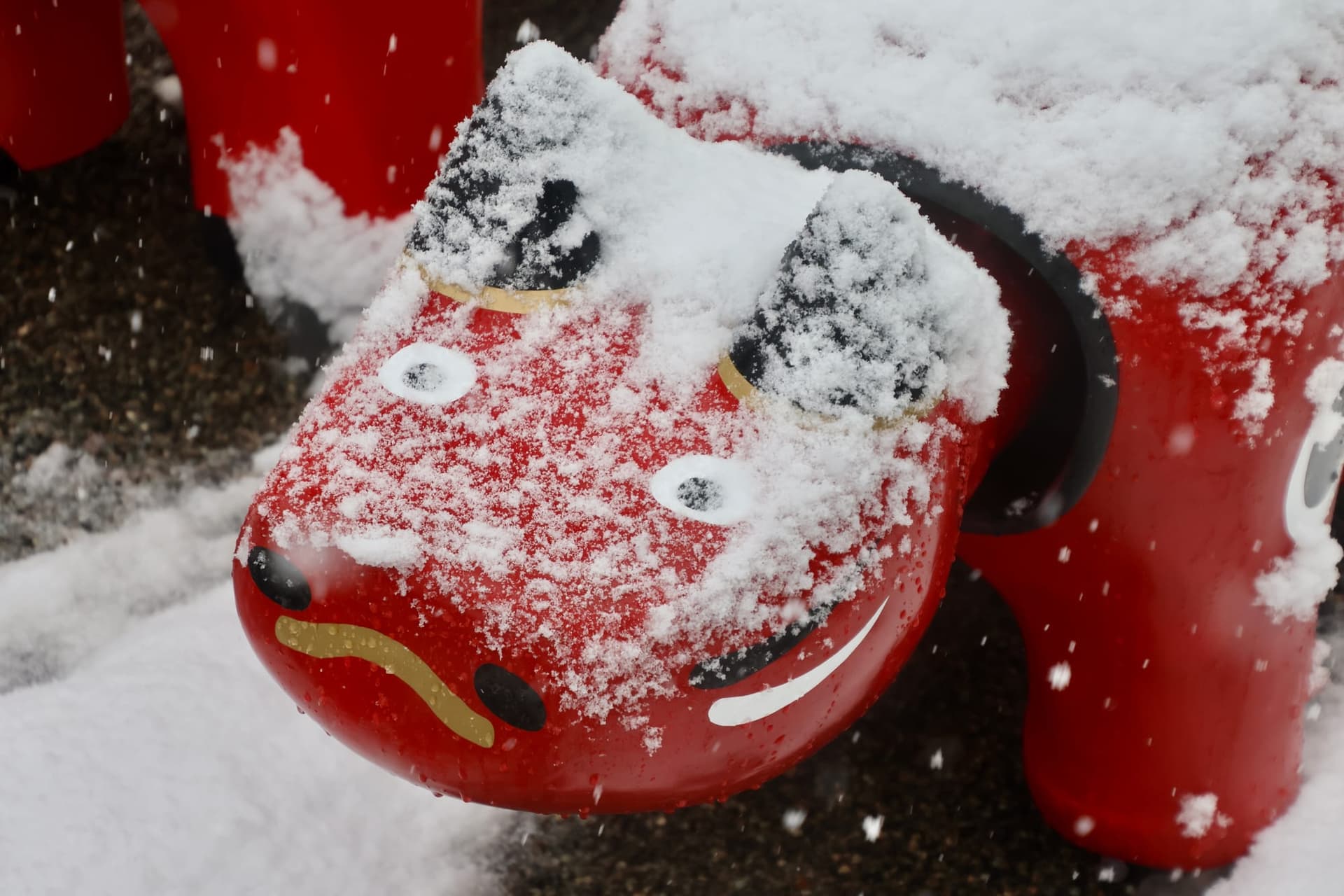
A small red cow nods at you from a souvenir shelf in Aizu-Wakamatsu, its head bobbing for a few seconds after you touch it. Most visitors buy one because it is cute, and almost nobody knows that this toy was once believed to keep children safe from smallpox. Once you know the akabeko meaning and where the name comes from, that little cow looks a bit different.
Akabeko at a glance
- Meaning: aka (red) + beko (the Tohoku word for cow) = "red cow", a nodding papier-mâché cow from Aizu in Fukushima.
- Name origin: when Enzoji Temple's main hall in Yanaizu was rebuilt, people called the red-haired cows that hauled the timber "akabeko".
- Where to see it: paint one in Aizu-Wakamatsu, then visit Yanaizu, where the temple's cow statue and five akabeko around town wait for you.
What is an akabeko? Aizu's nodding red cow
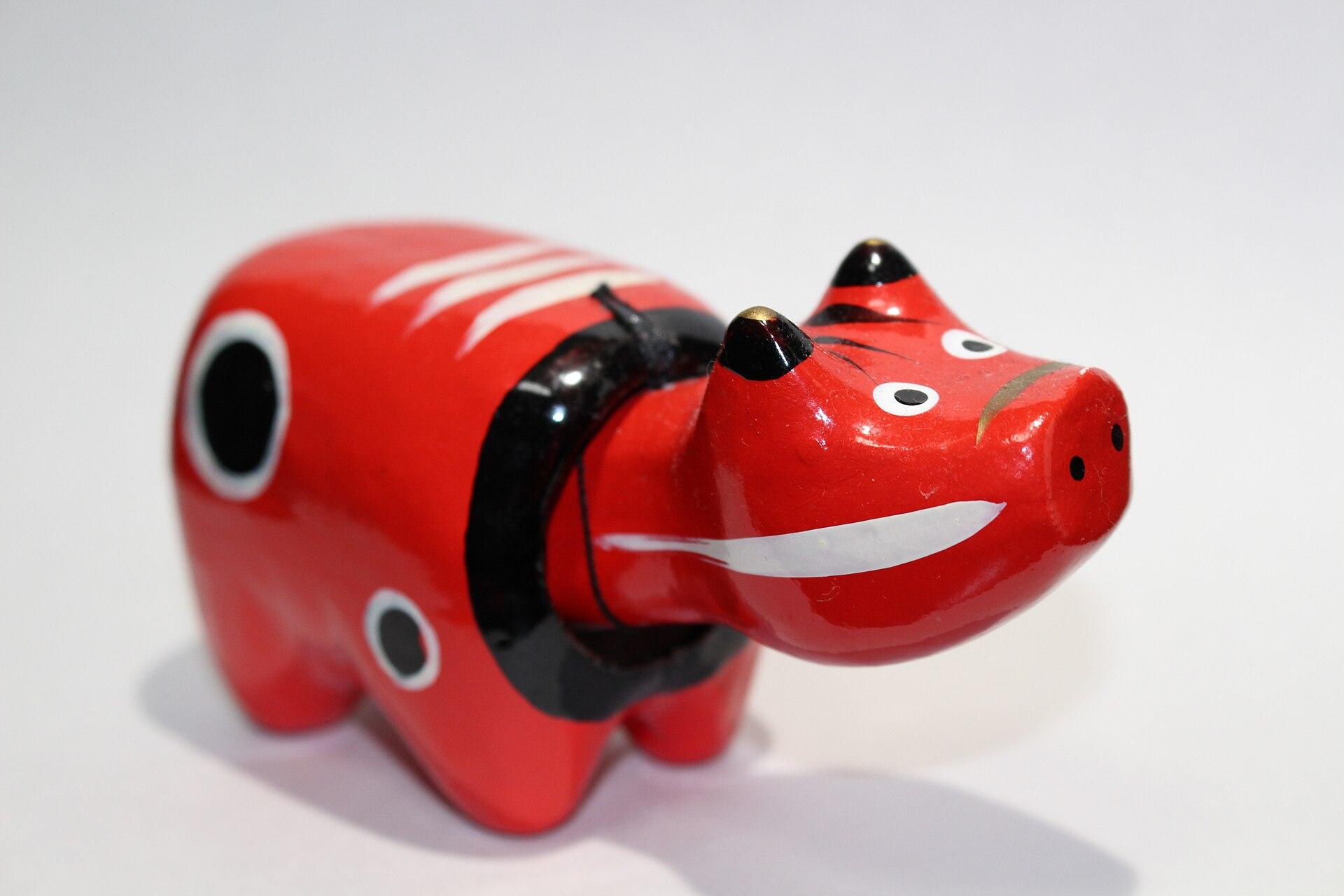
An akabeko is a small papier-mâché cow with an elongated neck that fits into a hole in the body, which is why the head moves up and down. According to Japan's tourism agency, akabeko were made as playthings and good-luck charms for children more than 400 years ago, and today they are a symbol of Aizu-Wakamatsu.
Akabeko name origin: why is it called the "red cow"?
The name is as plain as it sounds. Beko is the word for a cow in the Tohoku region, so akabeko simply means "red cow".
So why red? In the Yanaizu legend, the cows that appeared and helped rebuild Enzoji's main hall had red hair, and people called them akabeko. Fukushima's official tourism guide explains that in the past, the word "red" was also used for the color brown. Japan's tourism agency likewise notes that the legend's red cow was probably what we would now call a brown one. Red has long been the color of good fortune and protection in Japan, so the name fit the lucky meaning well.
The akabeko legend of Enzoji Temple
There are several theories about where the akabeko came from, but the best known starts at Enzoji Temple in the Aizu region. Enzoji was founded in 807 by the monk Tokuitsu. According to Japan's tourism agency, people used cattle to carry heavy materials when building the temple around 807, and one day a mysterious "red" cow appeared and led the other animals until the work was finished.

Yanaizu Town, where Enzoji stands, tells a later chapter of the same legend. A great earthquake struck the Aizu region in 1611 and badly damaged the temple, and when the main hall was rebuilt on its rocky bluff in 1617, a herd of strong red-haired cows appeared and helped the struggling black cows haul the timber up. Fukushima Prefecture says the timber was donated by villages upstream and carried down the Tadami River, and the red cow vanished once the work was done. The hall rebuilt then is the Kokuzo-do, Enzoji's main hall.
To get a feel for Yanaizu, the town where the legend began, watch this three-minute scenery film from Yanaizu's official tourism channel.
In thanks, people set up a "Nade-ushi" (stroking cow) statue at the temple. Fukushima Prefecture describes this statue as the origin of the akabeko, and stroking it is said to bring good luck and help recovery from illness. Later stories grew around it too, such as families who owned an akabeko being cured of sickness after stroking the cow.
How a temple story became a lucky toy
The legend turned into a craft thanks to a samurai lord. Gamo Ujisato (1556–1595) became lord of Aizu in 1590 and was looking for new sources of income for his retainers. After hearing the akabeko story at the temple, he invited artisans to make small toys based on the red cow and started a toy-making industry in the region.
Timing helped. Around then, smallpox broke out in Japan, and it was thought that children with akabeko toys were less likely to catch it, which made the toy a popular good-luck charm.
How akabeko are made, and what the stripes mean
Akabeko are still handmade, and they are one of Aizu-Wakamatsu's best-known folk crafts. The steps are simple to describe and slow to do:
| Step | What the craftsperson does |
|---|---|
| 1 | Soaks washi paper in a mix of glue and chalk |
| 2 | Wraps it around a wooden mold to form the cow |
| 3 | Splits the dried shell in half to remove the mold |
| 4 | Rejoins the two halves with more layers of paper |
| 5 | Hangs the head and neck inside the hollow body on a string |
That last step is the whole charm: the head is not fixed, so it keeps rocking. Fukushima's tourism guide notes that the stripes painted on the face and back are said to stand for strength and perseverance. In the legend, too, the akabeko came to be loved as a cow of patience and strength that carries good fortune.
Where to paint your own akabeko in Aizu
If you want more than a shop-bought cow, Aizu has hands-on painting workshops that suit all ages and are popular with school groups and visitors. Painting akabeko is said to have started as an activity for children visiting Aizu-Wakamatsu on school trips. Most workshops give you the classic red, white and black paints.
| Workshop | Area | Note |
|---|---|---|
| Tsurugajo Kaikan | Aizu-Wakamatsu | Next to Tsurugajo Castle, online booking page |
| Aizu Hanko Nisshinkan | Aizu-Wakamatsu | The former samurai school |
| Bansho | Aizu-Wakamatsu | Workshop in the city |
| Hot in Yanaizu | Yanaizu | In the town of Enzoji, home of the legend |
| Michi-no-Eki Aizu Yanaizu | Yanaizu | Hands-on classes incl. akabeko painting |
Check the places and booking on Fukushima's official akabeko painting page.

If you would rather not paint, ready-made akabeko are sold at most souvenir shops in the city. They are light, which makes them an easy gift to pack.
Plan an akabeko day in Aizu
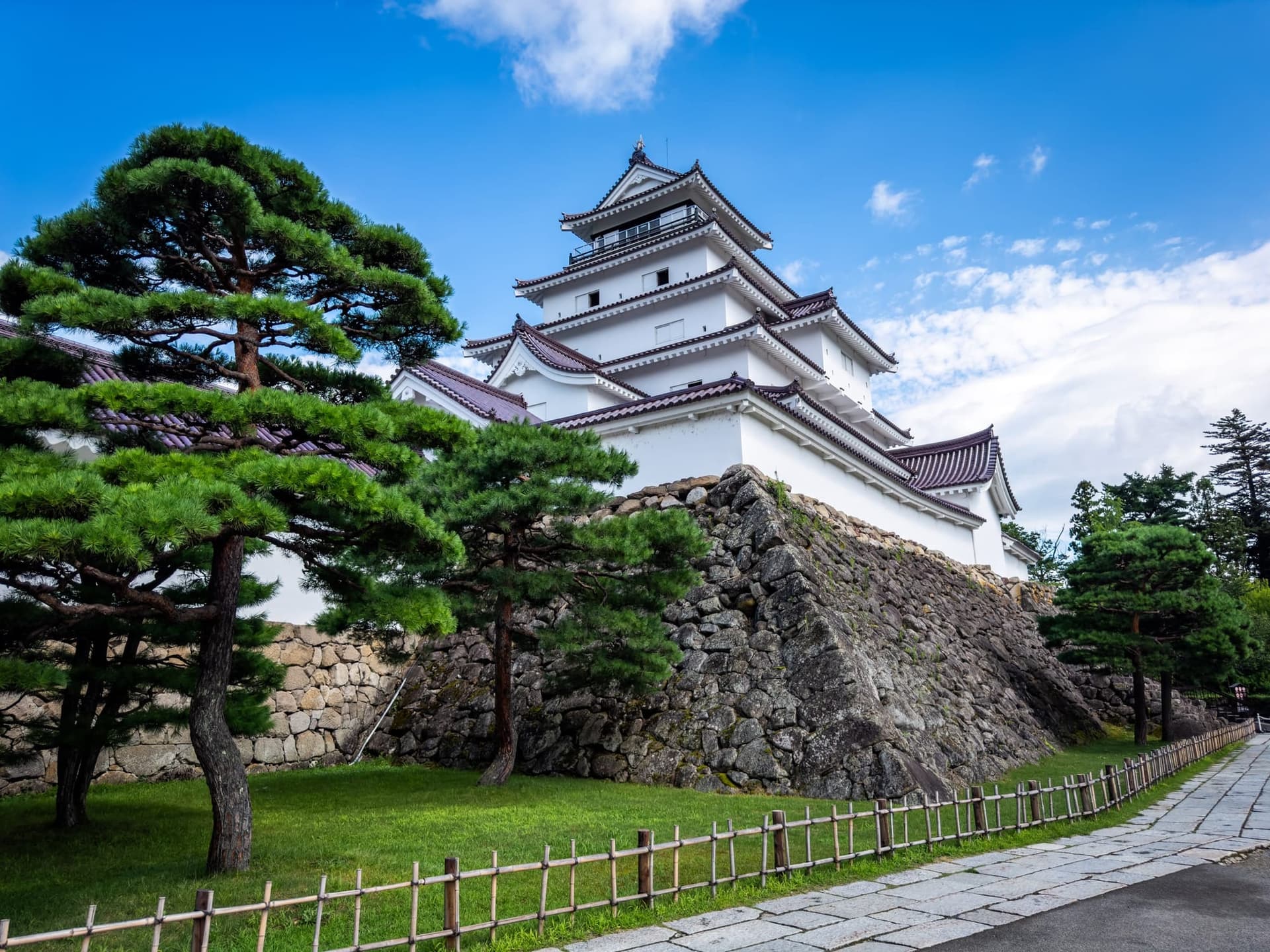
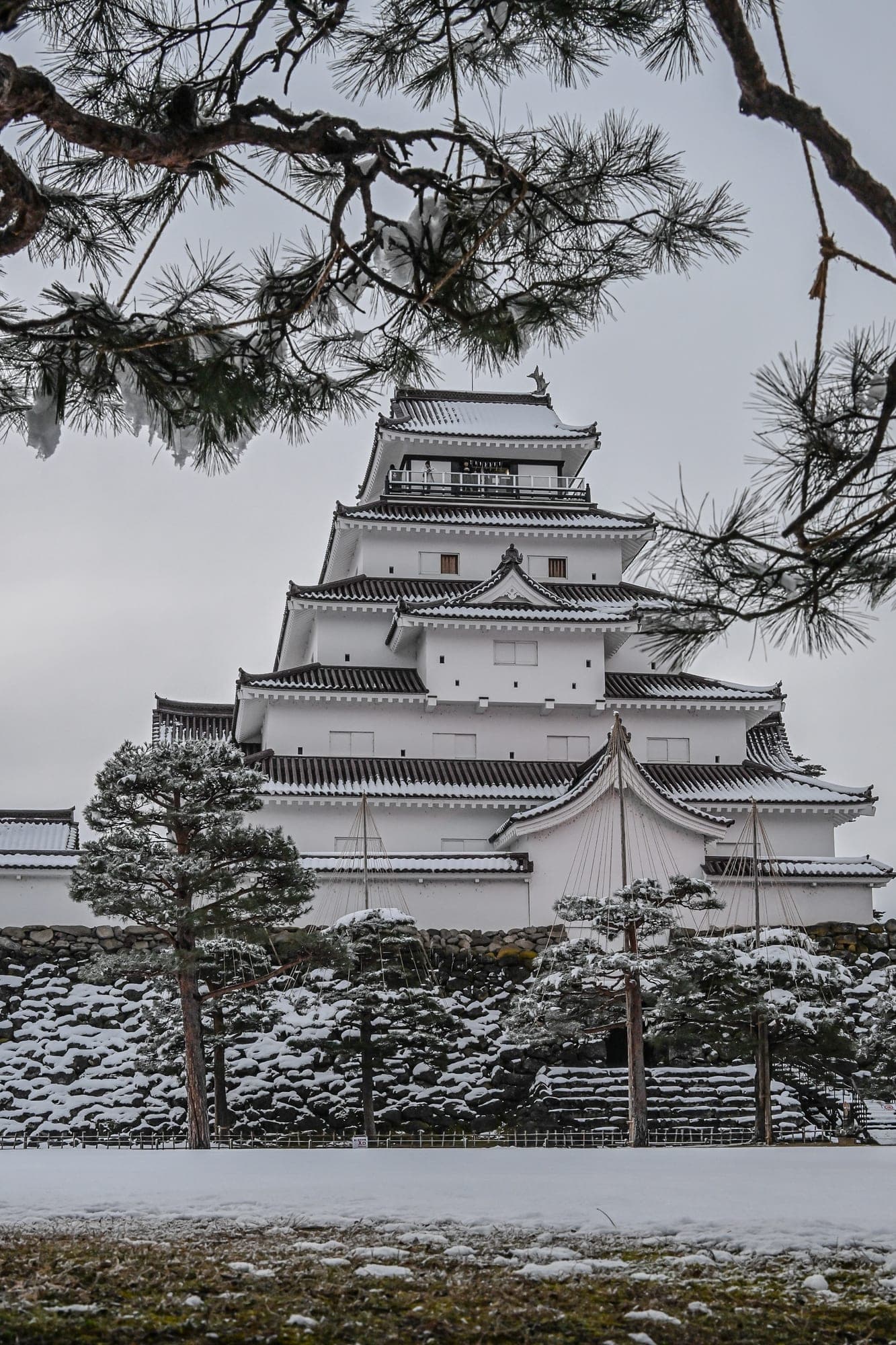
A simple way to see the whole story is to split it across two places. Spend the morning in Aizu-Wakamatsu around Tsurugajo Castle, the castle town Gamo Ujisato ruled, then paint a cow at a workshop nearby. If you have more time, go to Yanaizu to see Enzoji Temple, where the legend began. Enzoji is about a 10-minute walk from Aizu-Yanaizu Station.
In Yanaizu, keep an eye out on your walk. The town has placed an akabeko family around its roadside station and streets: father Fukutaro, mother Mitsuko, and the children Mo-kun, Ai-chan and Yanagimaru. Fukushima Prefecture also lists a walking course of about 6.7 km (about 2 hours) along the Tadami River to find all five. In autumn, Zuikoji Park across the river gives a full view of Enzoji's fall colors.

Information rechecked on November 11, 2026.
Before you go, check the cost of your souvenirs with our yen converter.
Recommended next reads
If you like the stories behind Japanese lucky charms, these pick up the same thread:


If you brought one akabeko home, would you keep the classic red or paint your own in a new color?
Sources
Facts in this article were checked against these official sources.
Photo credits
Photo: IKOKA · shutterstock shutterstock-unlimited
Comments
Anyone can comment with just a nickname. Comments with links or contact details are published after review.
Loading comments…