Sukajan Meaning: How the Yokosuka Souvenir Jacket Began on Dobuita Street
 Written by Mei · IKOKA Japan
Sukajan meaning: the Yokosuka jumper. How the embroidered souvenir jacket began on Dobuita Street after WWII, why it looks Japanese, and how to visit.

You spot a satin jacket with a roaring tiger stitched across the back in a Tokyo vintage shop and wonder why it looks half Japanese, half American. Here is the short answer: it is a sukajan, short for "Yokosuka jumper", a souvenir jacket that began after World War II on one street outside the naval base in Yokosuka.
In short
- Sukajan means "Yokosuka jumper": a souvenir jacket that began after World War II, and Dobuita Street calls itself its birthplace
- Lustrous fabric, embroidered with dragons, tigers or eagles
- Shops on Dobuita Street still sell them, and fans order custom designs
Sukajan meaning (スカジャン 意味): the "Yokosuka jumper"
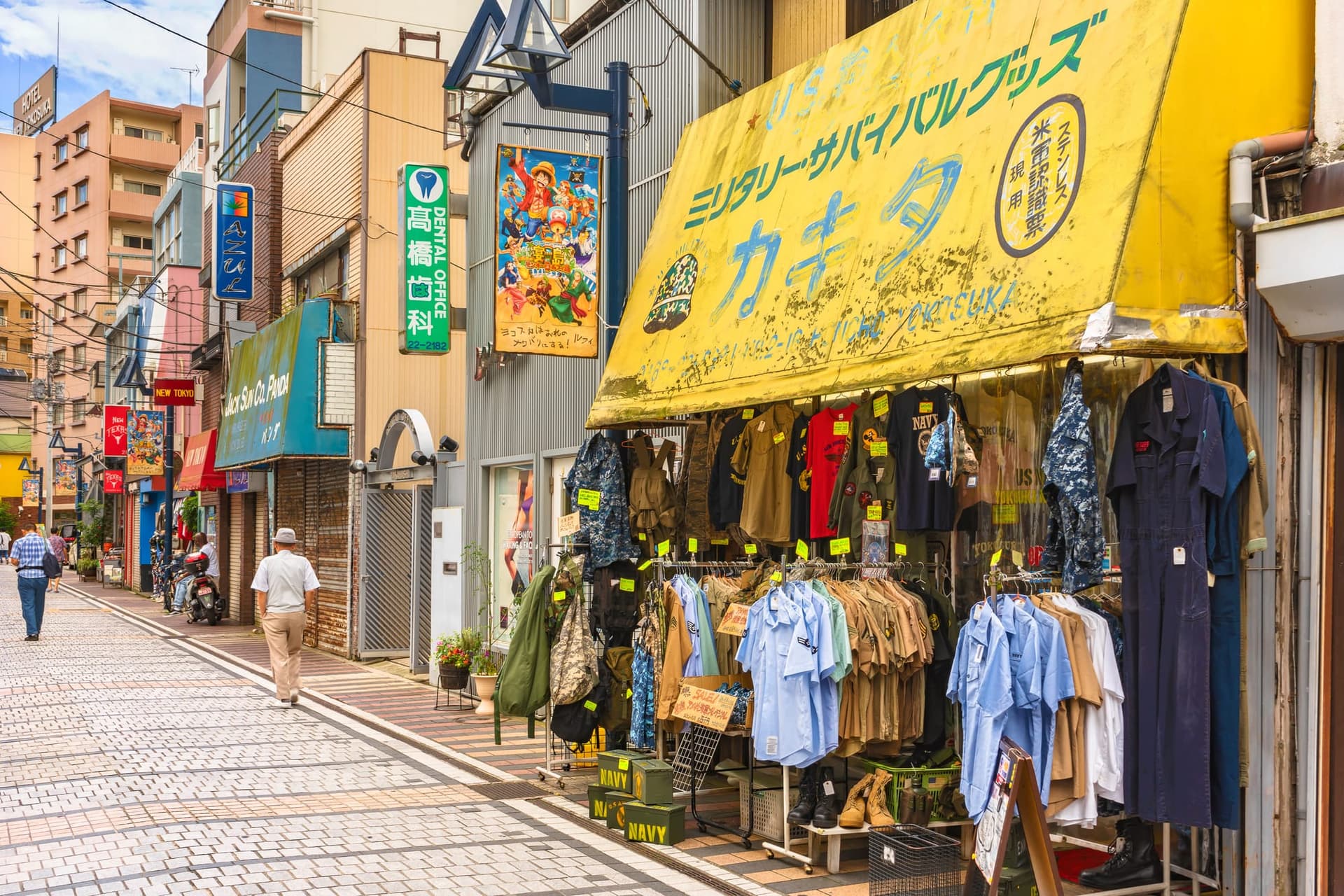
The name comes straight from the place: sukajan is short for "Yokosuka jumper". After World War II, these jackets were first made as souvenirs for American soldiers heading home. In the 1940s and 1950s, souvenir shops on Dobuita Street embroidered jackets with Japanese designs for US servicemen stationed in Yokosuka. Back when one dollar bought 360 yen, many soldiers took one home at the end of their stay.
Sukajan history: from parachute silk to embroidered jacket

It began, the story goes, with US soldiers in Yokosuka asking to have Japanese-style designs stitched onto their own jackets. Yokosuka's city history records one version almost like a scene: at Prince Shokai, a shop founded in 1947, the owner took silk parachute fabric that US soldiers had brought in, dyed it, and handed it to embroiderers hired from Kiryu in Gunma, an embroidery town. What came out was lustrous fabric with a dragon, a tiger or a hawk across the back. The shape came from American jackets, the pictures from Japanese craft, and that mix is still the whole appeal.
Dobuita Street (ドブ板通り): where the sukajan began

Dobuita Street covers the area from the US Navy's Yokosuka base to Keikyu Shioiri Station.
The name has its own story. In the Taisho era, a sewer about 1.5 m wide ran along the street under thick board lids, and that is how it came to be called Dobuita: "dobu" for the ditch, "ita" for the boards. Today military shops, foreign-run bars and hamburger shops line the street, busy with visitors who come for its overseas atmosphere. It has been known as a main place to buy sukajan for more than 70 years, and in February 2018 the shopping street declared itself the "birthplace of the sukajan".
Sukajan jacket today: from souvenir to fashion icon

The jacket did not stay a sailor's souvenir. With about 70 years of tradition behind it, the sukajan has caught attention at fashion shows in Japan and around the world. It also drew attention as an official licensed product of the Tokyo 2020 Olympics. In Honcho 3-chome, the same neighborhood as Dobuita Street, even a manhole cover wears a sukajan design. Dobuita shops still sell them, and dedicated fans visit to order their own designs.
Visiting Dobuita Street

- Getting there: 5 minutes on foot from Keikyu Shioiri Station, 10 minutes from Keikyu Yokosuka-chuo Station, or 15 minutes from JR Yokosuka Station
- Getting back: you can leave from any of the same three stations; Keikyu Shioiri is the closest at 5 minutes, and JR Yokosuka is the one to pick if you want the JR line
- Opening hours: they vary by shop, so check the official Dobuita Street site before you go
- Photo stop: look for the sukajan manhole cover in Honcho 3-chome
- Eat: try a navy burger, a simple hamburger that began as a meal for lookouts on US Navy ships
- Shop: first decide which motif you want on the back (dragon, tiger or hawk are the classics), then ask whether the shop takes custom orders, since some fans order their own designs. Check prices in the shop and convert them with the yen converter
Dragon, tiger or hawk: which one would you wear on your back?
More Japanese objects with a story
Both of these start, like the sukajan, with a local object that grew into a symbol of its town.
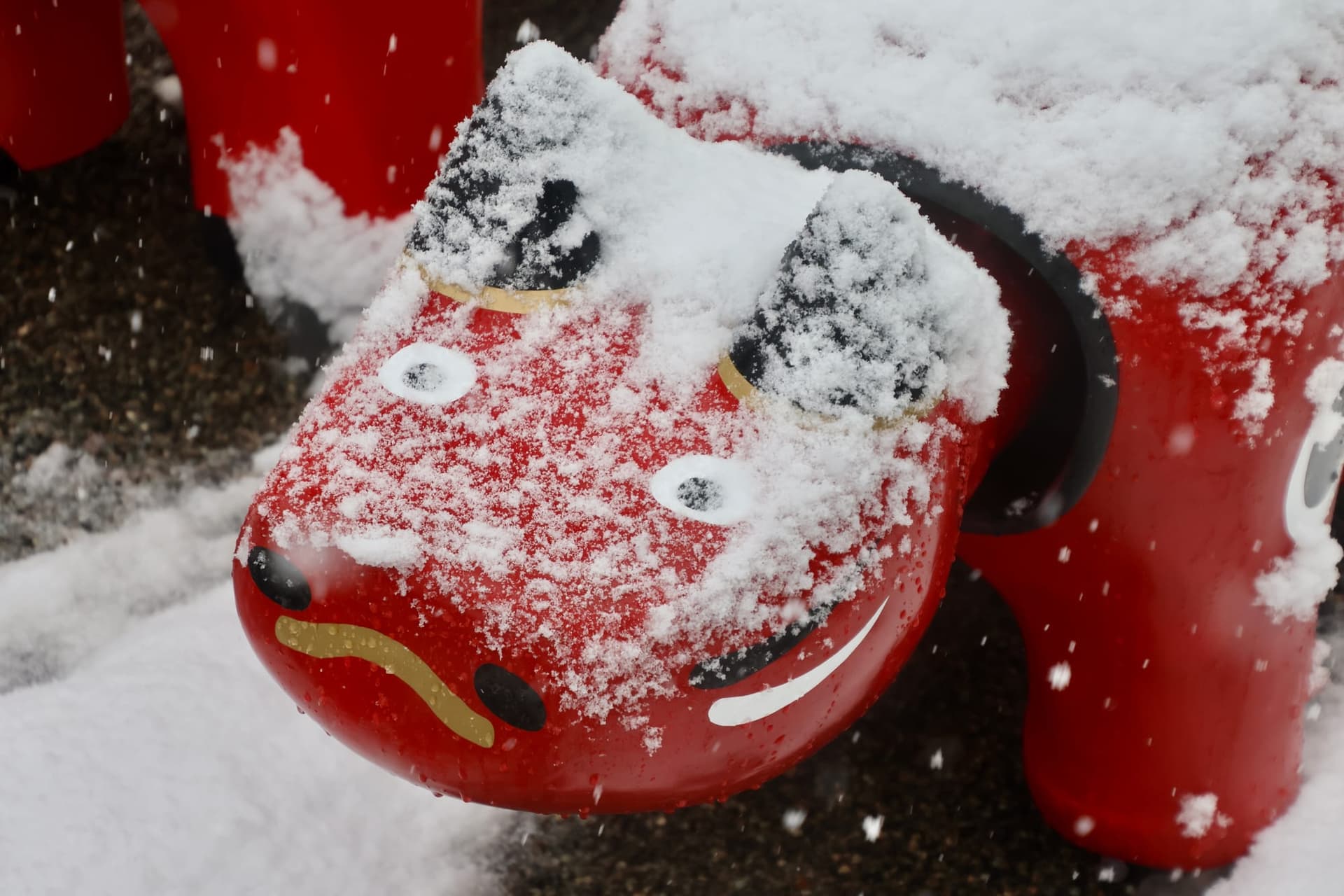
A red cow toy from Aizu that turned into a lucky charm for the whole region:
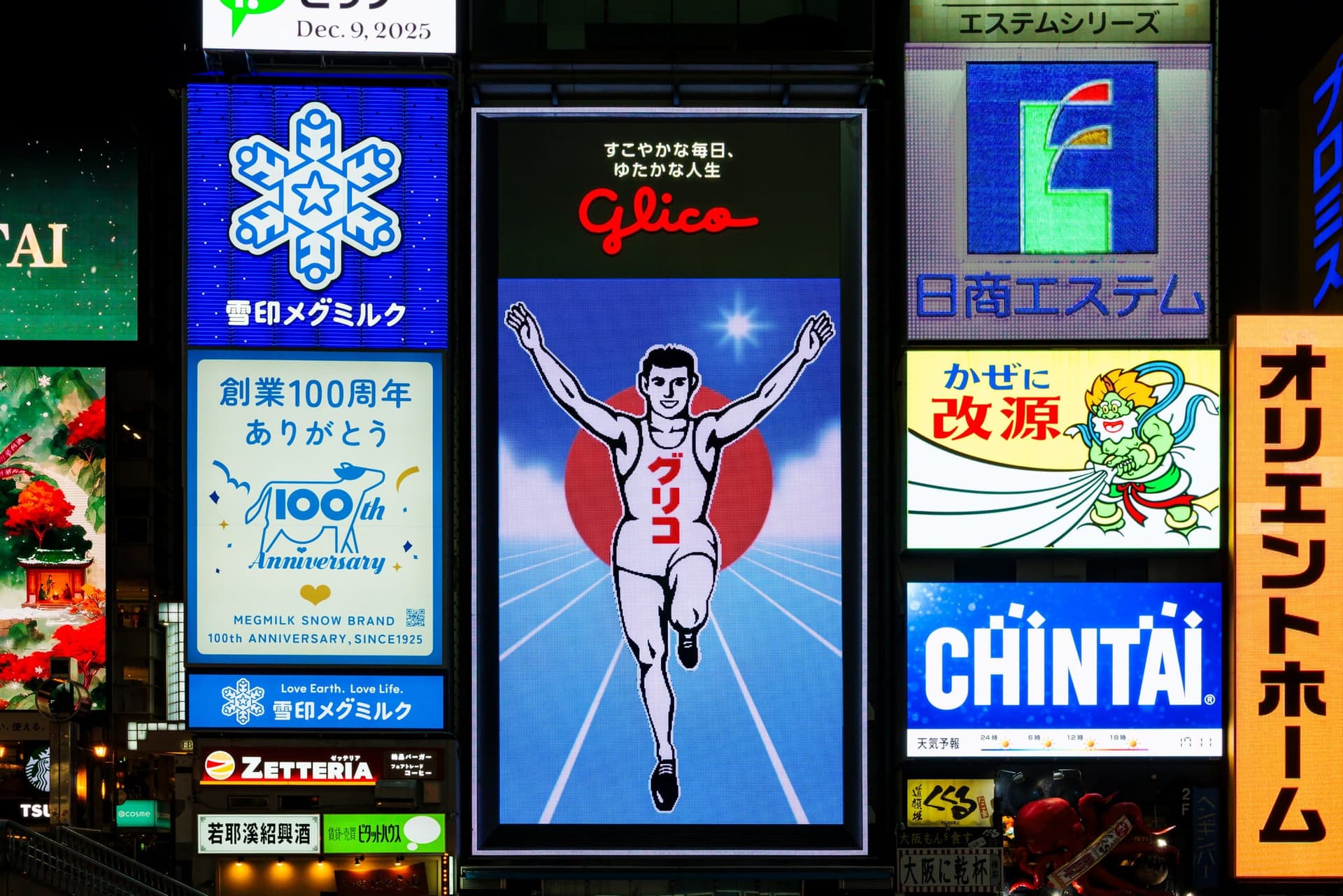
A running-man sign that became the face of Osaka's Dotonbori:
If the sukajan made you curious about how a small local thing becomes a national icon, the akabeko is a good place to go next.
Sources
Facts in this article were checked against these official sources.
Photo credits
Photo: IKOKA · shutterstock shutterstock-unlimited
Comments
Anyone can comment with just a nickname. Comments with links or contact details are published after review.
Loading comments…