Kurama Fire Festival Origin: The Torches of Yuki Shrine Explained
·
 Written by Mei · IKOKA Japan
Kurama Fire Festival origin: the night in 940 Yuki Shrine moved to Kurama, what the torches mean, the mikoshi rites, and how to see it each October 22.
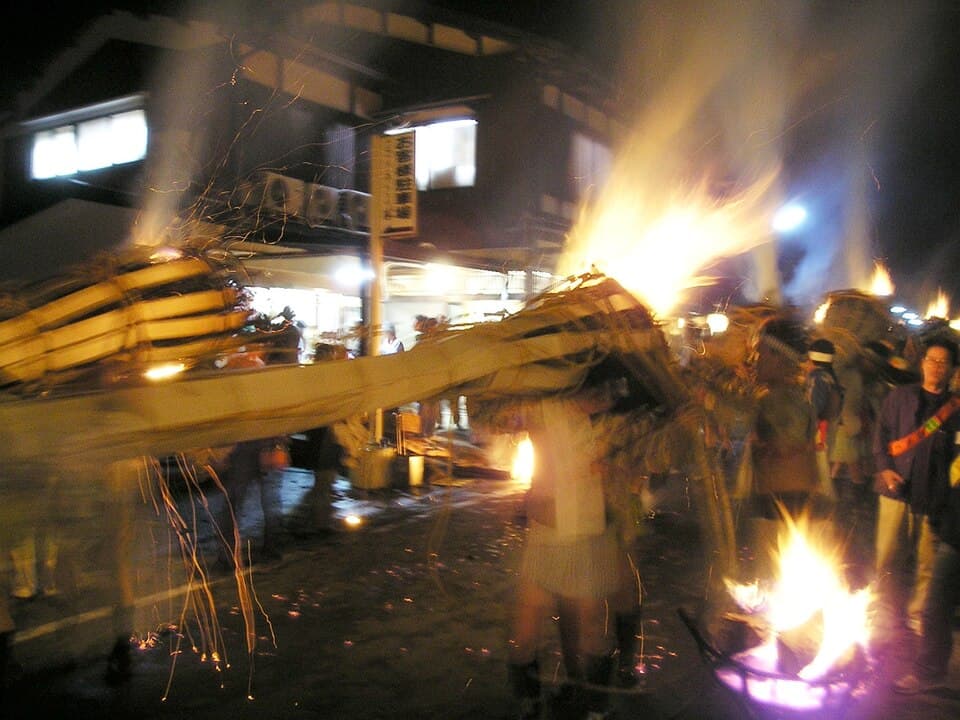
At six in the evening on October 22, a voice calls through the narrow street of Kurama, and every house lights the stacked firewood at its door. Soon the valley north of Kyoto is full of sparks, small torches carried by children, and the chant "Sai-rei, sai-ryo." Once you know the Kurama Fire Festival origin, those flames stop looking like a show.
Most guides tell you which train to catch. I wanted to know why a mountain village sets itself ablaze every year, and the answer starts with a frightened capital more than a thousand years ago.
The night of 940: a deity moves north
In the Tengyo era, Kyoto was shaken by a great earthquake and by the rebellion of Taira no Masakado. To pray for peace, Emperor Suzaku ordered that Yuki Daimyojin, a deity until then enshrined inside the Imperial Palace, be moved to Kurama, north of the capital. The transfer took place on the ninth day of the ninth month of 940.
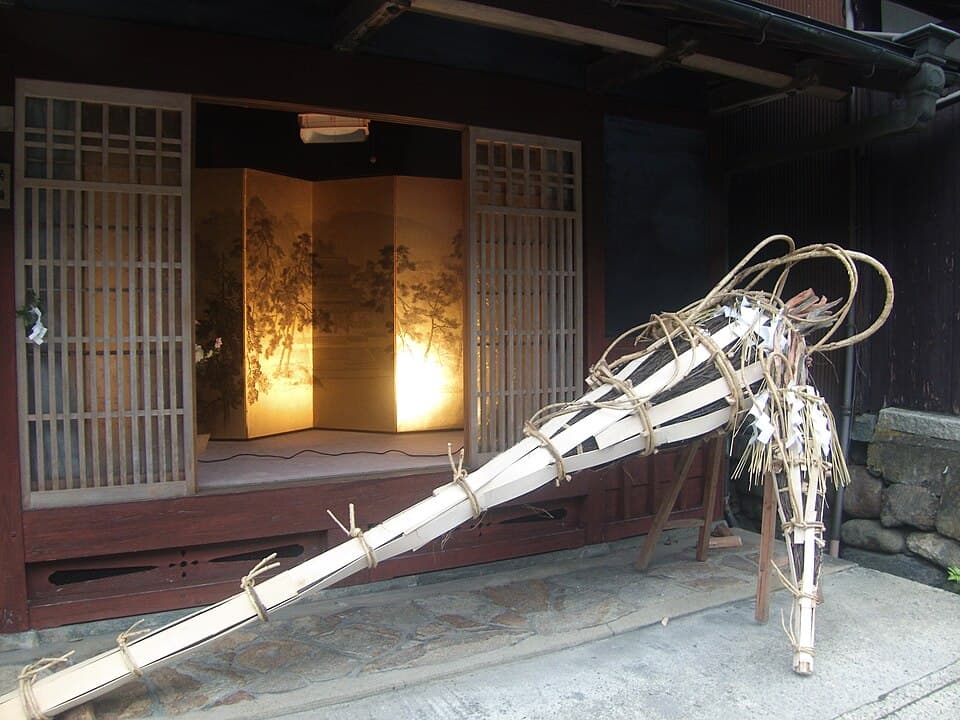
It was a state ceremony. Torches were made from reeds that grew along the Kamo River, bonfires burned along the roads, and the procession is said to have stretched about one kilometer.
The people of Kurama were so moved by that night that they kept retelling it, in fire. According to Yuki Shrine, that memory is the origin of the Kurama Fire Festival. So every torch on October 22 is a kind of re-enactment: the village lighting the road for a god that came up the valley in the dark.
What the torches mean
The fire is not decoration; it is the welcome itself. Today more than 250 pine torches, some weighing up to about 80 kg, are carried up the street toward the shrine together with the mikoshi.
The festival also builds up in a clear order. After the evening signal, the bonfires called eji are lit at every house. Small children walk first with little torches, and as the night grows, young men join with huge burning ones, calling out "Sai-rei, sai-ryo" as they move between the gathering houses. Watching it as a story helps: the fire grows the way a village wakes up, house by house, age by age.
Because the shrine has kept this rite of fire for so long, Yuki Shrine is also worshipped as a protector against fire. I love that contrast: a festival of flames that ends up guarding homes from them.
From fire to mikoshi: the rites most visitors miss
The peak comes in front of the stone steps below Kurama-dera's Sanmon gate, where young men crowd with their great torches. At a drum signal, a sacred shimenawa rope stretched on green bamboo is cut, and the festival turns from a festival of torches into a festival of mikoshi.
Then three details make Kurama unlike any other matsuri:
- Warriors ride the mikoshi. A man in armor sits on top of the portable shrine, which is unusual in itself.
- Women pull the ropes. Ropes are tied to the back of the mikoshi so it does not rush down slopes and steps, and young women of the town pull them. Pulling the rope is said to bring an easy childbirth.
- The Choppen rite. As the mikoshi goes down the steps, two young men hang upside down from its carrying poles with arms and legs spread. The shrine says this is a remnant of Kurama's old coming-of-age ceremony.
Late at night, kagura is offered at the otabisho, the temporary shrine, and four large torches circle the grounds. On the morning of October 23, the two mikoshi return to the main shrine.
Yuki Shrine today: a cedar, a split hall and a lion holding a child
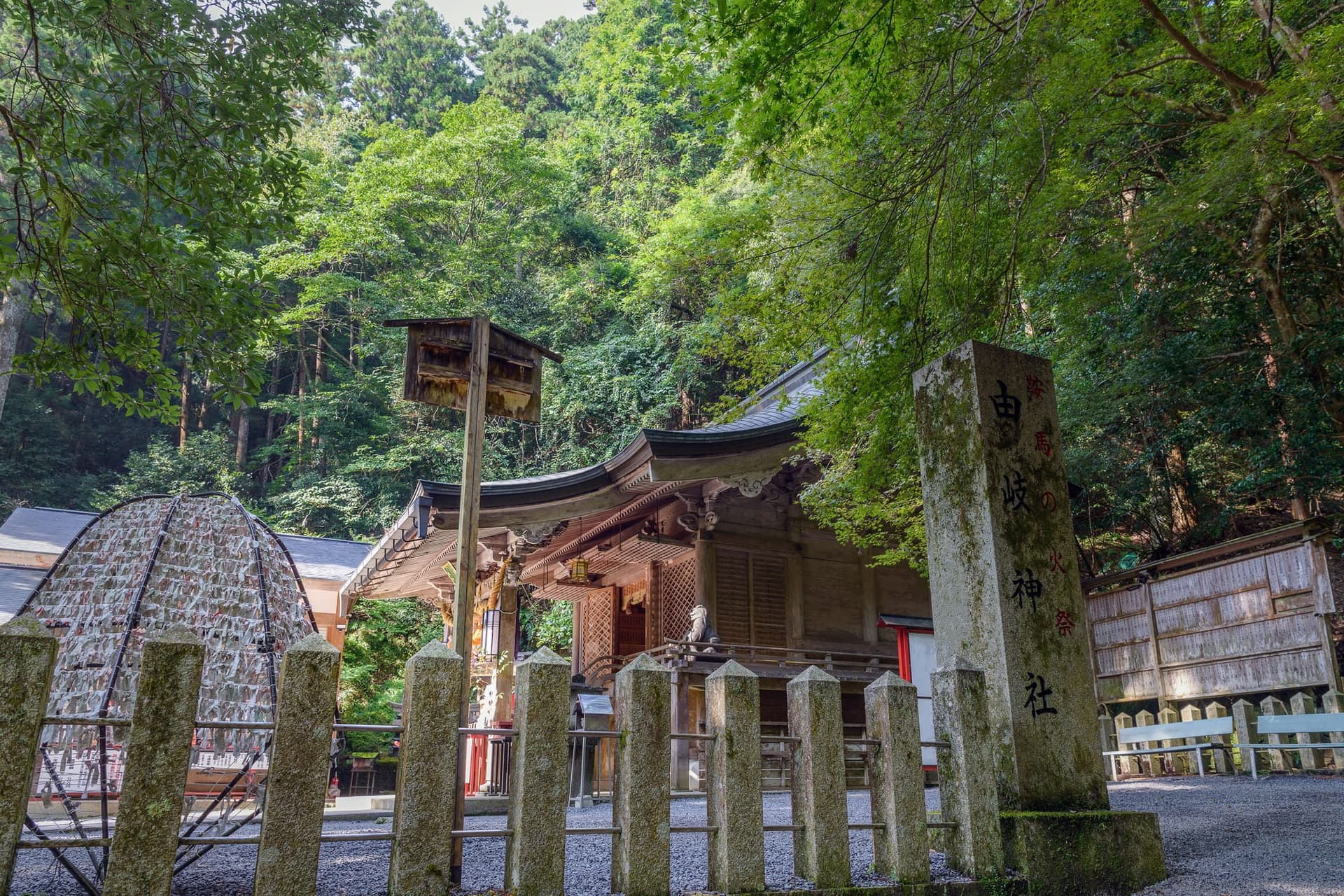
Visit in daylight and the shrine tells the same story more quietly. Its sacred cedar, known as Osugi-san, is about 800 years old and about 53 meters tall, and it is a natural monument of Kyoto City.
The worship hall was rebuilt in 1607 by Toyotomi Hideyori. It is a rare split hall (wari-haiden) with a passage through the middle, and it is a national Important Cultural Property. Look also for the komainu guardian lion that holds a cub. It is an Important Cultural Property too, and people come to pray for children and safe births. The festival's rope-pulling custom suddenly makes more sense here.
Walking on: Kurama village and Kurama-dera
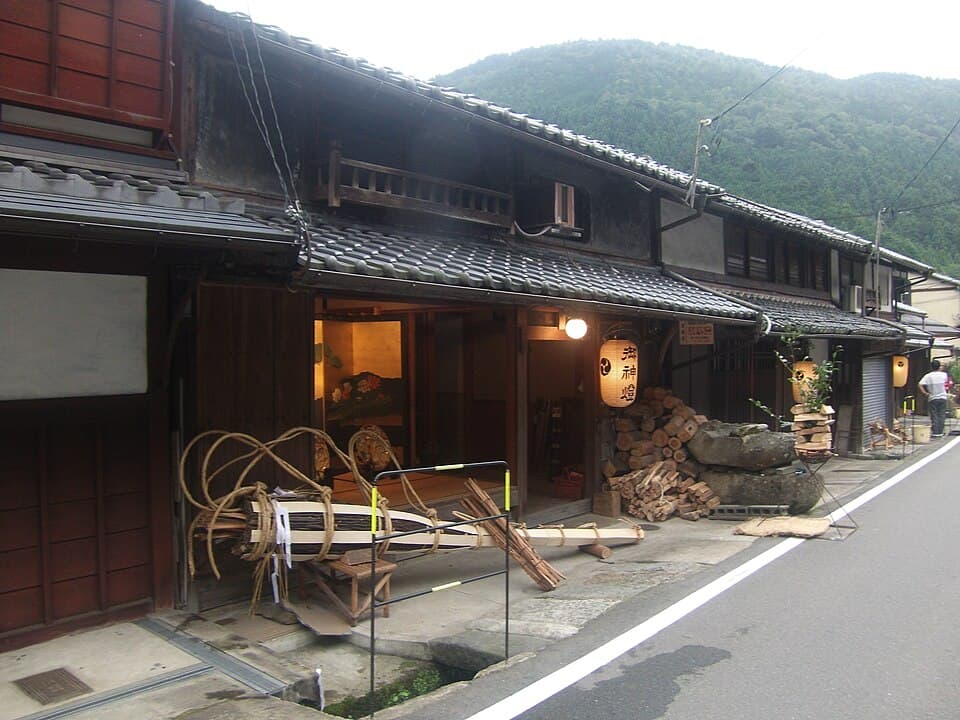
On an ordinary day the road up to the shrine is a quiet village street, and walking it in daylight is the best way to imagine the procession.
Above the shrine, the approach climbs to Kurama-dera. From the Sanmon gate to the main hall takes about 30 minutes on foot along the winding path that Sei Shonagon described in The Pillow Book as "near yet far." Mount Kurama is also known as the place where the young Minamoto no Yoshitsune, Ushiwakamaru, trained.
Getting there, and why you should plan the way back
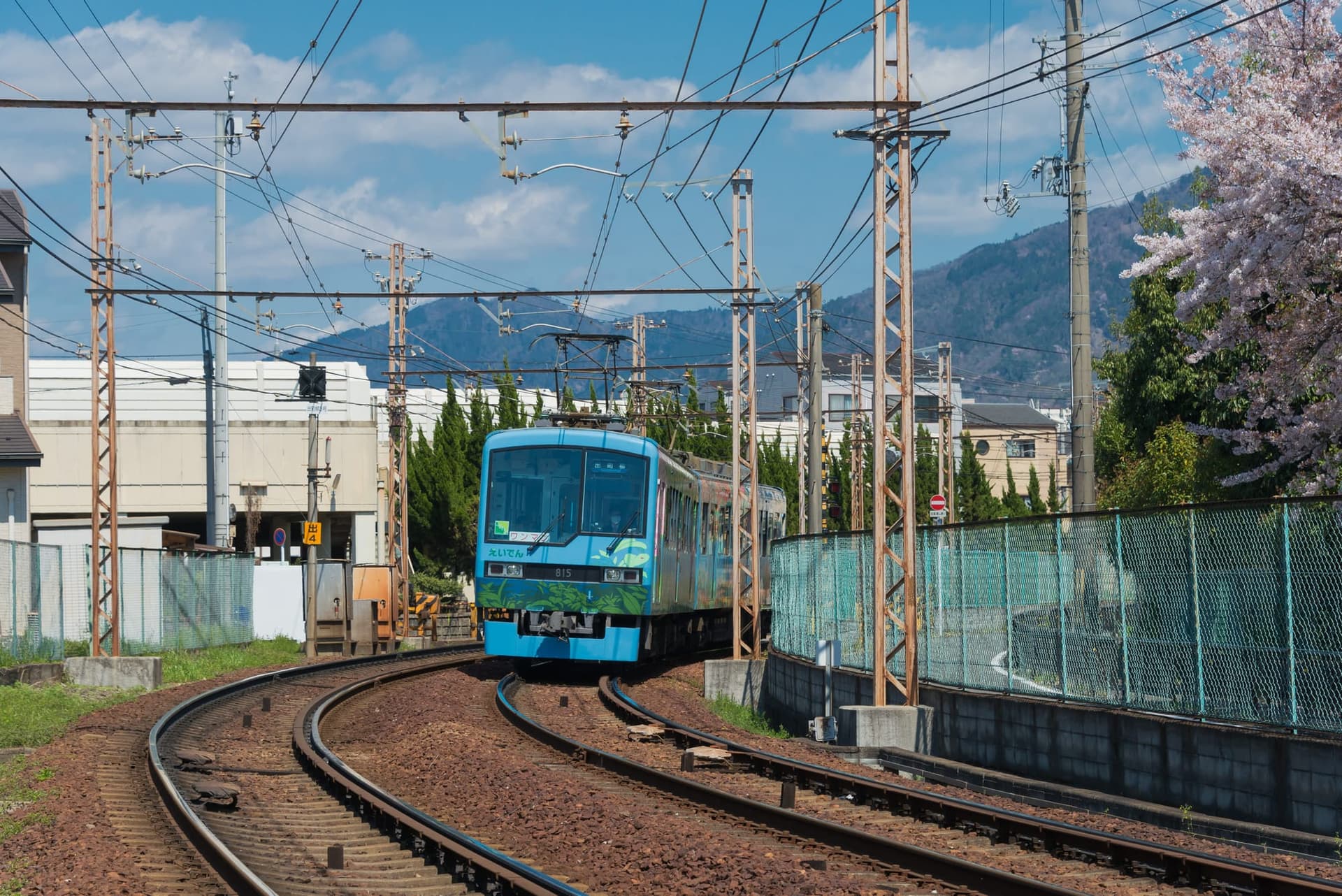
From Kyoto Station, take the JR Nara Line to Tofukuji, the Keihan Main Line to Demachiyanagi, then the Eizan Railway Kurama Line, about 30 minutes, to Kurama Station. The festival is held every year on the night of October 22.
On the 2026 festival day the Eizan Railway ran a special timetable and warned it might limit boarding when crowded; the last train from Kurama to Demachiyanagi that night left at 23:24. Before you go in another year, check the railway's news page for that year's festival timetable.
For the full timetable, crowd tips and the return plan, read my day-of guide:

The same day, central Kyoto holds another procession that walks backwards through history:

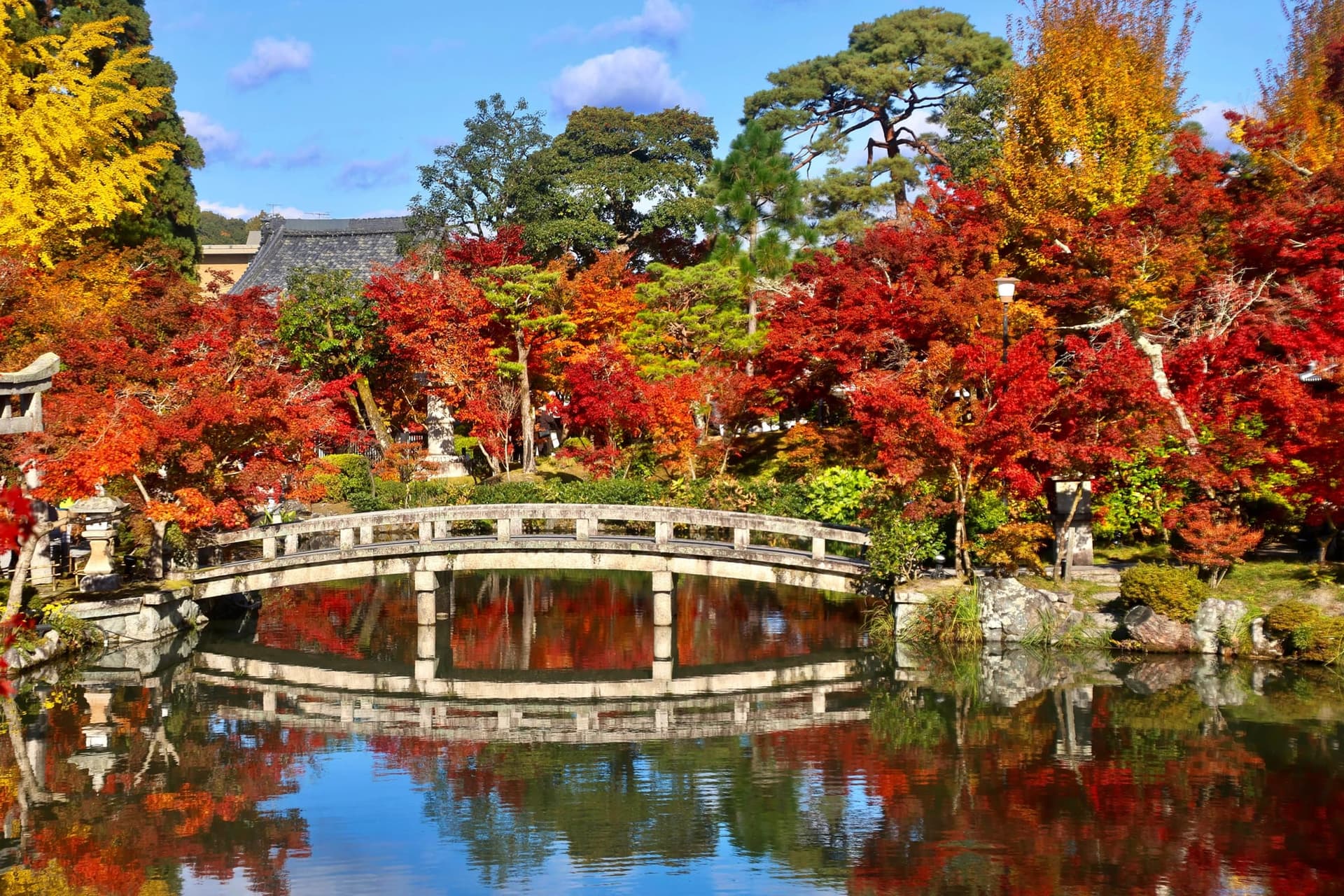
And if you are staying on for autumn colors in the mountains:
Save this for the night you go. If you could watch only one moment, would it be the first fires at six or the rope cut at the Sanmon gate?
Sources
Facts in this article were checked against these official sources.
Photo credits
Photo: ja:User:Si-take. · CC BY-SA 3.0
Comments
Anyone can comment with just a nickname. Comments with links or contact details are published after review.
Loading comments…