Maneki Neko Meaning: Left vs Right Paw, and Tokoname's Lucky Cat Town
 Written by Mei · IKOKA Japan
Maneki neko meaning: a raised left paw calls people, a right paw calls money. Meet giant Tokonyan and 39 lucky cats in Tokoname, 30 min from Nagoya.
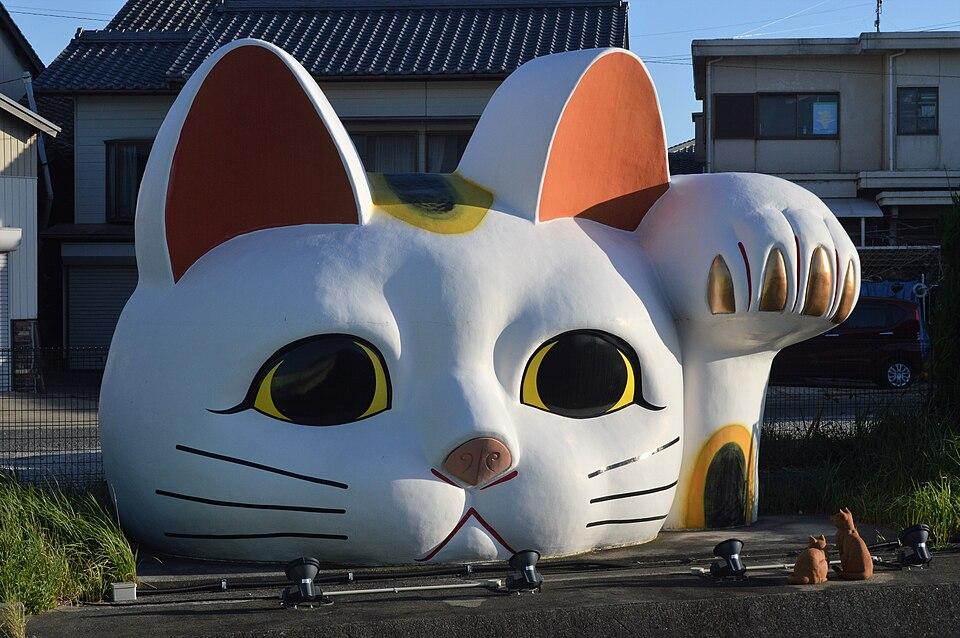
Maneki neko meaning, in one breath: left paw up? That cat is calling people. Right paw up? It's calling money and luck. And the town that became Japan's main maneki neko maker is Tokoname in Aichi, about 30 minutes from Nagoya by Meitetsu express.
At a glance
- Right paw = money and fortune, left paw = customers and people
- Tokoname = Japan's main lucky cat producer by 1950
- Tokonyan, the giant cat: 3.8 m high, 6.3 m wide
- Pottery Footpath (Yakimono Sanpomichi): Course A is 1.6 km, about an hour
- Getting there: Meitetsu Nagoya to Tokoname, about 30 min by express for ¥750; Centrair Airport, about 5 min for ¥330
Official Tokoname access guide
Jump to: paw meanings → colors and wishes → Lucky Cat Street → Tokonyan → Pottery Footpath → getting there
My manga notebook has a page called "cats I'll draw someday." Guess which town is written at the very top? Tokoname. A whole town of beckoning cats. I mean, come on.
Maneki neko meaning: left paw vs right paw
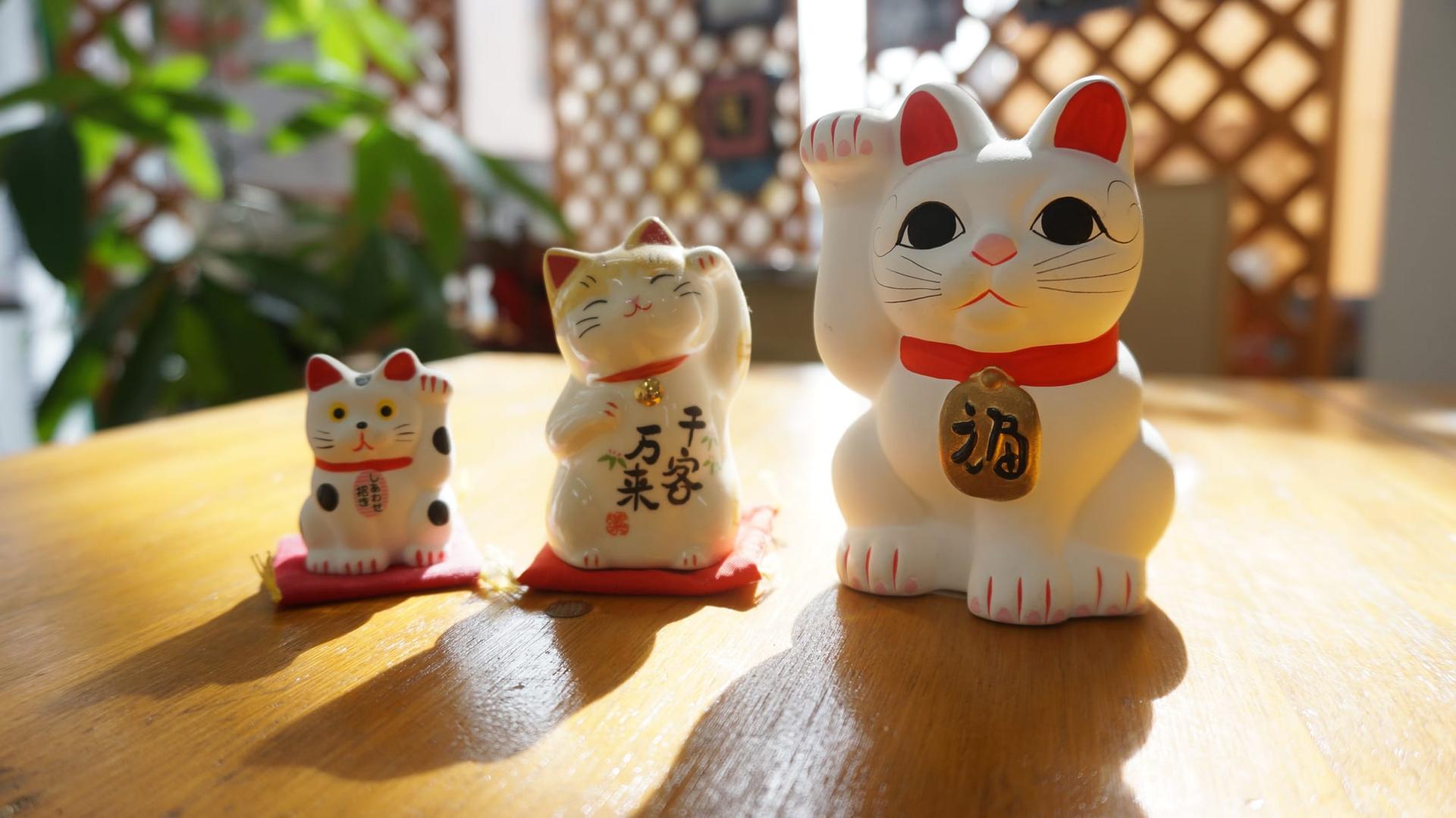
Most maneki neko are calico cats, white with black and orange patches. One front paw is up, the other hugs a gold coin. That raised paw is the Japanese "come here" wave.
So which paw? A raised left paw is said to beckon people, which is why shops that want customers love it. A raised right paw brings good fortune and wealth. Tokoname's own tourism association puts it the same way: right for money, left for patrons.
Honestly? I want both. A manga artist needs readers and rent money.
Every color is a different wish
Tokoname's cats carry wishes in their colors, too.
| Color | Wish |
|---|---|
| White | General luck coming in |
| Gold | Money luck |
| Pink | Romance |
| Yellow | Finding a good partner |
| Green | Passing exams |
| Blue | Safety |
| Red | Good health |
| Black | Keeping misfortune away |
Green for a friend with exams coming up, blue for a friend who just moved. Gift shopping just got way more fun.
How Tokoname became the lucky cat's hometown
Nobody knows exactly where the maneki neko began. What we do know: farmers and shopkeepers always treasured cats for catching rats and pests. One story even says the cats were born in Edo-period Asakusa, after an old woman shaped a clay cat the way a cat in her dream told her to, and good things kept happening.
Tokoname enters the story in the late 1930s. Traditional pottery work was fading, so local artisans started making cat figurines as a new line of business. Early ones were slim, like real cats. Then, between the late 1940s and mid-1950s, the founder of Baigetsu Tomimoto Dolls and a sculptor friend gave them a rounder head, bigger eyes and a chubbier body. Giant eyes, a body like two stacked balls: that's the "Tokoname-kei" style.
By 1950, Tokoname was Japan's main lucky cat producer. A cuter face that kept a whole town going. As someone who draws characters for a living, that part gives me goosebumps every single time.
Curious about Japan's other lucky charms? This one pairs perfectly.

Tokoname Lucky Cat Street: 39 cats living on a wall
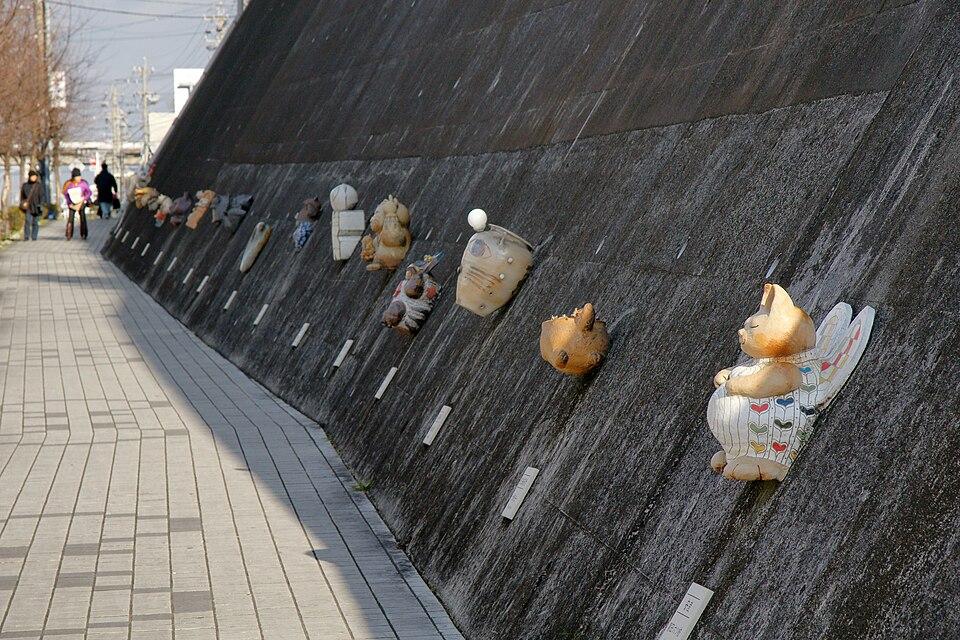
Step out of Tokoname Station and you're on Tokoname Maneki Neko-dori, Lucky Cat Street. Thirty-nine modern lucky cats by artists with ties to Tokoname line the wall, each with its own blessing: a happy marriage, good health, getting a job done.
The street runs from Tokoname Station to Tokonyan and on to Tokoname Tojiki Kaikan (Ceramics Hall), where the Pottery Footpath begins. Count cats, and before you know it you're at the start of the walk. Even the route is cute.
Tokonyan: the giant cat peeking over the wall
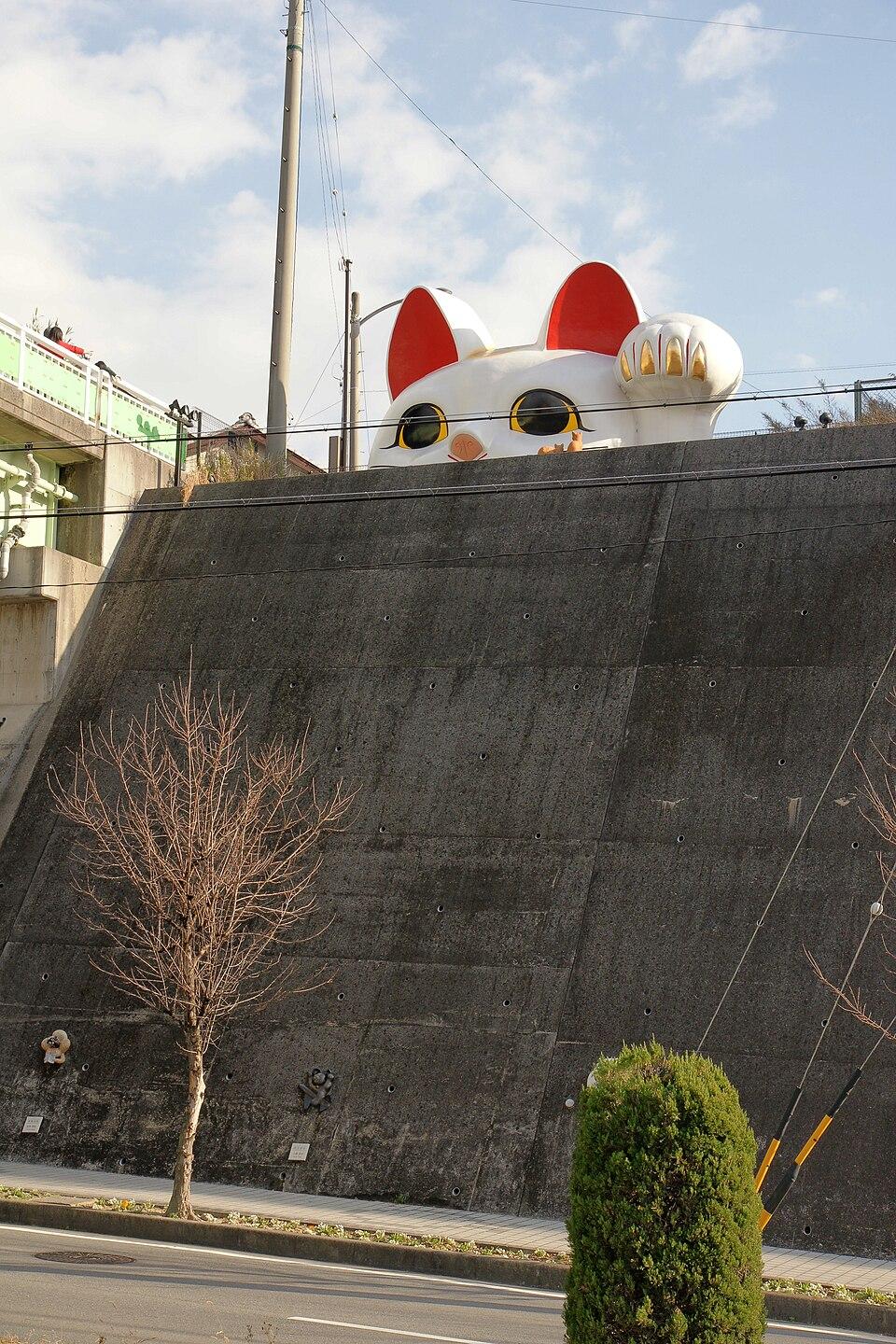
Halfway down the street, a huge cat head pops up over an embankment. Meet Tokonyan. The name mixes "Tokoname" with "nyan," the Japanese meow.
It's 3.8 meters high and 6.3 meters wide, one of the biggest maneki neko in Japan, and it's only a head and a raised left paw. Left paw, so it's calling people. Look closely along the wall nearby, too: 11 small, realistic cat figurines are hiding there. Hidden-object fans, this one's for you.
A one-minute clip from Aichi Prefecture's official tourism channel, for the cat-town mood.
Pottery Footpath: after the cats, the clay lanes
The Pottery Footpath (Yakimono Sanpomichi) opened in 1972. Course A is 1.6 km (about an hour) and Course B is 4 km (about two and a half hours). Both start at the Ceramics Hall, which has Tokoname ware displays and tourist info.
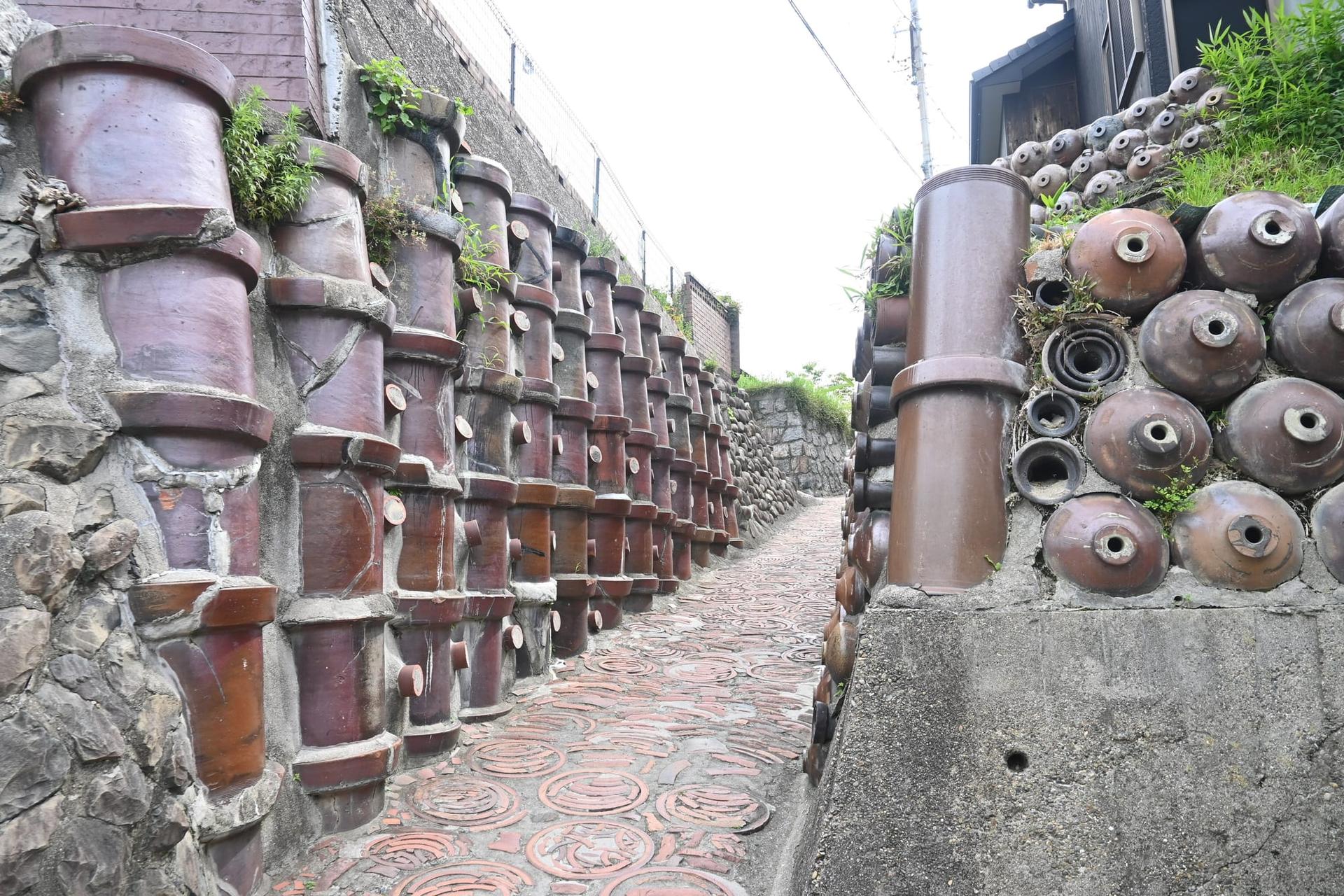
The star is Dokanzaka Hill. One wall is built from 1870s ceramic pipes, the other from shochu bottles from around 1960, and leftover clay rings are set into the path so your feet don't slip. Pottery that almost became trash turned into a street. I love that so much. It's marked "background panel, top pick" in my notebook.
A little further on is the red-brick Noborigama (Toei Kiln), Tokoname's last surviving climbing kiln and one of the largest in Japan. It fired from 1887 to 1974, with eight chambers and 10 chimneys.
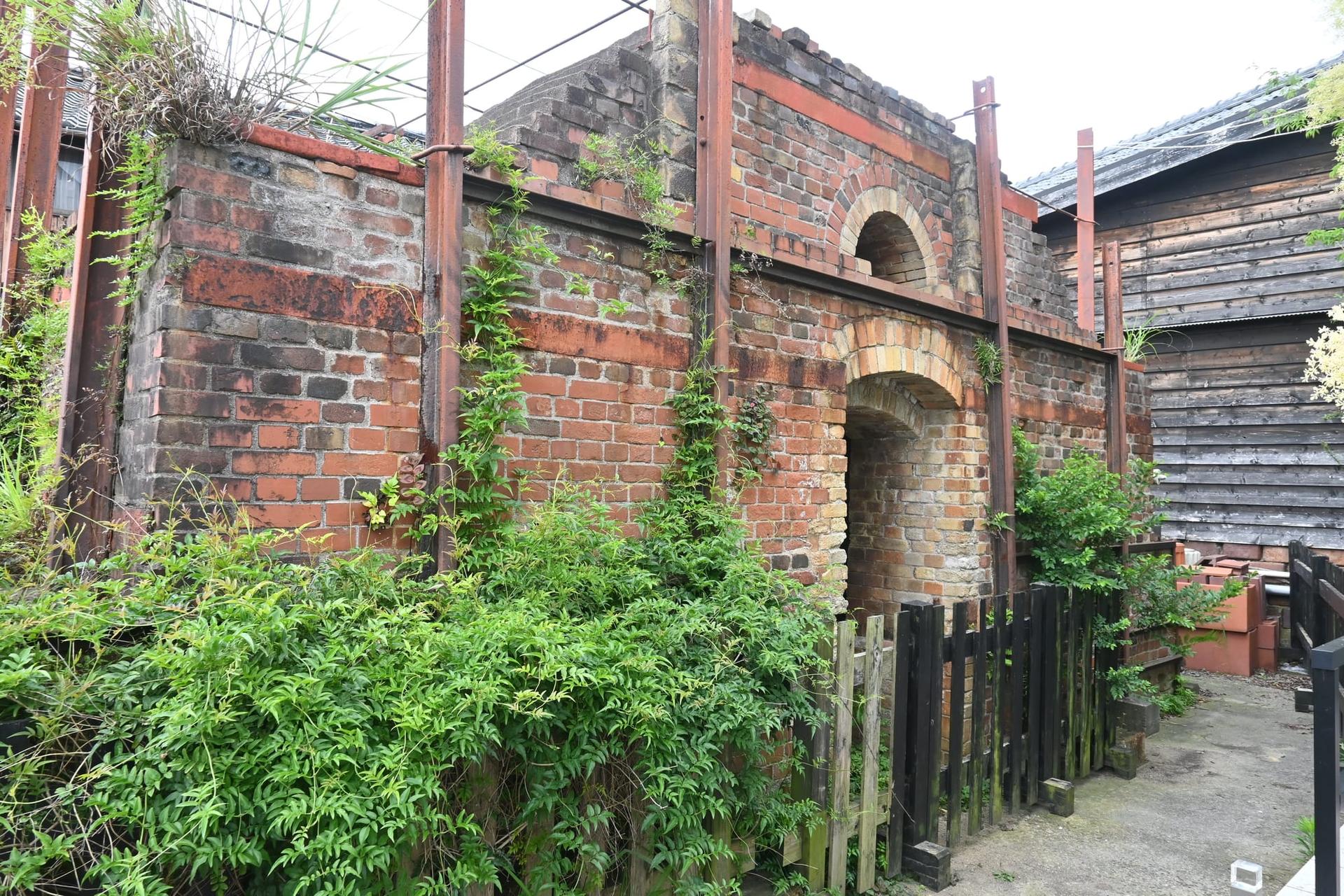
At the 1950s production peak, Tokoname had more than 300 brick chimneys, and around 100 still stand. So it's a cat town and a chimney town.
Want to paint your own lucky cat? Climbing Kiln Plaza Gallery and Studio on Course A runs painting workshops, 9:30 am to 4:30 pm, closed Wednesdays and over New Year.
The Tokoname Tourism Association's official channel walks the footpath slowly here. Watch this first if Dokanzaka and the kiln are calling you.
One of Japan's Six Ancient Kilns
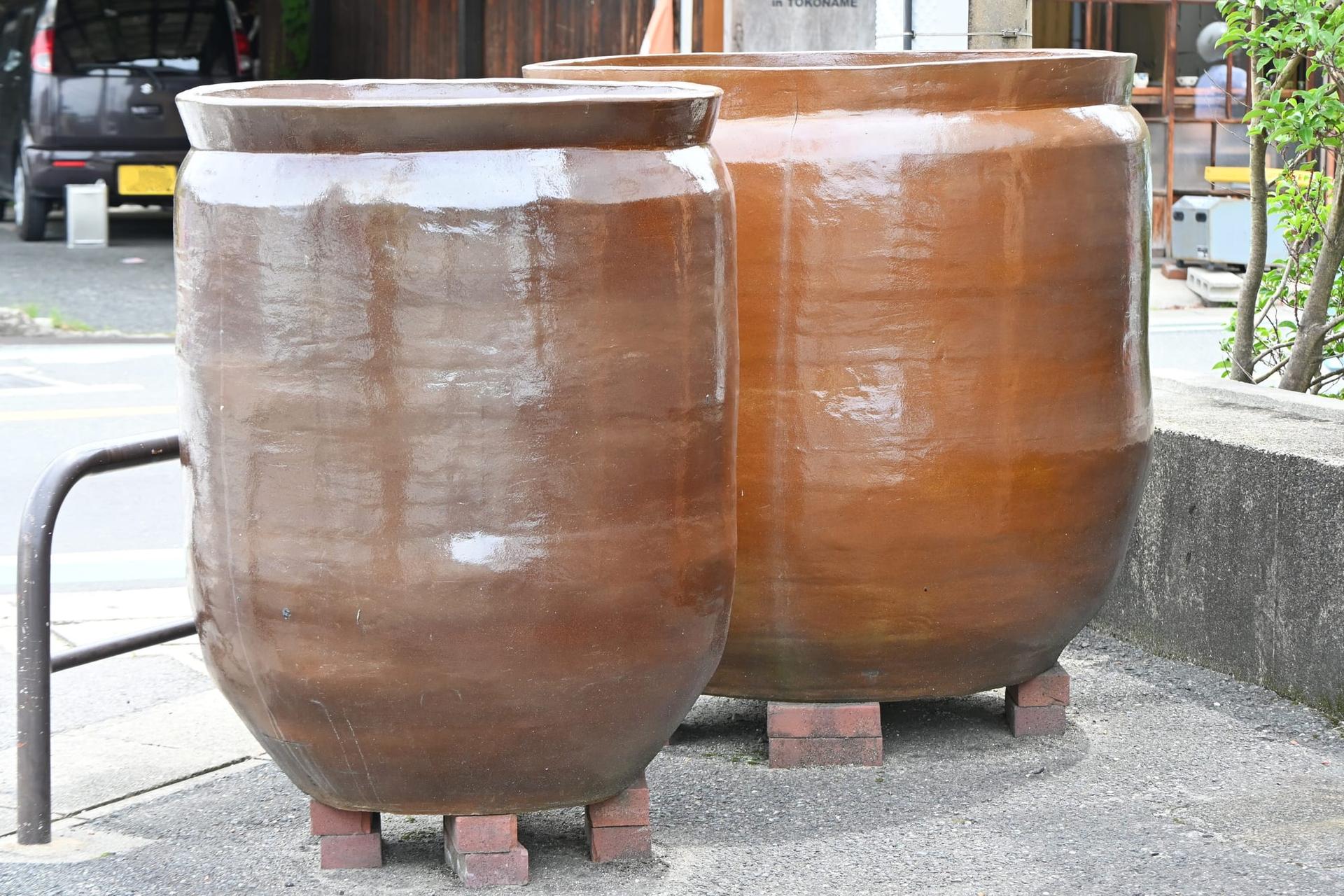
Tokoname ware, along with Echizen, Seto, Shigaraki, Tanba and Bizen, was recognized as Japan Heritage as the "Six Ancient Kilns." These are the six pottery areas that started firing between the late Heian and Kamakura periods and never stopped. Japan Heritage is certified by the Agency for Cultural Affairs, and in Tokoname the footpath townscape and the Noborigama are part of it. A lucky cat born from thousand-year-old clay. Feels extra lucky, right?
How to get to Tokoname
| From | Line | Time | Adult fare |
|---|---|---|---|
| Meitetsu Nagoya Station | Meitetsu Tokoname Line express | About 30 min | ¥750 |
| Centrair Airport Station | Meitetsu Airport Line | About 5 min | ¥330 |
Official Tokoname access guide
Heads-up: the all-reserved μSKY trains don't stop at Tokoname Station. Five minutes from the airport also makes it a sweet half-day before a flight.
Information rechecked on November 13, 2026.
Recommended next reads
If you could bring one Tokoname cat home, which color would you pick?
Places in this article: how crowded are they now?
Hour-by-hour estimates (LEVEL 1–5). Tap a place to see today’s calmest times.
See all crowd estimates
Sources
Facts in this article were checked against these official sources.
Photo credits
Photo: Asturio Cantabrio · CC BY-SA 4.0
Comments
Anyone can comment with just a nickname. Comments with links or contact details are published after review.
Loading comments…