Japan Seasonal Food in Autumn: Chestnut Rice, Taro, Lotus Root
 Written by Mei · IKOKA Japan
Japan seasonal food in autumn: chestnut okowa from Saga, Yamagata imoni taro hot pot, Ibaraki lotus root, Nishiki Market and the menu words to point at.

You sit down at an izakaya counter in October, and the menu is a wall of handwritten kanji. The worry is real: what if the one dish that only exists this season is right there and you can't read it? This guide to Japan seasonal food in autumn gives you the stories behind three ingredients, chestnut, taro and lotus root, plus the names to point at.
Take the taro hot pot on that menu. Its story is said to begin in the mid-1600s, with boatmen on a Yamagata riverbank passing the time by cooking local taro with dried cod from their cargo (more on that below). Every autumn dish here has a story like that behind it, a harvest, a festival or a riverside pot, and once you know it, the name on the menu is much easier to spot.
The official information in this article was rechecked on October 30, 2026.
Why Japanese autumn food tastes different (旬, shun)
Japanese cooks have a word for an ingredient at its best: shun (旬). You don't need to memorise it, but it explains a lot. In December 2013, "Washoku, traditional dietary cultures of the Japanese" was inscribed as UNESCO Intangible Cultural Heritage.
Two of its features matter at the dinner table. Washoku expresses the beauty of nature and the changing seasons, with dishes decorated with seasonal flowers and leaves and served on tableware that suits the season. And Japanese food culture grew up in close connection with annual events such as New Year.
That second point is the key to autumn. The food of this season is tied to harvests and festivals, and each ingredient below comes with its own celebration.
On a menu: 旬 (shun) or 秋 (aki) next to a dish means it is a seasonal pick.
Kuri okowa: chestnut rice for Kyushu's autumn festivals (栗おこわ)
Start with chestnuts. In Saga Prefecture, kuri okowa, also called kuri kowai or just kowai, is sticky rice made with glutinous rice, chestnuts and azuki beans. It is a dish no village festival or family celebration can do without.
Its big moment is kunchi (or okunchi), the autumn festivals of northern Kyushu where new rice is offered to the local deity in thanks for the harvest. In Saga, October, when kunchi is held, is also when local vegetables, fish and chestnuts are plentiful. In Arita, families make kuri okowa in quantity for the October kunchi and press it into a fan-shaped wooden mould.
The method is humble: soak the glutinous rice overnight, cook the azuki until about 80% done, peel the chestnuts, then mix everything with a little salt and steam it. On a menu, you'll more often see the everyday cousin, 栗ご飯 (kuri gohan), chestnut rice cooked in a rice cooker or pot.
On a menu: 栗おこわ (kuri okowa) = chestnut sticky rice, 栗ご飯 (kuri gohan) = chestnut rice.
Imoni: Yamagata's riverside taro hot pot in autumn (芋煮)
Taro, satoimo (里芋), is small and hairy outside and silky inside, and in Yamagata it is the star of imoni. The basic pot holds taro, beef, konnyaku and green onion, sometimes with mushrooms or shaved burdock. It is eaten from autumn, the taro harvest season, into winter.
The best part is its origin. It is said to go back to the mid-1600s, when boatmen waiting for cargo at the end of the Mogami River boat route passed the time by cooking local taro with dried cod from their cargo on the riverbank. Flavours split by region: in the Shonai area facing the Sea of Japan, imoni uses pork and miso instead of beef and soy sauce.
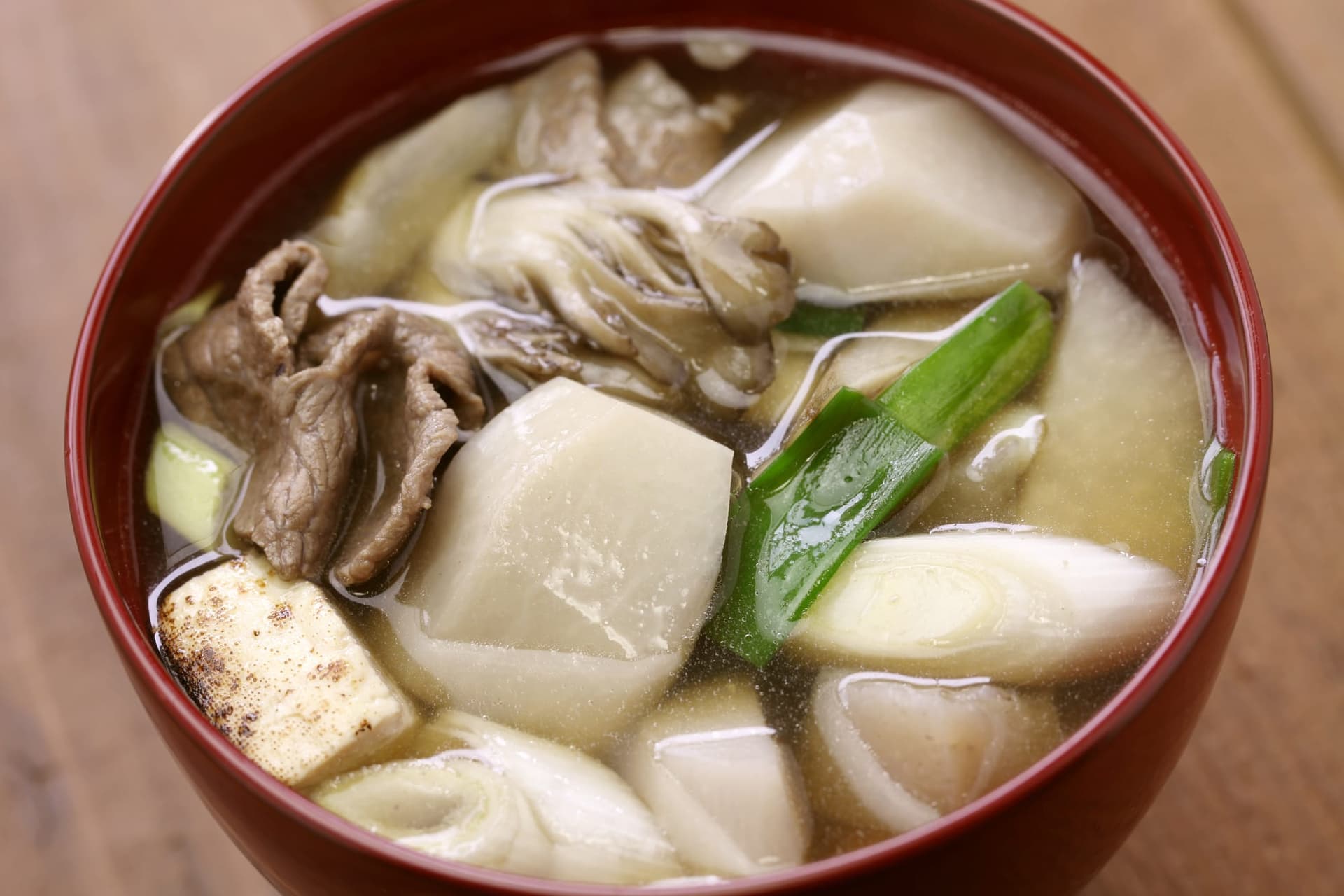
Today the riverbank habit has a name, imonikai. In autumn, families and friends gather around big pots outdoors on riverbanks, by the sea and in parks, and in Yamagata it ranks as an annual event alongside New Year and year-end parties. Taro is ready to eat in autumn, right when the rice harvest ends.
On a menu: 芋煮 (imoni) = taro hot pot; 里芋 (satoimo) = taro.
Japanese fall vegetables: lotus root from Ibaraki and Kasumigaura (れんこん)
If you ride a train through Ibaraki, look for flooded fields. According to Japan's Ministry of Agriculture, Forestry and Fisheries (MAFF), Ibaraki ranks first in Japan for lotus root in both shipments and planted area, with more than 50% of the national share. The Kasumigaura area, with plenty of water and fertile wetland, is where lotus growing thrives.
Here is a useful detail. Kasumigaura's lotus root is harvested from July to around March. The longer it stays in the mud, the more starch it builds, so summer lotus root is crisp and winter lotus root turns soft and fluffy. Autumn sits right between the two.
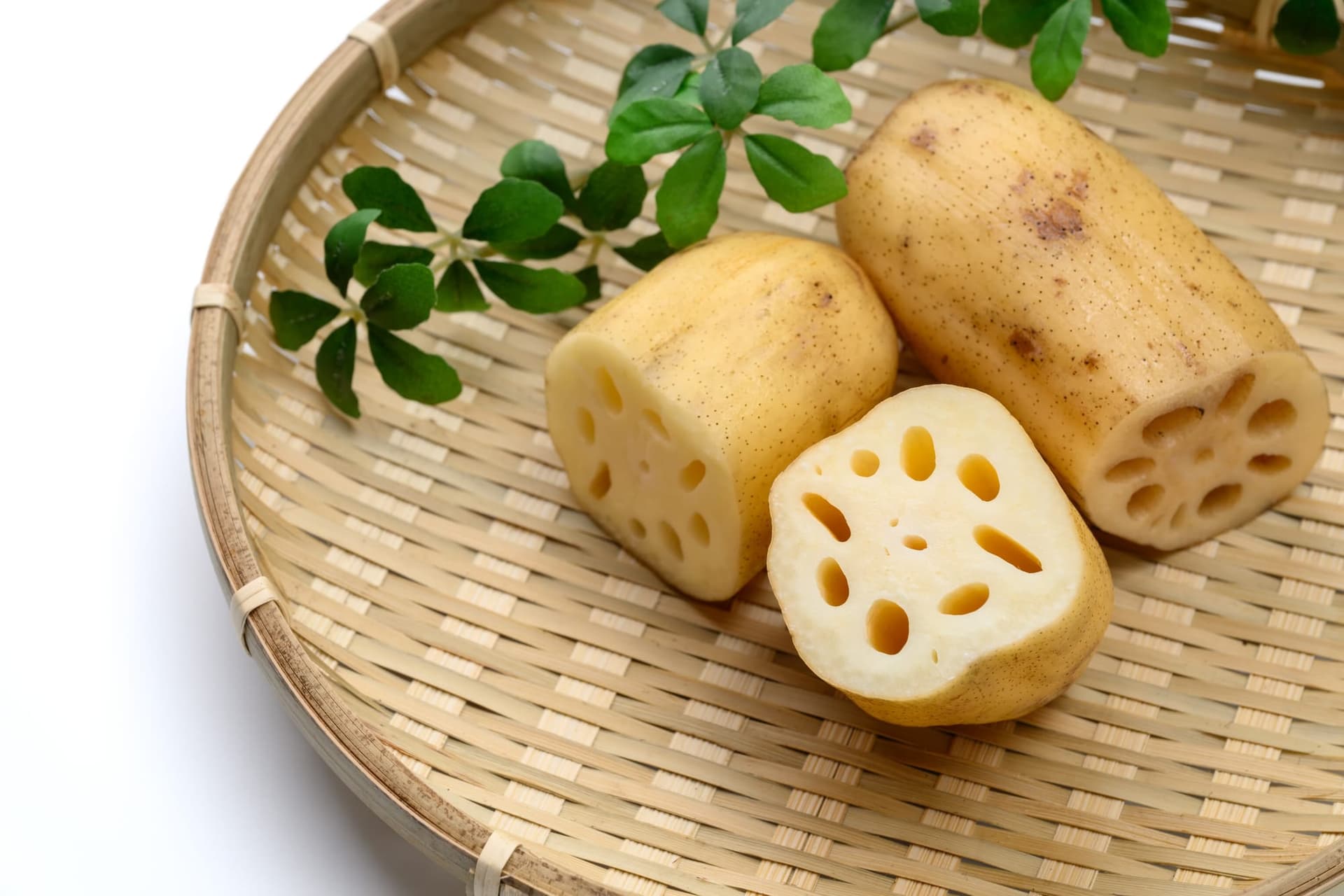
MAFF also records a local dish, Ogura renkon (小倉れんこん), made with lotus root and azuki beans and passed down across Ibaraki and around Kasumigaura. The azuki are packed into the holes, then everything simmers slowly on low heat for 2 to 3 hours before sugar and salt go in. It is a New Year dish: lotus root's holes are a lucky sign of "seeing ahead," and the red of azuki is said to ward off evil. So in autumn you are tasting the same root that will appear on the New Year table a few weeks later.
On a menu: れんこん or 蓮根 (renkon) = lotus root; 小倉れんこん (Ogura renkon) = lotus root with azuki.
Japan seasonal food in October: where and when to eat it
Quick summary
- Kuri okowa (栗おこわ): Saga, especially around the October kunchi festivals (Arita presses it into fan-shaped moulds).
- Imoni (芋煮): Yamagata, from autumn into winter, at outdoor imonikai gatherings on riverbanks and in parks.
- Lotus root (れんこん): Ibaraki's Kasumigaura area, harvested from July to around March, so October falls in the middle of the season.
- Ogura renkon (小倉れんこん): the same lotus root returns on the New Year table.
How to read an autumn menu (with a Nishiki Market tip)
On izakaya and restaurant menus anywhere, look for 旬 (shun) or 秋 (aki, autumn) on a card or board. In the table below, rows marked "This guide" are the dishes explained above; rows marked "Common menu word" are everyday autumn dishes to recognise, not covered by this guide's sources.
| Look for | Japanese | What it is | Source |
|---|---|---|---|
| Chestnut sticky rice | 栗おこわ (kuri okowa) | Steamed sticky rice with chestnuts | This guide |
| Taro hot pot | 芋煮 (imoni) | Taro stew, Yamagata style | This guide |
| Lotus root with azuki | 小倉れんこん (Ogura renkon) | Lotus root stuffed with azuki | This guide |
| Chestnut rice | 栗ご飯 (kuri gohan) | Rice cooked with chestnuts | Common menu word |
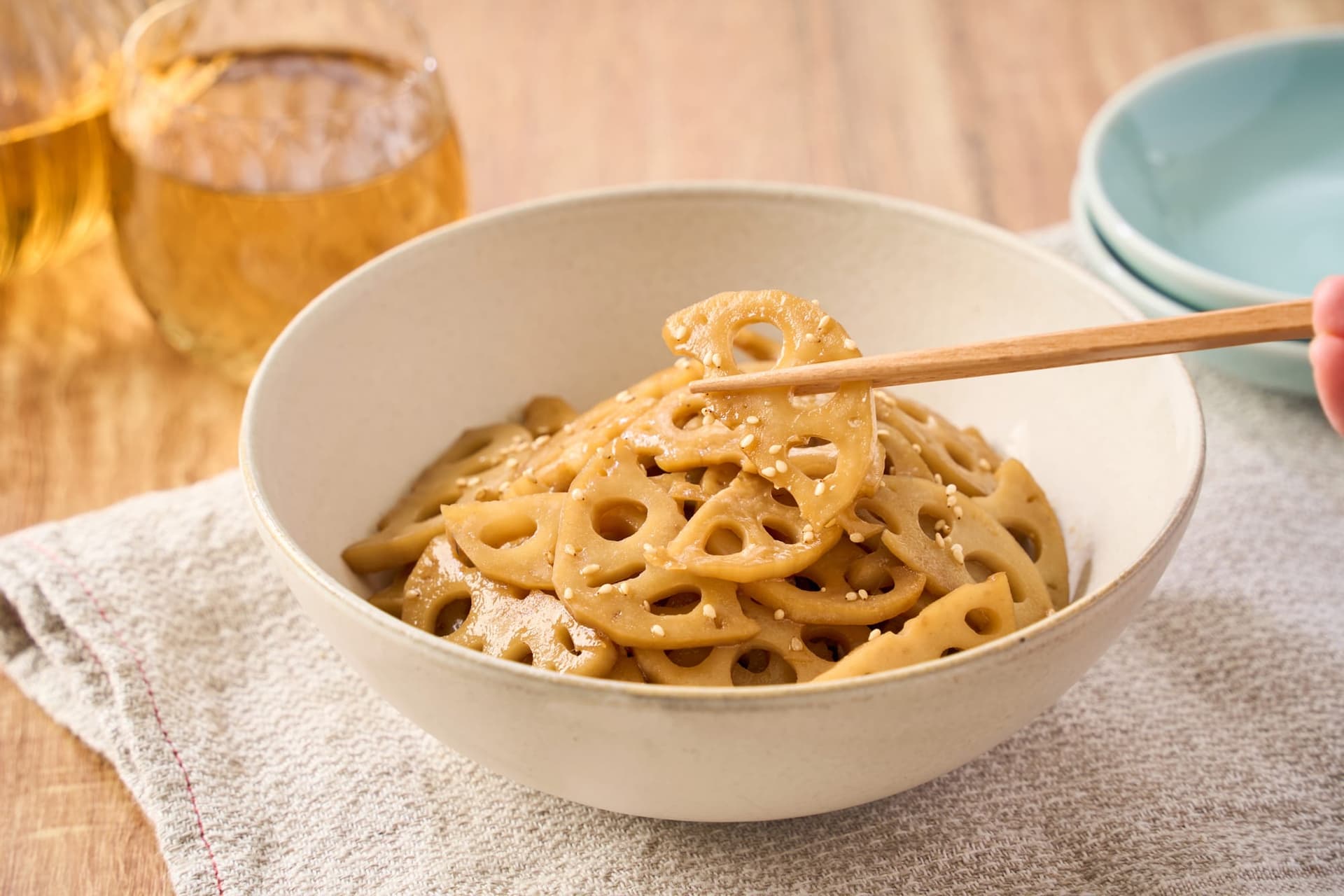
| Lotus root kinpira | れんこんのきんぴら | Stir-fried lotus root | Common menu word |
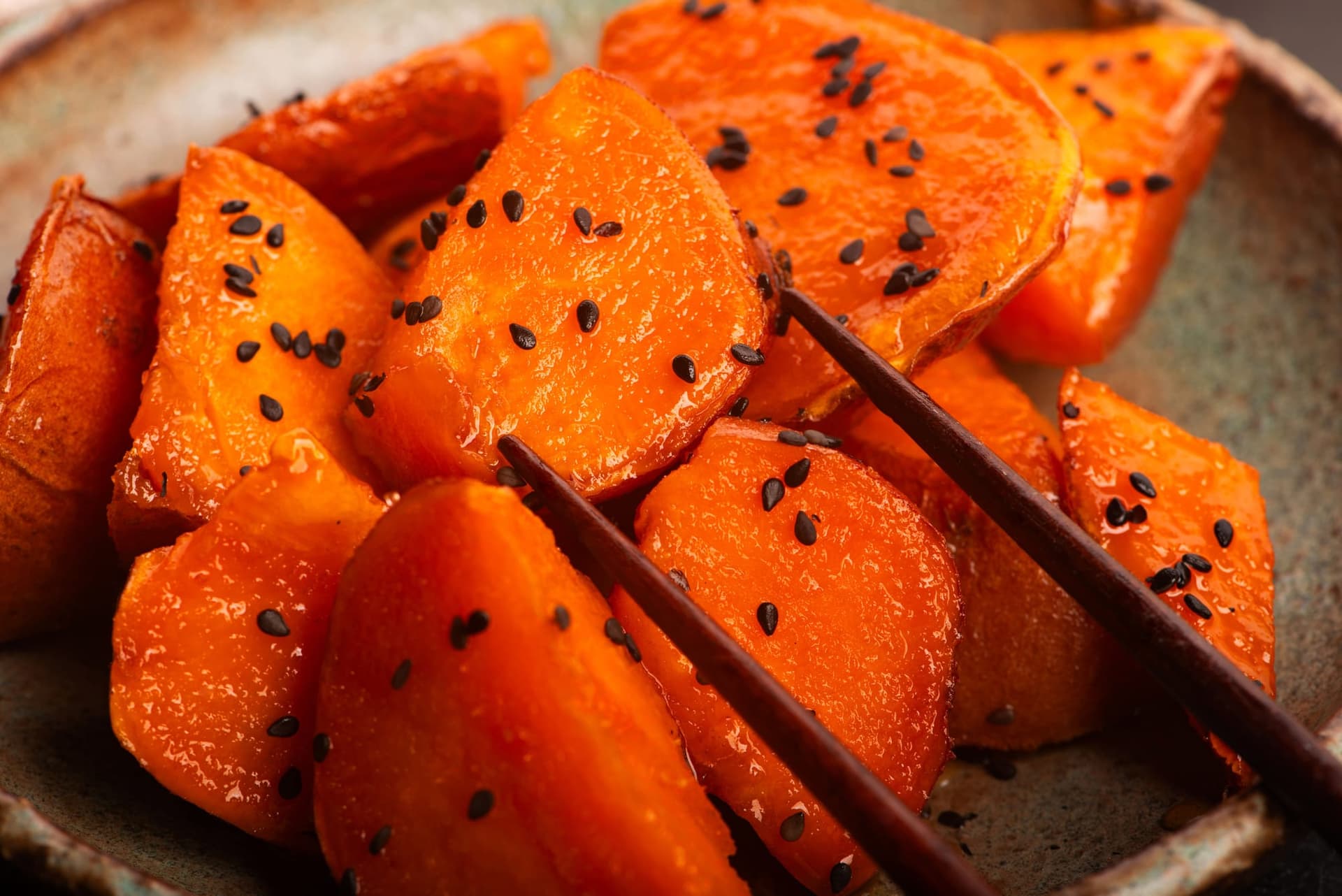
| Candied sweet potato | 大学芋 (daigaku imo) | Fried sweet potato in a sweet glaze | Common menu word |
Nishiki Market tip: if your trip runs through Kyoto, Nishiki Market, a 390-metre market street with 400 years of history, is an easy place to see the season's ingredients, though it doesn't promise the regional dishes above. Known as "Kyoto's kitchen," it gathers seasonal ingredients such as Kyoto vegetables, fish, yuba and nama-fu. It gets very crowded at year-end and New Year, so check the Nishiki Market crowd forecast and pick a calmer hour.

Two phrases to use with the table:
- これをください (Kore o kudasai, say "ko-reh oh koo-dah-sigh"): "This one, please." Say it with your finger on the name.
- 旬のものはありますか? (Shun no mono wa arimasu ka?, say "shoon no mo-no wa ah-ree-mas ka"): "Do you have anything in season?"
Quick checklist for an autumn menu:
- Scan the board for 旬 or 秋 first.
- Match the name with the table above.
- Point and use one of the two phrases.
- Prices vary by shop, so check the menu and convert with the yen converter if it helps.
What to read next on IKOKA
Autumn's lotus root is only the start: a few weeks later, the same root comes back as Ogura renkon on the New Year table, so this season quietly sets up the next. Until then, sweet potato deserves its own story, and it has one: roasted yakiimo is autumn's favourite street snack.

For autumn's most luxurious ingredient, read IKOKA's matsutake guide next.

The same chestnuts, taro and lotus root come back every autumn, and the lotus root carries on into New Year, a small wish for "seeing ahead." Which would you point at first: chestnut rice, a bowl of imoni, or lotus root?
Places in this article: how crowded are they now?
Hour-by-hour estimates (LEVEL 1–5). Tap a place to see today’s calmest times.
See all crowd estimates
Sources
Facts in this article were checked against these official sources.
- Kyoto Nishiki Market Shopping District Promotion Association
- Kyoto Nishiki Market Shopping District Promotion Association
- Ministry of Agriculture, Forestry and Fisheries (MAFF), Japan
- MAFF, Our Regional Cuisines (Saga)
- MAFF, Our Regional Cuisines (Yamagata)
- MAFF, Our Regional Cuisines (Ibaraki)
- MAFF, Nippon Traditional Foods (Yamagata)
Photo credits
Photo: IKOKA · shutterstock shutterstock-unlimited
Comments
Anyone can comment with just a nickname. Comments with links or contact details are published after review.
Loading comments…