Tokyo Ginkgo Avenue Guide: Jingu Gaien, UTokyo Hongo, Showa Kinen Park
 Written by Mei · IKOKA Japan
Tokyo ginkgo avenue guide: when Jingu Gaien, UTokyo Hongo and Showa Kinen Park turn gold, nearest stations, fees and how to dodge weekend crowds.

If you picture Tokyo in autumn, you probably picture one straight road of golden trees, and on a peak weekend you may share it with what feels like the whole city. The good news: Tokyo has more than one ginkgo avenue, and each one rewards a different kind of trip.
In short
- Meiji Jingu Gaien is the classic: four rows of cone-shaped ginkgo, free to walk, busiest on weekends.
- The University of Tokyo Hongo campus has a 200 m avenue that ends at Yasuda Auditorium, one minute from Todaimae Station.
- Showa Kinen Park in Tachikawa is the day-trip option, with a 300 m golden tunnel inside a paid park.
When Tokyo's ginkgo turn yellow
GO TOKYO, the city's official travel guide, says Tokyo's autumn leaves usually peak from mid-November to early December, and lists the same window for Meiji Jingu Gaien. At Showa Kinen Park in western Tokyo, the park's own calendar shows ginkgo yellow leaves from late October to late November. Leaves turn a little differently every year, so treat these as typical ranges, not promises.
| Spot | Typical yellow season | Entry | Nearest station |
|---|---|---|---|
| Meiji Jingu Gaien | Mid-Nov to early Dec | Free | Gaienmae (Ginza Line) |
| UTokyo Hongo | Not stated officially | Free campus walk | Todaimae (Namboku Line) |
| Showa Kinen Park | Late Oct to late Nov | 450 yen adults | Nishi-Tachikawa (JR Ome Line) |
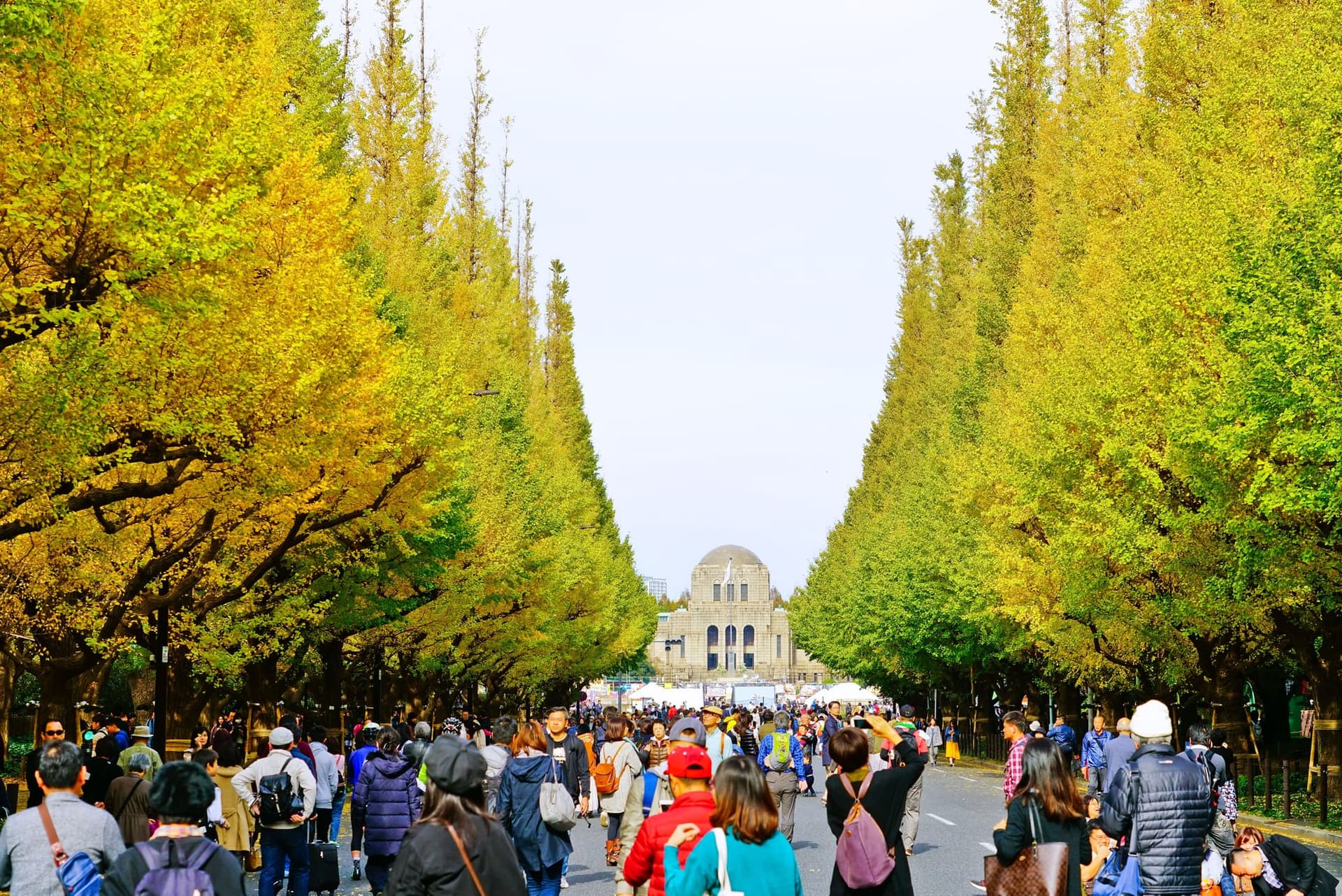
Meiji Jingu Gaien: the four-row avenue
The avenue runs 300 m from the Aoyama entrance to the loop road, with 146 trees planted 9 m apart. It is planted as four parallel rows, and locals enjoy it in every season, not just autumn. The trick behind the famous photo is deliberate: the trees were planted in order of height and the ground drops about 1 m toward the Meiji Memorial Picture Gallery, borrowing the perspective technique of painting. For the full effect, the official site suggests looking back from the top of the Picture Gallery's front steps.
The trees did not grow into cones by themselves. Once every four years, between January and March when the branches are bare, gardeners prune them into that neat triangle shape. The tallest tree has now reached 28.0 m.

Getting there: the operator lists Gaienmae and Aoyama-itchome (Ginza Line), Aoyama-itchome (Hanzomon Line), Kokuritsu-Kyogijo and Aoyama-itchome (Oedo Line), and Shinanomachi and Sendagaya (JR Chuo-Sobu Line). From the Aoyama side, Gaienmae or Aoyama-itchome put you at the entrance where the tallest trees begin. Station list: Meiji Jingu Gaien access map.
How to dodge the crowds at Jingu Gaien
The Picture Gallery view is one of Tokyo's most popular fall photo spots, so plan around it.
- Go on a weekday morning, before office workers and tour groups arrive.
- Check our crowd forecast for the Ginkgo Avenue; it shows LEVEL 1–5 by hour.
- Stand at the edge of the sidewalk for photos and keep moving in the middle.
- Food stalls are not something to count on every year. Check the official site before you plan around them: Meiji Jingu Gaien official site.

If you want even quieter times across Tokyo's big spots, this free guide helps:
University of Tokyo Hongo: the avenue to Yasuda Auditorium
On the Hongo campus, the ginkgo avenue runs about 200 m from the main gate on Hongo-dori to Yasuda Auditorium, completed in 1925. President Arata Hamao planned this layout, and the trees were first planted tall near the gate and lower toward the auditorium, so the avenue looks deeper, like a perspective drawing. The ginkgo is even part of the university's symbol mark and logo.

Getting there: Todaimae Station (Namboku Line) is a 1-minute walk; Hongo-sanchome is 8 minutes on the Marunouchi Line or 6 minutes on the Oedo Line. It is a working campus, so walk quietly and stay out of buildings.
Showa Kinen Park: the golden tunnel day trip
Showa Kinen Park is about thirty minutes from central Tokyo. Its Katarai Ginkgo Avenue is about 300 m long, and the uneven ground gives it depth. Unlike the park's Canal avenue, which is trimmed for aviation height limits, the Katarai trees keep their natural shape. At the November peak it becomes a golden tunnel, and since 2019 the yellow leaves have also been lit up. The park also holds an autumn leaves festival in November.

Getting there: use the Nishi-Tachikawa Gate, about 2 minutes from Nishi-Tachikawa Station (JR Ome Line), then walk about 7 minutes to the Katarai avenue. The Tachikawa Gate is about 18 minutes from JR Tachikawa Station's north exit. Adult admission is 450 yen, seniors 65+ pay 210 yen, and junior high students and younger are free. Fees in other currencies: yen converter.
Checklist before you go
- Pick your spot: city stroll (Jingu Gaien), history walk (UTokyo), or a half-day in a big park (Showa Kinen).
- Aim for a weekday morning at Jingu Gaien.
- Bring coins or an IC card for Showa Kinen Park admission.
- Leave the tripod at home on crowded sidewalks.
- Pair your walk with a garden light-up in the evening.
Information rechecked on November 2, 2026.
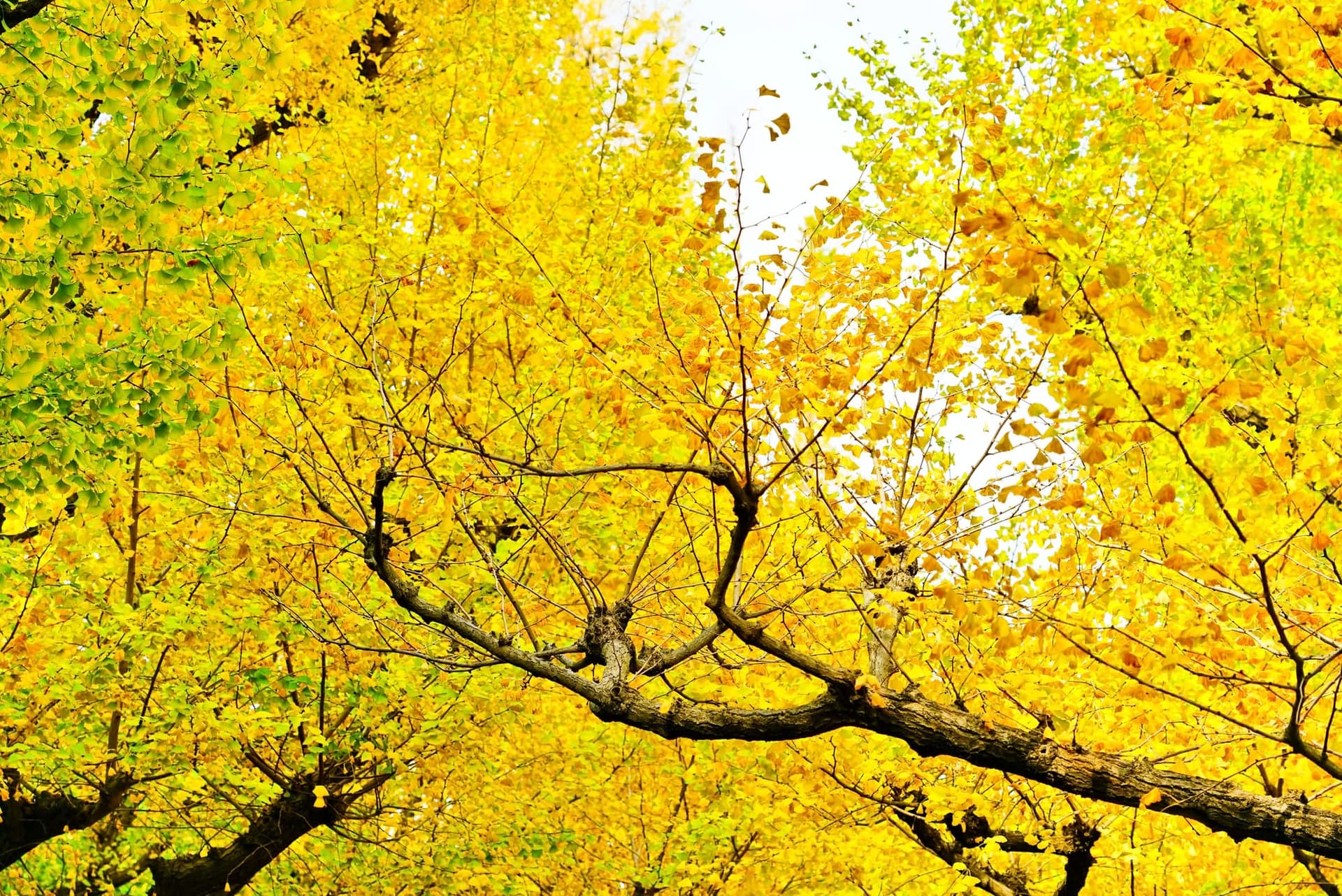
Want red maple after the yellow ginkgo? These garden night visits are next on the list:
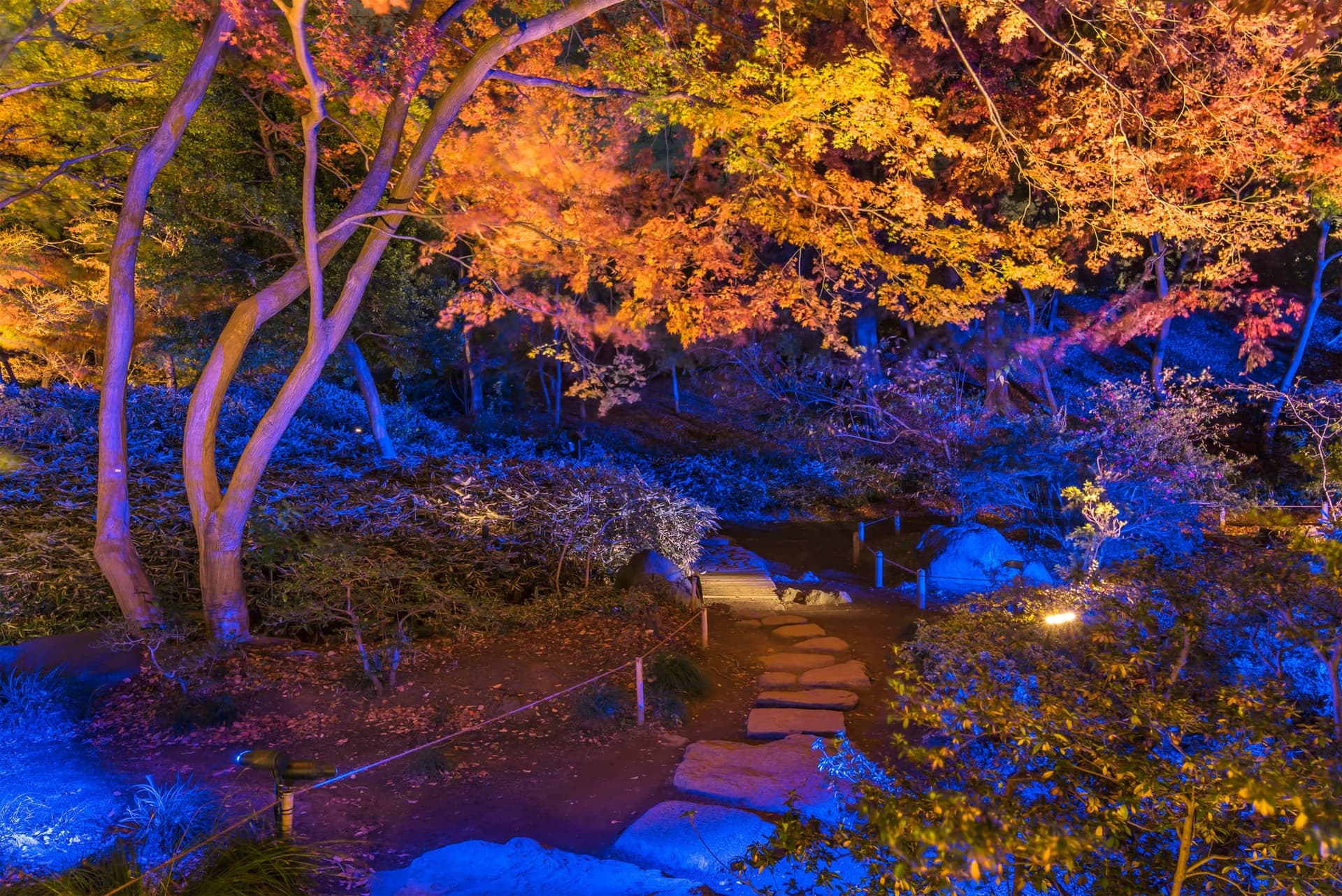
Which would you choose: the famous four rows at Jingu Gaien, or the quieter golden tunnel in Tachikawa?
Places in this article: how crowded are they now?
Hour-by-hour estimates (LEVEL 1–5). Tap a place to see today’s calmest times.
 Ginkgo Avenue, Meiji Jingu GaienTokyo · NatureQuieter at 08:00 · 16:00Crowd LEVEL 2/5 · Calm (estimate)
 Meiji JinguTokyo · Shrine & templeQuieter at 08:00 · 17:00Crowd LEVEL 1/5 · Very calm (estimate)
Sources
Facts in this article were checked against these official sources.
Photo credits
Photo: IKOKA · shutterstock shutterstock-unlimited
Comments
Anyone can comment with just a nickname. Comments with links or contact details are published after review.
Loading comments…