Chrysanthemum Festival Japan November 2026: Yushima, Jindai, No Hibiya Show
·
 Written by Mei · IKOKA Japan
Chrysanthemum festival Japan November 2026: no Hibiya Park show this year, but Yushima Tenjin and Jindai run to Nov 23 and Shinjuku Gyoen to Nov 15.
Short answer first: Hibiya Park's Tokyo Metropolitan Tourism Chrysanthemum Exhibition is not being held in 2026. The Tokyo Metropolitan Park Association's November notice for Hibiya Park says there's no show at the park's exhibition hall this year (Reiwa 8). Good news, though: you can still go! Three Tokyo shows are on right now: Yushima Tenjin (to Nov 23), Jindai Botanical Gardens (to Nov 23) and Shinjuku Gyoen (to Nov 15).
At a glance: Tokyo chrysanthemum shows 2026
| Venue | 2026 dates | Hours | Entry | Nearest station |
|---|---|---|---|---|
| Yushima Tenjin (Bunkyo Chrysanthemum Festival) | Nov 1–23 (Mon, holiday) | 6:00 to sunset (no night lighting) | Free | Yushima Exit 3, 2 min walk (Chiyoda Line) |
| Jindai Botanical Gardens Chrysanthemum Show | Oct 31–Nov 23 (Mon, holiday); closed Mondays | 9:30–17:00 (last entry 16:00; Nov 23 closes 16:00) | Adults ¥500 · 65+ ¥250 · junior high ¥200 | Bus from Chofu, Mitaka or Kichijoji |
| Shinjuku Gyoen Chrysanthemum Exhibition | Nov 1–15 (Sun); closed Nov 16 | 9:00–16:30 (last entry 16:00) | Adults ¥500 | Shinjuku-gyoemmae Exit 2, 5 min walk |
| Hibiya Park (Tokyo Metropolitan Tourism Chrysanthemum Exhibition) | Not held in 2026 | — | — | — |
Official pages: Yushima Tenjin festival · Jindai Chrysanthemum Show · Shinjuku Gyoen November calendar · Hibiya Park November notice
Information rechecked on November 13, 2026.
Every November forecast is wall-to-wall maple leaves, but my notebook's November page has one word circled again this year: chrysanthemums. Hundreds of blooms from a single root, all opening at once? I can't skip that.
Hibiya Park chrysanthemum exhibition 2026: taking a year off
If you searched "日比谷公園 菊花展 2026", sorry, the answer is no show this year. That's straight from the park association's November notice.
It stings a little because of the history. The Tokyo Metropolitan Tourism Chrysanthemum Exhibition has run since 1915, and its 100th edition filled Hibiya Park's exhibition hall from October 31 to November 9, 2025, free of charge. So the year right after number 100 is a rest year.
Where to go instead? If you wanted a city-center chrysanthemum show, the three below are your answer. After November 16, head to Yushima or Jindai.
Jindai Botanical Gardens Chrysanthemum Show: until Nov 23
Jindai Botanical Gardens in Chofu, west Tokyo, has held its Chrysanthemum Show every year since it opened in 1961. This is the 66th, running from October 31 (Sat) to November 23 (Mon, holiday), 9:30–17:00 with last entry at 16:00. On the final day, the 23rd, it closes at 16:00.
- Closed: every Monday (the next day if Monday is a holiday), so during the show it's closed on Monday, November 16, and open on the holiday Monday, November 23.
- Entry: adults ¥500, 65 and over ¥250, junior high students ¥200, elementary school kids and younger free.
- Getting there: from Chofu Station (Keio Line), take an Odakyu Bus from stop 12 toward Kichijoji or Mitaka to "Jindai Shokubutsu Koen-mae", or a Keio Bus from stop 11 toward Jindaiji to "Jindai Shokubutsu Koen". From Mitaka or Kichijoji Station (JR Chuo Line), an Odakyu Bus goes to "Jindai Shokubutsu Koen-mae".
This one is a contest of patience. Members of the garden's chrysanthemum federation enter three-stem large mums (bonyo), compact fukusuke and daruma pots and small-chrysanthemum bonsai, all judged by category. You'll also find classic chrysanthemums, the regional varieties that grew up separately in Edo, Ise and Higo.
And the real star? The Jindai hanaguruma, an old cart piled high with colorful small mums. It's been a fixture for more than 30 years and takes five or six staff to build. This year there's a lantern stand behind it, about 8 m wide and 2.8 m tall with 72 lanterns, as an Edo-style photo spot. Edo-style gates go up at the main and Jindaiji gates too, along with a first-ever panel exhibition on Edo gardening.
Honestly, it sounds like a place you'd go just for the photos.
Yushima Tenjin Chrysanthemum Festival: free, until Nov 23
The 48th festival fills the grounds of Yushima Tenmangu, the shrine of the god of learning, from November 1 to 23. It's open from 6:00 until sunset and it's free. There's no night lighting, so don't leave it too late.
About 2,000 plants are on show, built around the chrysanthemum dolls. These life-size figures wear costumes made of living blooms, put together by specialist kikushi over more than a week, and they get re-dressed halfway through the festival. Which means the dolls may look different depending on when you go. Kind of makes you want to go twice, right?
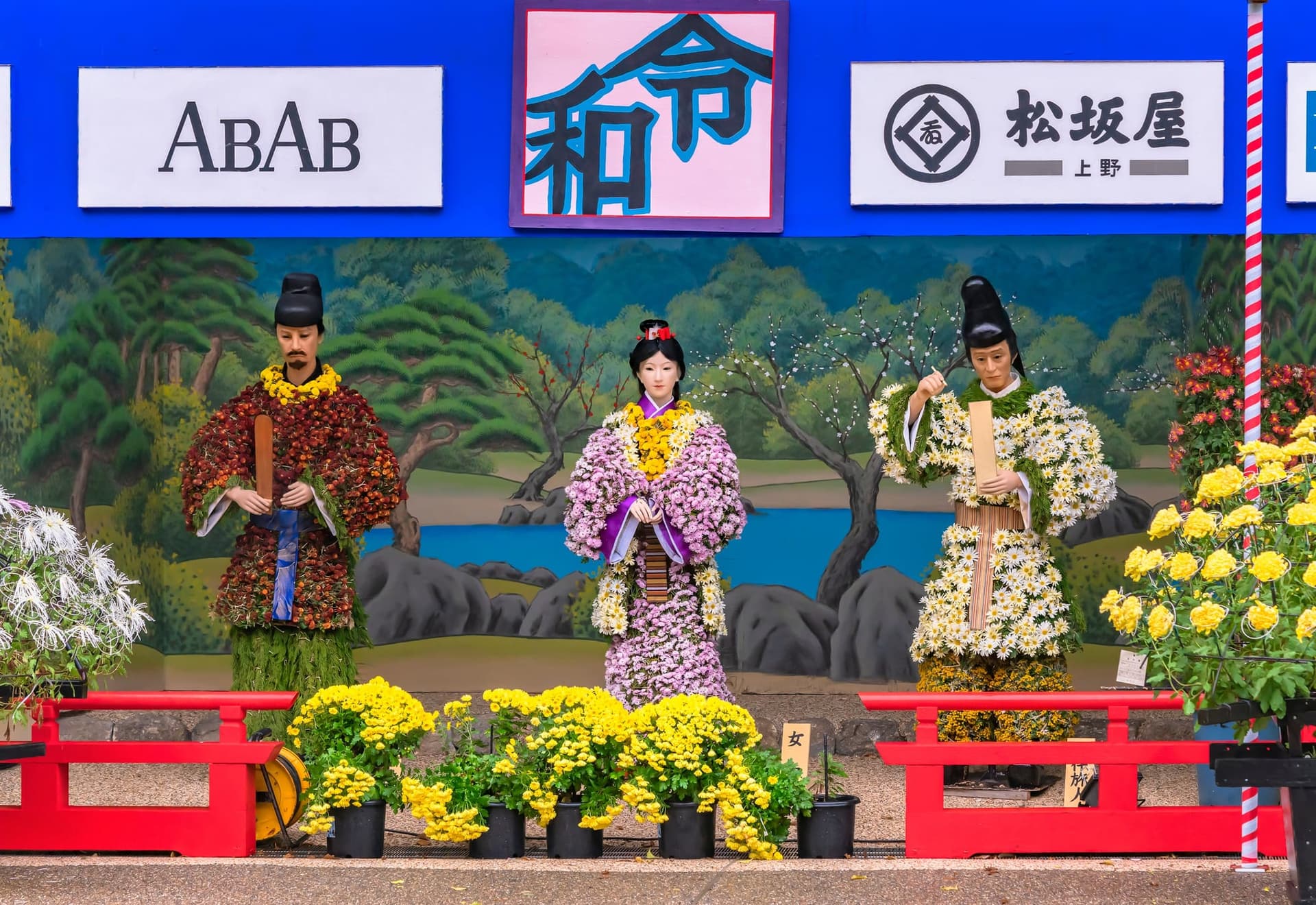
Look out for the senrinzaki too: one plant trained so that each tier adds six blooms around a center flower, until the whole thing reads as one giant bloom. And find Tomoe-nishiki, a classic variety that's deep crimson inside and gold outside. Chrysanthemum sake (kikuzake) is handed out on November 7, 12 and 21. The 7th and 12th have already passed, so the one left is November 21.
- Getting there: 2 minutes on foot from Exit 3 of Yushima Station on the Tokyo Metro Chiyoda Line. The shrine sits on a hill, so you can pick the stairs or a barrier-free slope.
Once Shinjuku Gyoen wraps up on the 15th, this is the central Tokyo chrysanthemum show for late-November trips.
Shinjuku Gyoen Chrysanthemum Exhibition: until Nov 15 (Sun)
Shinjuku Gyoen's show runs November 1 (Sun) to 15 (Sun), open every day including Mondays. The garden closes on November 16, then switches to an Orchid Exhibition from the 17th to the 23rd. So from the 16th, the chrysanthemum show is over.
- Hours and entry: GO TOKYO lists 9:00–16:30 with last admission at 16:00 (varies by season); adults ¥500, 15 and under free, 65+ and students 16+ ¥250 (check the official site for current prices)
- Getting there: 5 min from Exit 2 of Shinjuku-gyoemmae Station (Marunouchi Line), 5 min from JR Sendagaya, 10 min from Shinjuku Station South Exit
- Heads-up: no alcohol in the garden.
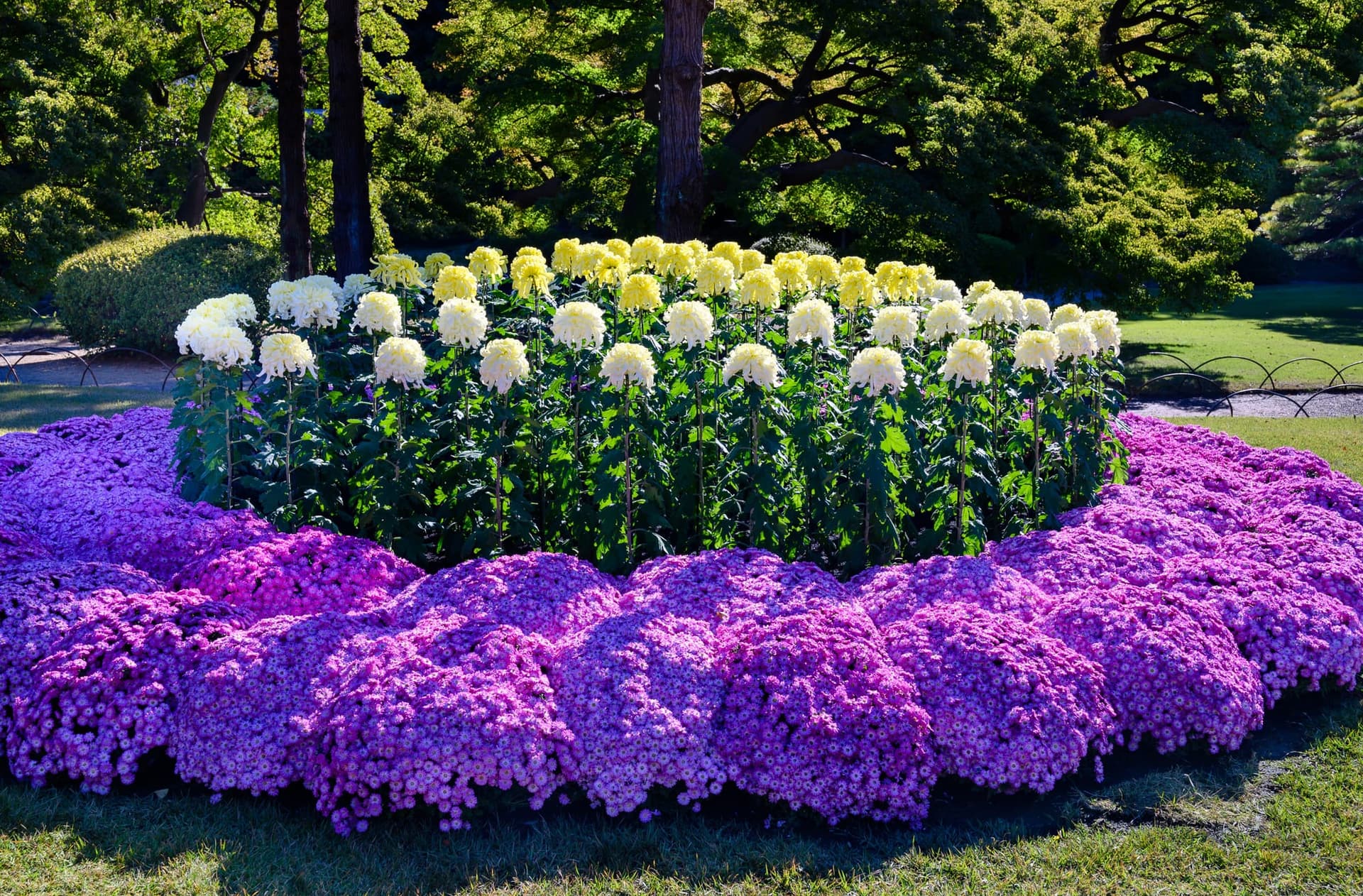
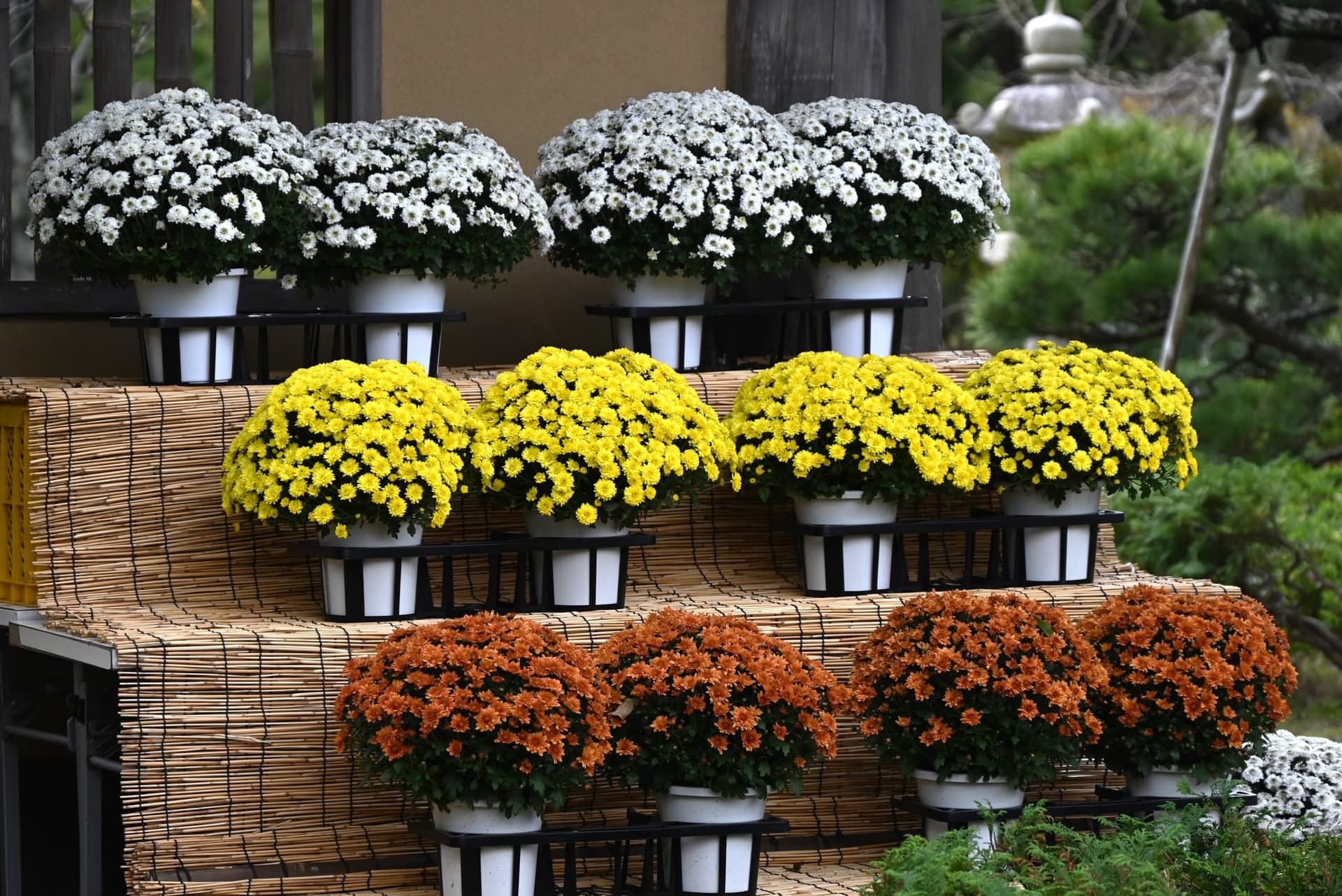
The displays sit inside uwaya, temporary wooden pavilions built along the paths of the Japanese Traditional Garden. The one that stops everyone is the ozukuri: a single root grown for a year or more without grafting, trained into one dome of hundreds of flowers.
One root, one year, then one day in November it all goes off at once. That kind of patience feels almost unfair.
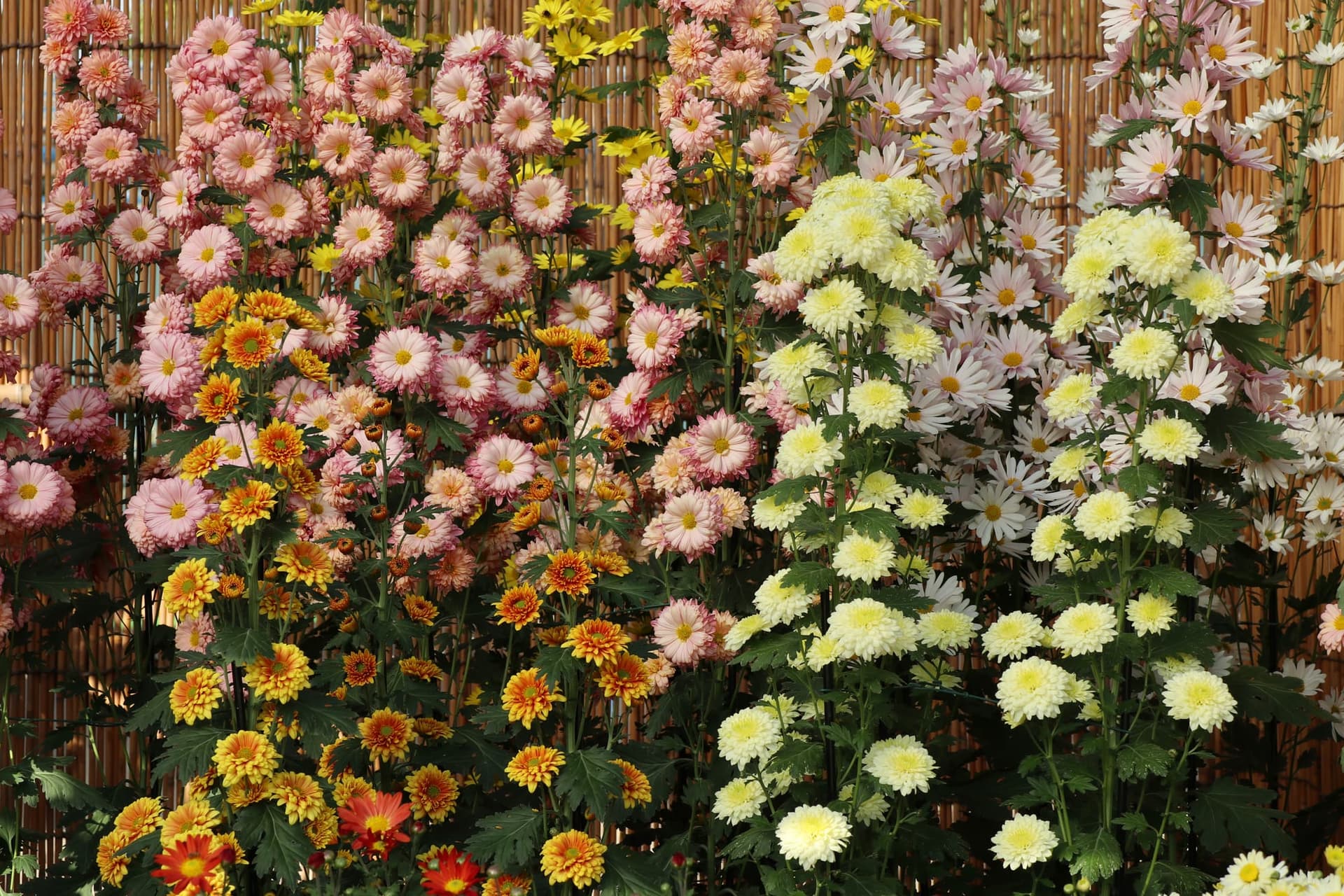
Every bed has its own style. Kengai imitates wild mums tumbling off a cliff, with a single plant pinched, staked and trained on a bamboo-and-wire frame into a cascade. The Saga variety, with thin, straight petals spraying upward, comes from the Saga area of Kyoto Prefecture. A little piece of Kyoto in Tokyo!
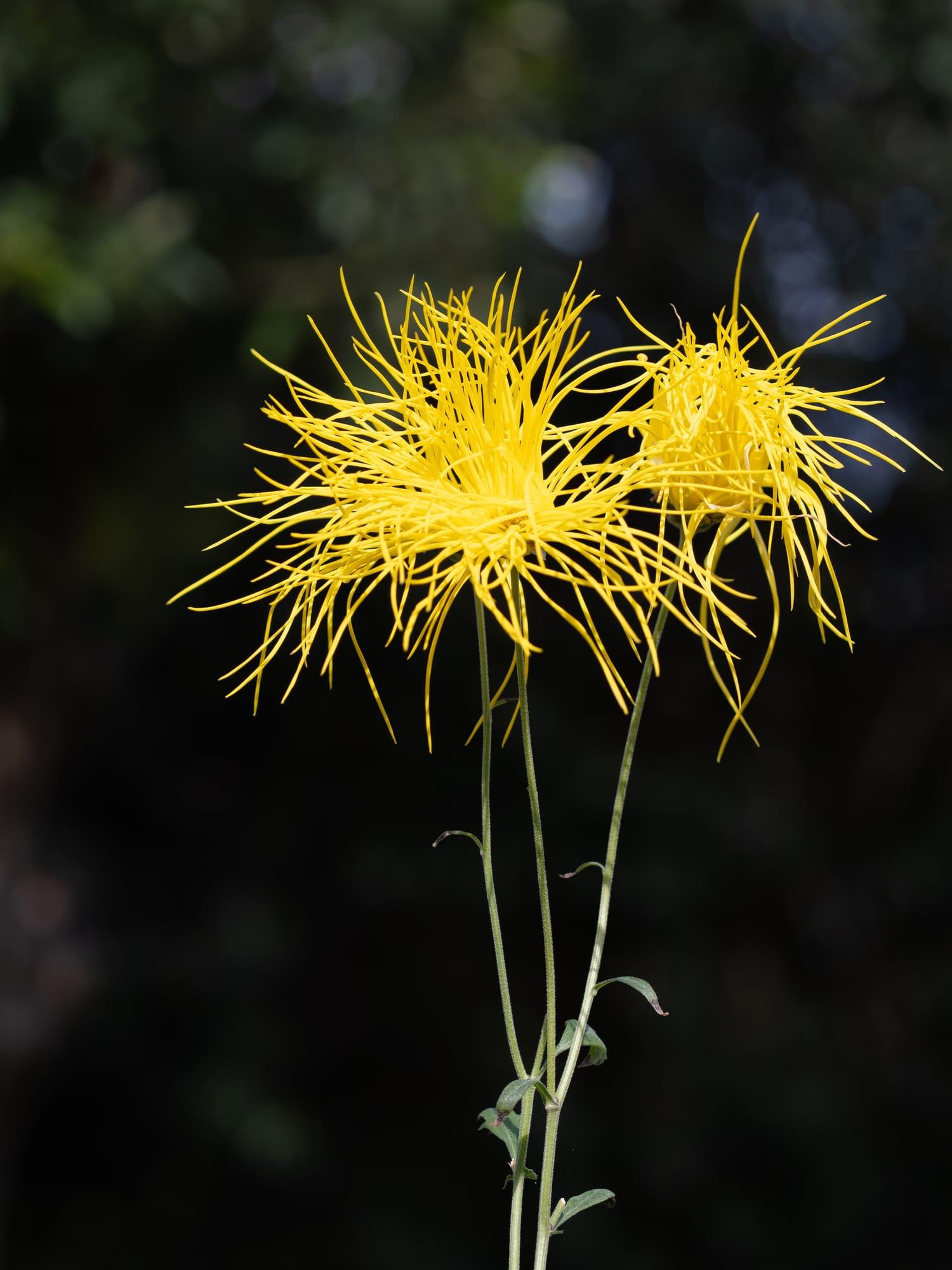
Edo-giku developed in Edo, today's Tokyo, between the 17th and 19th centuries; its petals and colors keep changing after it opens, so it's also called Mai-giku, the "dancing chrysanthemum". Higo-giku comes from present-day Kumamoto, where samurai grew it as spiritual training. The ogiku bed lines up 311 plants in 39 cultivars in diagonal stripes of yellow, white and pink, a style called tazuna-ue, after the reins of a sacred horse.

Want the backstory on the boards? A Chrysanthemum Panel Exhibition runs at the Art Gallery until November 15. With last entry at 16:00, arriving by early afternoon means you won't be racing for the gate. Worried about crowds? Check the Shinjuku Gyoen crowd forecast before you go.
Why chrysanthemums matter in Japan: from palace show to public garden
Chrysanthemums are said to have arrived in Japan between the late 8th and early 9th centuries. Ichimonji, a big single flower with around 16 petals, is also called Gomonsho-giku because it looks like the Imperial crest.
The show's history is easy to trace. In 1878 the Imperial Household Ministry held the first chrysanthemum exhibition for the Imperial Family at Akasaka Palace, and from 1880 foreign envoys were invited too. Shinjuku Gyoen, then an imperial botanical garden, began growing some of the flowers in 1904, grew all of them by 1925, and became the venue in 1929. After a pause from 1937 to 1948, it's been open to everyone every year since 1949, when the garden reopened as a national garden.

Flowers once arranged for an emperor's guests, now yours for an afternoon and a ticket. That part gets me every time.
Now wondering why there's a chrysanthemum on Japanese passports and the 50-yen coin? This one's for you.
Recommended next reads
Filling up a November week in Tokyo? These two pick up right where this leaves off.
Jindai's flower cart, Yushima's chrysanthemum dolls or Shinjuku Gyoen's domes: if you could pick only one, which would it be?
Places in this article: how crowded are they now?
Hour-by-hour estimates (LEVEL 1–5). Tap a place to see today’s calmest times.
 Kabukicho, ShinjukuTokyo · NightlifeQuieter at 11:00 · 12:00Crowd LEVEL 1/5 · Very calm (estimate)
 Shinjuku Gyoen National GardenTokyo · NatureQuieter at 09:00 · 16:00Crowd LEVEL 2/5 · Calm (estimate)
 Inokashira Park (Kichijoji)Tokyo · NatureQuieter at 09:00 · 16:00Crowd LEVEL 2/5 · Calm (estimate)
Sources
Facts in this article were checked against these official sources.
- Ministry of the Environment, Government of Japan (Shinjuku Gyoen)
- Ministry of the Environment, Government of Japan (Shinjuku Gyoen)
- Tokyo Convention & Visitors Bureau (GO TOKYO)
- Tokyo Convention & Visitors Bureau (GO TOKYO)
- Tokyo Metropolitan Government
- Tokyo Metropolitan Park Association (Hibiya Park)
- Tokyo Metropolitan Park Association (Jindai Botanical Gardens)
- Tokyo Metropolitan Park Association (Jindai Botanical Gardens)
- Yushima Tenmangu
- Yushima Tenmangu (Bunkyo Kiku Matsuri Executive Committee)
Photo credits
Photo: IKOKA · shutterstock shutterstock-unlimited
Comments
Anyone can comment with just a nickname. Comments with links or contact details are published after review.
Loading comments…