Snowy onsen towns in Japan: Kusatsu's steaming Yubatake, Nozawa's 13 free village baths, Shibu's nine-bath key walk and Tsurunoyu's milky snow bath.
Short answer: if you want a snowy onsen town Japan does best, one you can actually walk around, Aoto's shortlist is Kusatsu (steam field in the middle of town), Nozawa (13 free village baths), Shibu (nine baths on one key, snow monkeys up the valley) and Nyuto's Tsurunoyu (a milky outdoor bath in deep snow). All four are reachable by train plus a local bus.
Friday night, last train home, snow forecast on the phone. That's when I open the IKOKA map and start "just checking" onsen towns. It's never just checking.
At a glance
Town
Prefecture
Getting there
Why in winter
Good to know
Kusatsu Onsen
Gunma
Naganohara-Kusatsuguchi Sta. → JR bus, about 25 min
Steam over the Yubatake
Yumomi show every day
Nozawa Onsen
Nagano
Iiyama Sta. (Hokuriku Shinkansen) → Nozawa Onsen Liner, about 25 min
Snow on Edo-style bathhouses
13 sotoyu, free, offering box
Shibu Onsen
Nagano
Nagano Sta. → Nagano Electric Railway limited express 38 min to Yudanaka, then a short bus or taxi ride
Stone lanes, snow monkeys nearby
Sources
Facts in this article were checked against these official sources.
1. Kusatsu Onsen: the steam gets thicker when it snows
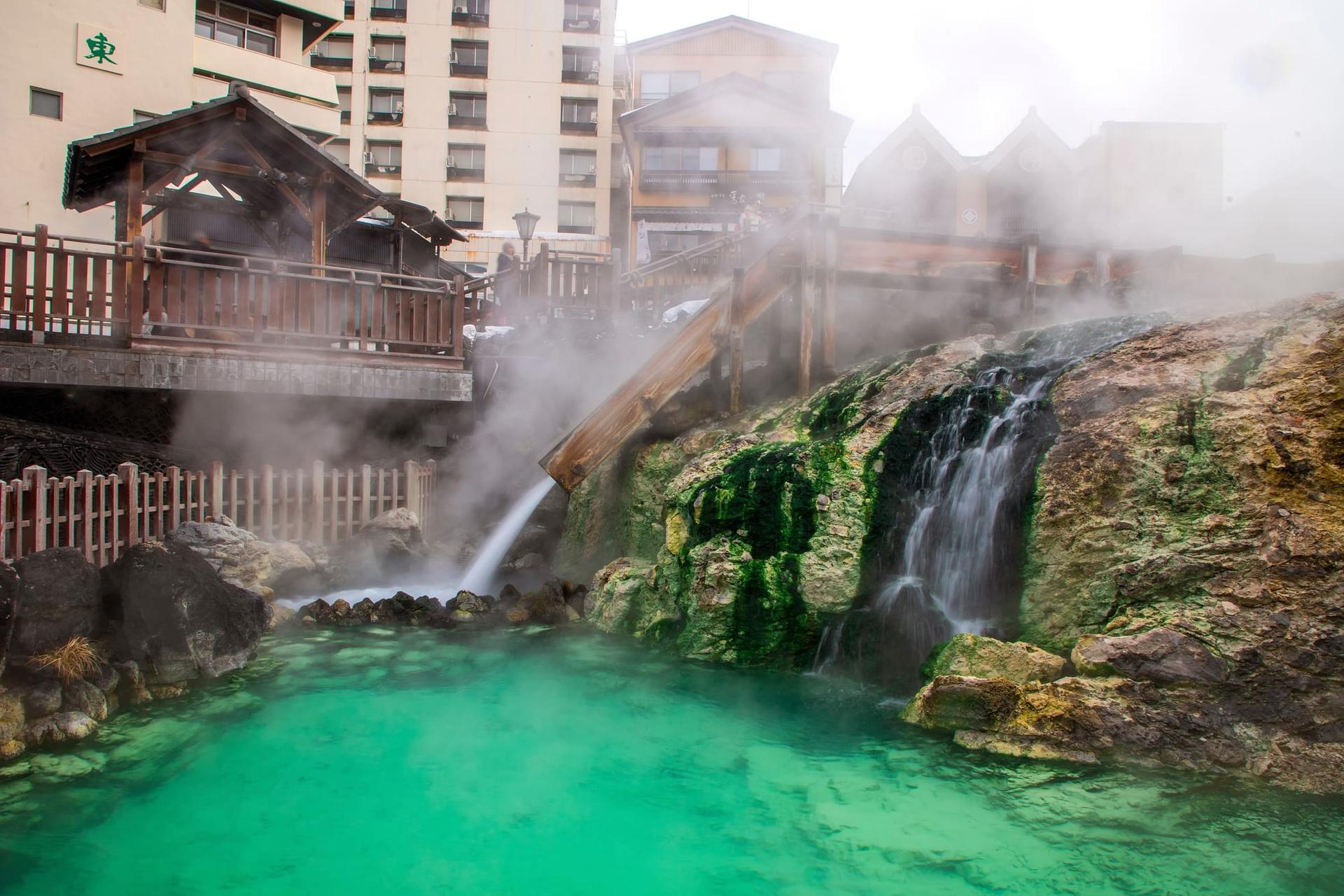
Kusatsu is the town I'd send a first-timer to, because the whole place is built around one thing you can stand and stare at. The Yubatake in the middle of town pushes out about 4,000 liters of spring water a minute and never stops steaming. Picture that steam against snowy roofs. Aoto's unofficial rule: bring a cloth for your glasses.
The numbers are a little ridiculous, honestly. The town's natural flow is more than 32,300 liters per minute, the largest in Japan, and the Yubatake source sits at pH 2.1. I keep reading that line and thinking, "so the town is basically a kettle."
Watch this before you go. The official tourism video shows the Yubatake in all four seasons, winter included.
Plays from youtube-nocookie.com after you tap.
From Tokyo, the JR limited express Kusatsu-Shima runs from Ueno to Naganohara-Kusatsuguchi in 2 hours 18 minutes, then it's the bus up the hill.
2. Nozawa Onsen: 13 village baths the neighbors still look after
Nozawa is my favorite kind of onsen town on paper: the baths aren't a tourist product, they belong to the village. Thirteen sotoyu are spread between more than 30 hot spring sources, and they've been protected since the Edo period by the yunakama, the local bath groups. Anyone visiting the village can use them, as long as you follow the manners.
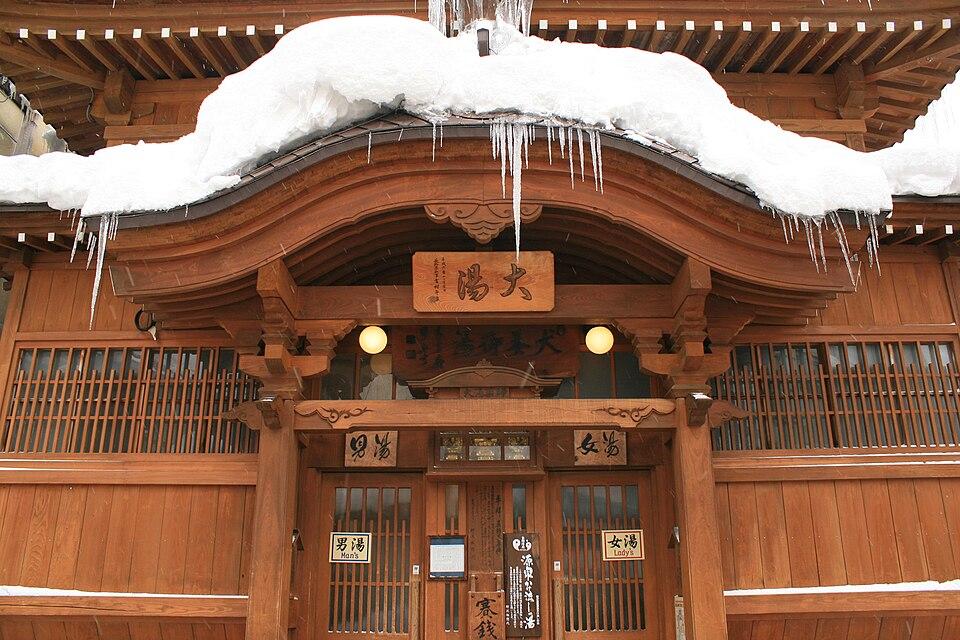
Oyu is the one on every postcard. Its bathhouse hasn't changed since the Edo period, and it stands right in the center of town. With snow piled on that roof? That's the picture.
The baths are free, but each one has an offering box, and a small donation to the yunakama is the polite thing to do. From December to March most of them open 6:00–23:00, while Shinyu, Takinoyu and Juodo no Yu close at 22:00. Late-night bathing isn't allowed.
The village tourism office made a short video on bath manners. It's worth the two minutes, especially the part about the water tap.
Plays from youtube-nocookie.com after you tap.
The rules in one line: wash first, keep your towel out of the water, and turn off the cold tap once the bath is bearable.
Getting there: the nearest station is Iiyama on the Hokuriku Shinkansen. One trap I'd flag for any planner: there's no public transport to Nozawa from Kamisakai or Togari-Nozawaonsen stations on the JR Iiyama Line, even though one of them has "Nozawaonsen" in its name.
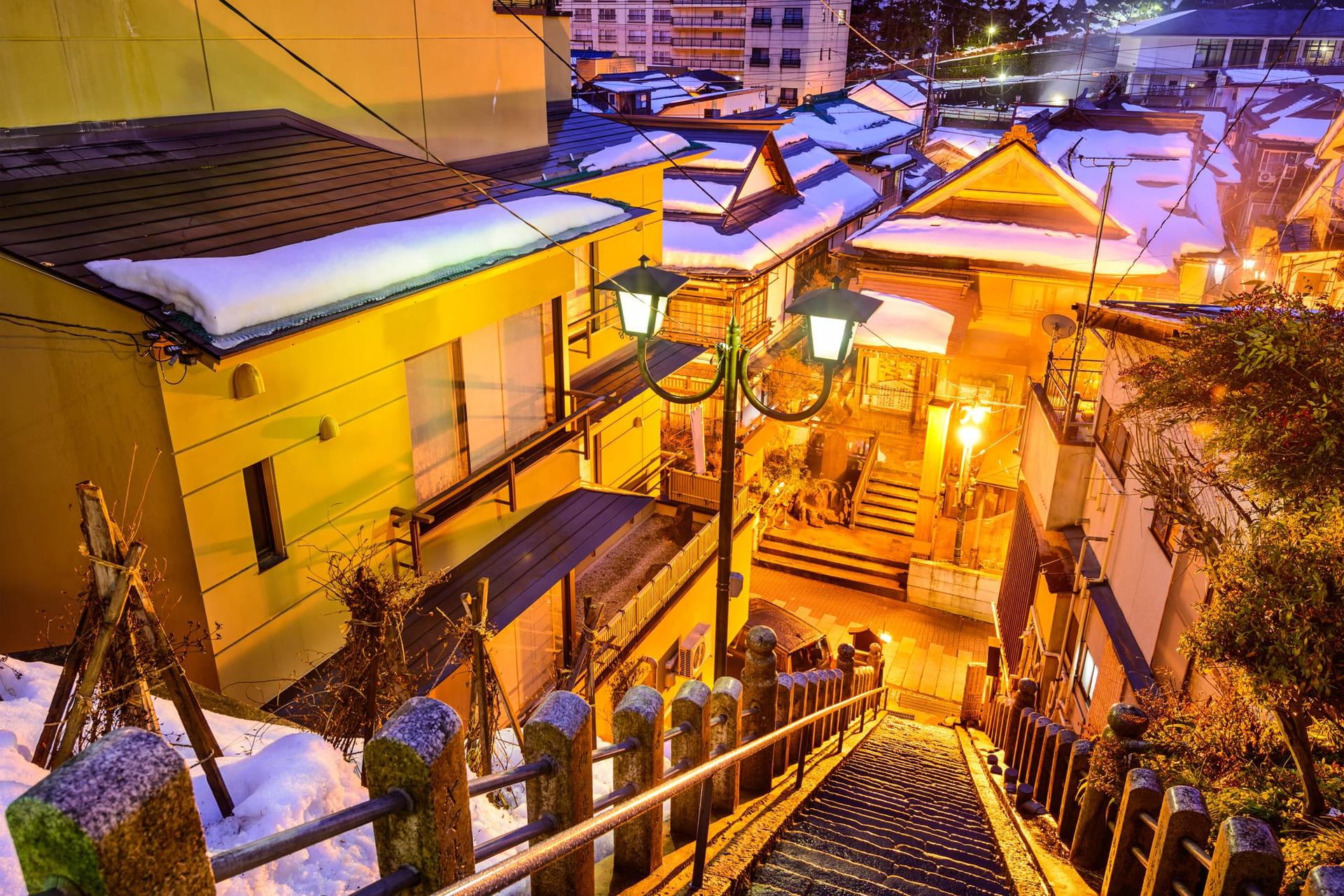
3. Shibu Onsen: nine baths, one key, and snow monkeys up the valley
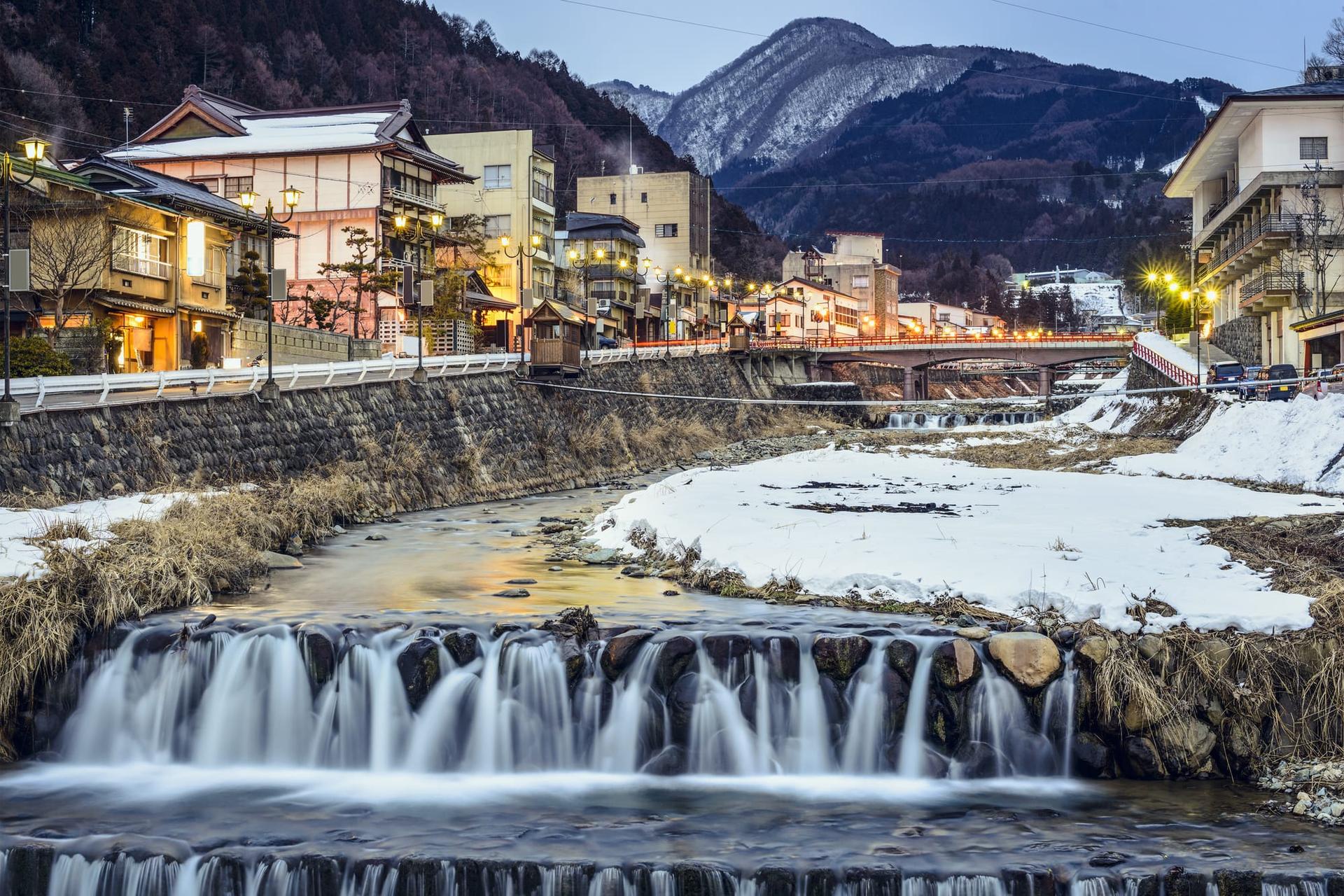
Shibu is the quiet one. Stone-paved lanes and old wooden buildings along the Yokoyu River, a history that's said to go back about 1,300 years to the monk Gyoki, and a story that it was one of Takeda Shingen's hidden hot springs.
Here's the part I love. Shibu has nine sotoyu that locals use every day, and if you stay at an inn in town, the inn lends you a key so you can use them all for free. You collect a stamp at each bath on a prayer towel, then finish at Shibu Takayakushi, the temple above town. If you're not staying in Shibu, only No. 9, Oyu, is open to you. The baths open 6:00–22:00.
One practical thing before you set off in your yukata. The water is very hot, and since it comes straight from the source it can be too hot to get in until you adjust it. Every inn and sotoyu here runs on free-flowing water straight from the source, so nobody's going to cool it for you.
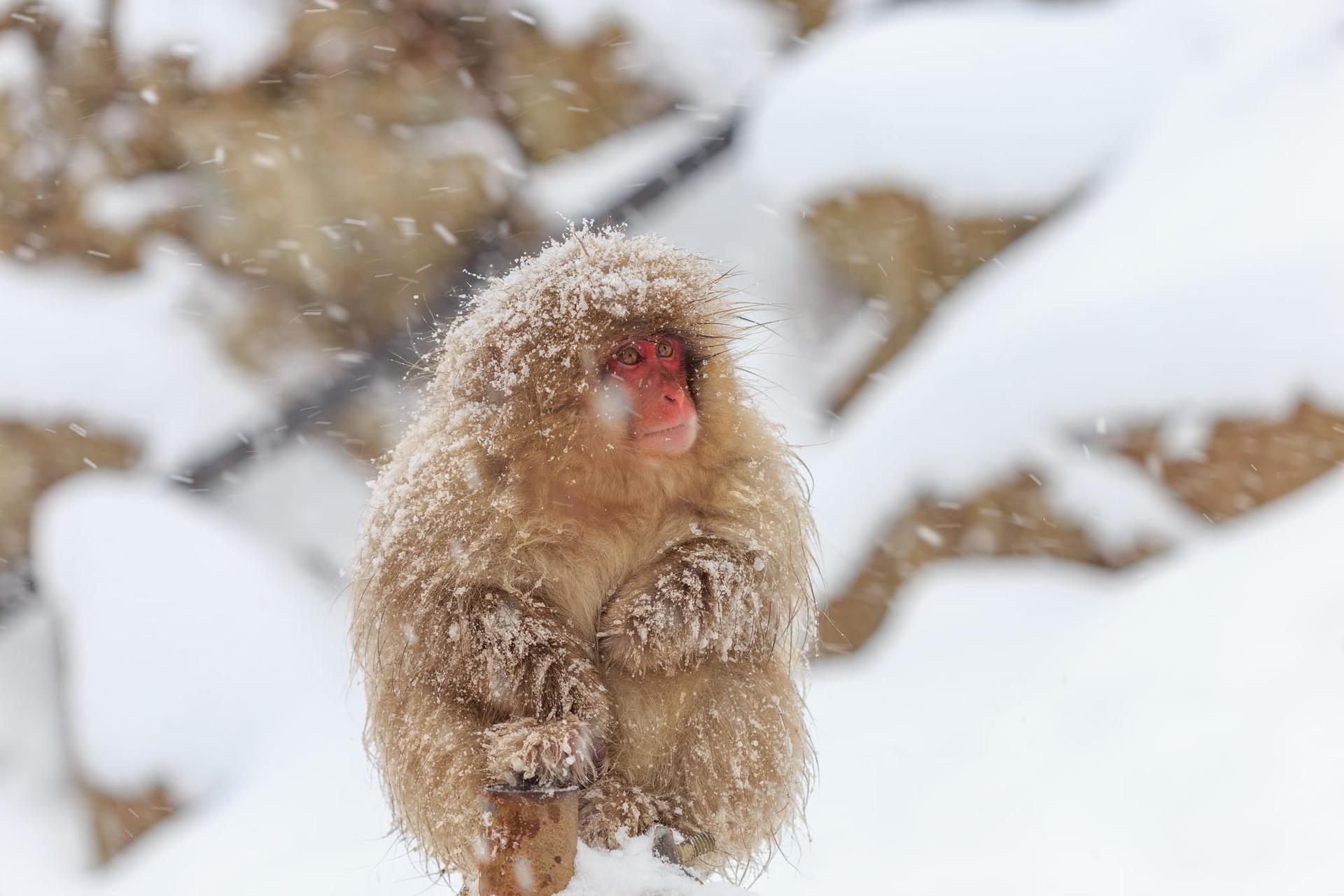
Up the valley is Jigokudani Yaen-koen, the snow monkey park. In winter (November to March) it's open 9:00–16:00.
A fair warning from the park itself: the monkeys bathe to beat the cold in winter, not all day and not all year, and some days they don't show up at all. From the Snow Monkey Park bus stop it's a 35-minute walk. Don't plan to drive the shortcut from Shibu, either. That narrow forest road is closed in winter.
Map tip: Kusatsu and Shibu look close, but the mountain road between them, the Shiga-Kusatsu Kogen Route (Route 292), closes for winter. Pick one per trip, or go around by train.
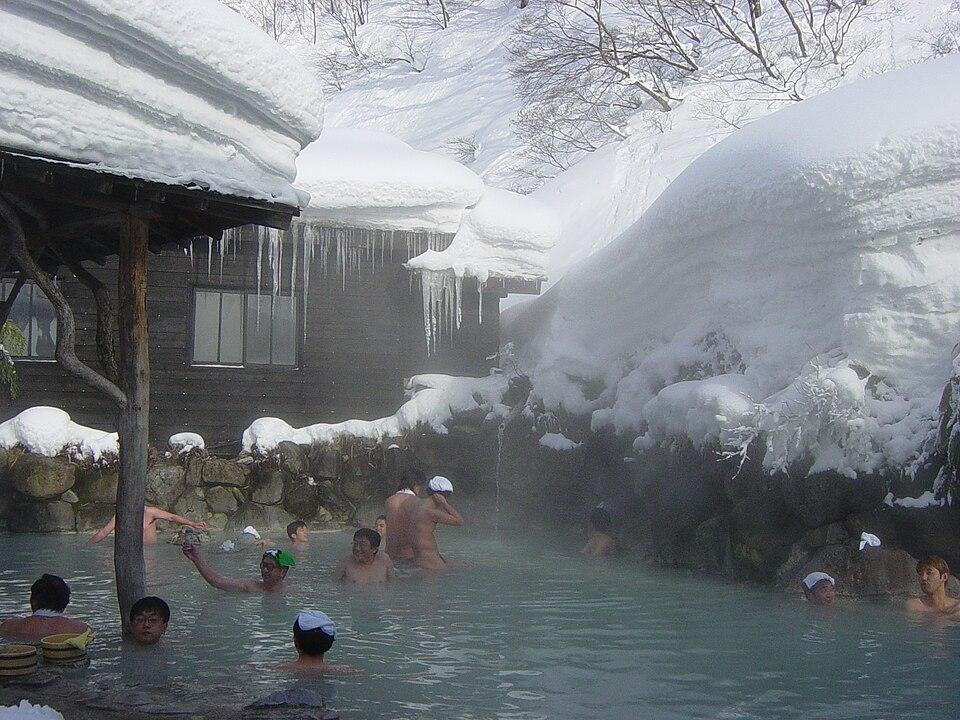
4. Nyuto Onsenkyo, Tsurunoyu: a milky bath between walls of snow
If Kusatsu is the town for first-timers, Tsurunoyu is the one people save as their phone wallpaper. It's the oldest inn in Nyuto Onsenkyo, at the foot of Mt. Nyuto (1,478 m). The second lord of the Akita domain is said to have come here to bathe in 1638, and the thatched-roof Honjin, where his guards stayed, is now the inn's symbol.
The name comes from a hunter who saw a wounded crane healing itself in the spring. And four different springs rise within 50 meters of each other. Four. In one yard.
Day bathing costs 700 yen, runs 10:00–15:00, and isn't available on Mondays. Towels don't go into the baths.
If you stay overnight in Nyuto, the Yumeguri-cho pass (2,500 yen) lets you day-bathe at all seven inns, but it's sold only to overnight guests. In winter, the bath-hopping bus skips Kuroyu and Magoroku from late November to early April because those roads close.
For another snowy onsen street, Ginzan has its own winter rules, so we wrote it up separately.
Before you go: Aoto's winter onsen checklist
Check the closed day. Tsurunoyu stops day bathing on Mondays.
Book where you sleep first. Shibu's nine-bath key comes with an inn stay; Nyuto's bath pass is for overnight guests too.
Go slow in the village baths. Shibu's water can be too hot until you adjust it.
Bring coins for the offering box in Nozawa.
Check winter road closures before you plan a loop (Route 292, the Jigokudani forest road).
Recommended next reads
Snow outside, warm inside. These pair well with a winter onsen trip:
 Written by Aoto · IKOKA Japan